




When most people think about retirement planning, they tend to focus on one number: how much they’ve saved. While that number is certainly important, what often matters just as much—if not more—is how those savings are structured from a tax perspective.
In retirement, not all dollars are treated the same. Where your money is held can have a meaningful impact on how much of it you ultimately keep after taxes. This is where the concept of “tax buckets” becomes especially relevant.
Understanding how these tax buckets work—and how they interact—can provide retirees with greater flexibility, control, and clarity when it comes to managing income.
Why Tax Structure Matters More in Retirement
During your working years, income is typically straightforward. A paycheck arrives regularly, taxes are withheld automatically, and while there may be some deductions or adjustments, the system is relatively consistent.
In retirement, that simplicity changes.
Instead of one primary income source, retirees often draw from multiple accounts, each with different tax treatments. These differences can influence not only how much you pay in taxes each year, but also how your income is perceived for purposes like Social Security taxation and Medicare premiums.
This shift makes tax planning more dynamic—and more important.
The Three Primary Tax Buckets
Most retirees hold assets across three general categories: tax-deferred, tax-free, and taxable accounts. Each plays a distinct role in retirement planning.
Tax-deferred accounts, such as traditional IRAs and 401(k)s, allow contributions to grow without being taxed immediately. However, when withdrawals begin, those distributions are typically taxed as ordinary income. While these accounts provide valuable tax deferral during your working years, they can create larger taxable income streams later in retirement—especially once Required Minimum Distributions (RMDs) begin.
Tax-free accounts, such as Roth IRAs, offer a different advantage. Qualified withdrawals are generally not subject to income tax, which can provide flexibility when managing income levels in retirement. Because of this, Roth accounts can be particularly useful in years when you want to limit taxable income.
Taxable investment accounts fall somewhere in between. While they do not offer the same tax deferral or tax-free benefits, they may provide more flexibility in how and when gains are realized. Capital gains and qualified dividends are often taxed at different rates than ordinary income, which can create planning opportunities when used thoughtfully.
Each of these buckets has its place. The goal is not to favor one exclusively, but to understand how they work together.
Why Balance Creates Flexibility
A balanced mix of tax buckets can give retirees more control over their financial decisions.
For example, in a year when you want to keep taxable income lower—perhaps to reduce taxes on Social Security benefits or avoid crossing a Medicare income threshold—you may choose to draw more heavily from tax-free accounts. In other years, you might strategically use tax-deferred accounts, depending on your income needs and tax situation.
Without this flexibility, retirees may find themselves with fewer options.
Consider two individuals with similar retirement savings. One holds the majority of their assets in tax-deferred accounts, while the other has a more balanced mix across all three buckets. Even if their total savings are the same, their after-tax income may look very different.
The individual with more diversification has greater control over how income is distributed and taxed.
Why This Matters Over Time
Tax planning in retirement is not just about a single year—it is about how decisions compound over time.
Without a balanced approach, retirees may face situations where required withdrawals increase taxable income significantly. This can push them into higher tax brackets, increase the portion of Social Security that is taxed, or raise Medicare premiums.
These outcomes are not always immediate, but they can build gradually over the course of retirement.
On the other hand, a diversified tax strategy allows for more thoughtful adjustments as circumstances change. Income can be managed more intentionally, and decisions can be made with both the present and the future in mind.
Common Challenges Retirees Face
Many retirees arrive at retirement with most of their savings concentrated in tax-deferred accounts. This is understandable, as these accounts are often the primary vehicle for retirement savings during working years.
However, this concentration can limit flexibility later on.
Another common challenge is overlooking how different income sources interact. For example, withdrawals from retirement accounts may unintentionally increase taxable income in ways that affect other areas of the financial plan.
These situations are not uncommon, and they can often be addressed with thoughtful planning and regular review.
A More Coordinated Approach to Planning
At Heritage Financial Planning, we view tax planning as an integral part of the retirement process—not a separate or isolated activity.
Through our HFP S.T.A.R. Strategy (Seasonal Transition into Advanced Retirement), we help clients evaluate how their income sources, tax exposure, and long-term goals align across each phase of retirement. This includes understanding how tax buckets are structured and how they can be used more effectively over time.
Rather than focusing on a single solution, we work to create a coordinated strategy that evolves alongside your financial life.
Moving Forward with Clarity
Retirement planning is not just about building wealth—it’s about using it efficiently.
Understanding your tax buckets and how they interact can help you make more informed decisions, reduce uncertainty, and maintain greater control over your income throughout retirement.
If your current plan has not been reviewed from a tax perspective recently, this may be a valuable opportunity to take a closer look. Even small adjustments can help improve flexibility and support long-term financial clarity.
At Heritage Financial Planning, we help individuals and families navigate these decisions through a structured, personalized process designed to adapt over time. If you’d like to explore how your current strategy aligns with your long-term goals, we invite you to schedule a conversation with our team.
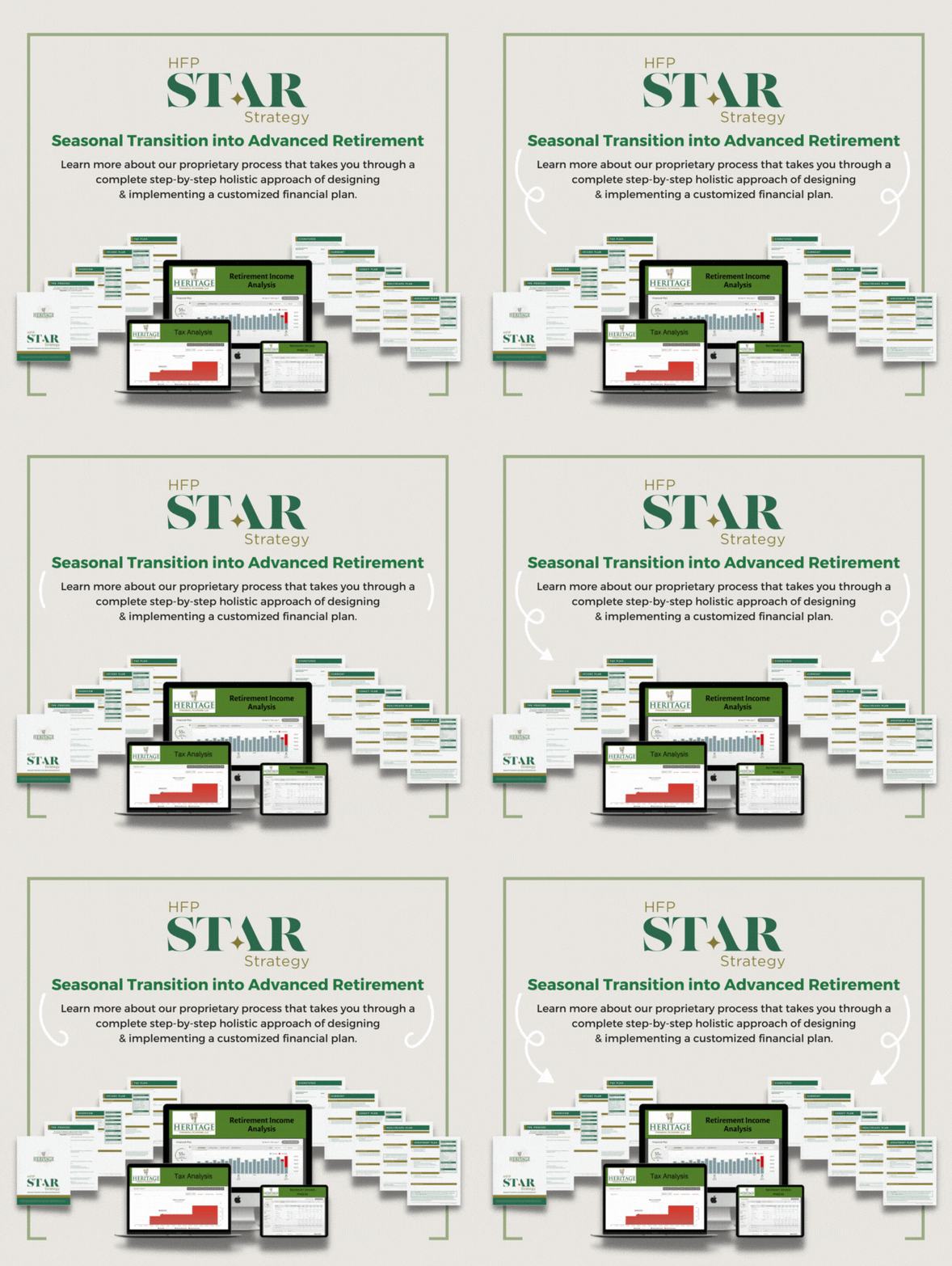
Click here to learn more about our HFP STAR Strategy process.
Sources
1 . Internal Revenue Service (IRS) – Retirement Accounts & Tax Rules Overview
https://www.irs.gov/retirement-plans
2. Vanguard – Tax-Efficient Withdrawal Strategies in Retirement
https://investor.vanguard.com/investor-resources-education/taxes/withdrawal-strategies
3. Morningstar – Tax Diversification and Retirement Income Planning
https://www.morningstar.com/retirement