




Retirement is often expected to bring simplicity. After years of earning income, filing taxes, and managing financial responsibilities, many individuals look forward to a phase where things feel more straightforward.
However, when it comes to taxes, retirement can introduce a different kind of complexity—one that is often less visible but just as important.
Some of the most impactful tax challenges in retirement are not obvious at first. Instead, they develop gradually over time, shaped by how different income sources interact with one another. Without a clear understanding of these interactions, retirees may find themselves facing unexpected outcomes.
Awareness is the first step toward avoiding these surprises.
Why Retirement Taxes Can Be Misleading
During your working years, taxes are often tied to a primary source of income—your paycheck. Withholding is handled automatically, and while there may be some variability, the overall structure tends to remain consistent.
In retirement, income becomes more layered.
Rather than relying on one source, retirees often draw from Social Security, retirement accounts, investment portfolios, and sometimes pensions. Each of these sources is taxed differently, and the way they combine can create outcomes that are not always intuitive.
What makes this especially challenging is that these tax effects are rarely immediate. Instead, they build over time, often without clear warning.
When Social Security Becomes Taxable
One of the most common surprises retirees encounter is the taxation of Social Security benefits.
Many people assume that Social Security income is entirely tax-free. In reality, whether those benefits are taxed depends on your overall income level. As additional income is introduced—such as withdrawals from retirement accounts—a portion of Social Security benefits may become taxable.
This interaction can feel unexpected, especially when retirees believe they are simply accessing funds they have already saved.
Over time, this can increase the total amount of taxable income, even if spending has not changed significantly.
Medicare Premium Adjustments and Income Thresholds
Another area that often goes unnoticed is the relationship between income and Medicare premiums.
Medicare uses a system known as IRMAA (Income-Related Monthly Adjustment Amount) to determine whether higher-income individuals pay increased premiums for coverage. These adjustments are based on income levels from prior years.
What makes this particularly important is that even a temporary increase in income—such as a large withdrawal or asset sale—can trigger higher premiums. These increases may not appear immediately but can show up later, creating a delayed effect that may feel disconnected from the original decision.
Understanding how income thresholds work can help retirees make more informed decisions about how and when to access their funds.
Required Minimum Distributions and Their Impact
Required Minimum Distributions (RMDs) are another area where tax challenges can develop over time.
Once retirees reach a certain age, the Internal Revenue Service requires withdrawals from tax-deferred accounts such as traditional IRAs and 401(k)s. These withdrawals are generally treated as taxable income.
While RMDs are a standard part of retirement planning, they can create complications if not anticipated in advance.
For example, larger account balances may lead to larger required distributions, which can increase taxable income in later years. This may influence tax brackets, Social Security taxation, and Medicare premiums—all at the same time.
Without planning, these effects can compound.
Why These Issues Often Go Unnoticed
One of the reasons these tax traps are so common is that they rarely appear all at once.
Instead, they develop gradually as different elements of a retirement plan begin to interact. A small increase in income here, a required distribution there—over time, these changes can create a ripple effect.
Because the impact is spread out, it may not feel significant in any single year. However, over the course of a 20- or 30-year retirement, these patterns can influence overall financial flexibility.
This is why periodic review becomes so important.
Why This Matters in Today’s Retirement Landscape
Today’s retirees face a more complex financial environment than previous generations.
Longer life expectancies mean retirement can span multiple decades. Over that time, tax rules may change, income needs may shift, and healthcare costs may evolve. At the same time, many individuals rely more heavily on personal savings rather than traditional pensions.
This combination makes it increasingly important to understand how different parts of a financial plan work together.
Without that understanding, it is easy for small inefficiencies to grow into larger challenges.
A More Proactive Approach
At Heritage Financial Planning, we believe that tax awareness should be integrated into the broader retirement planning process—not treated as a separate or occasional task.
Through our HFP S.T.A.R. Strategy (Seasonal Transition into Advanced Retirement), we help clients evaluate how income sources, tax exposure, and long-term goals align over time. This includes identifying potential areas of concern, reviewing strategies periodically, and making adjustments as needed.
The goal is not to eliminate taxes entirely, but to understand how they function within your overall plan.
Moving Forward With Clarity
Retirement planning is not just about avoiding mistakes—it is about understanding where they may occur and planning accordingly.
By becoming aware of how Social Security, Medicare premiums, and required distributions interact, retirees can make more informed decisions and maintain greater control over their financial future.
If it has been some time since your retirement strategy has been reviewed from a tax perspective, this may be a valuable opportunity to take a closer look.
At Heritage Financial Planning, we work with individuals and families to build strategies designed to adapt over time. Through our HFP S.T.A.R. Strategy, we provide a structured and personalized approach that helps bring clarity to complex financial decisions.
If you’d like to better understand how these factors may impact your plan, we invite you to schedule a conversation with our team.
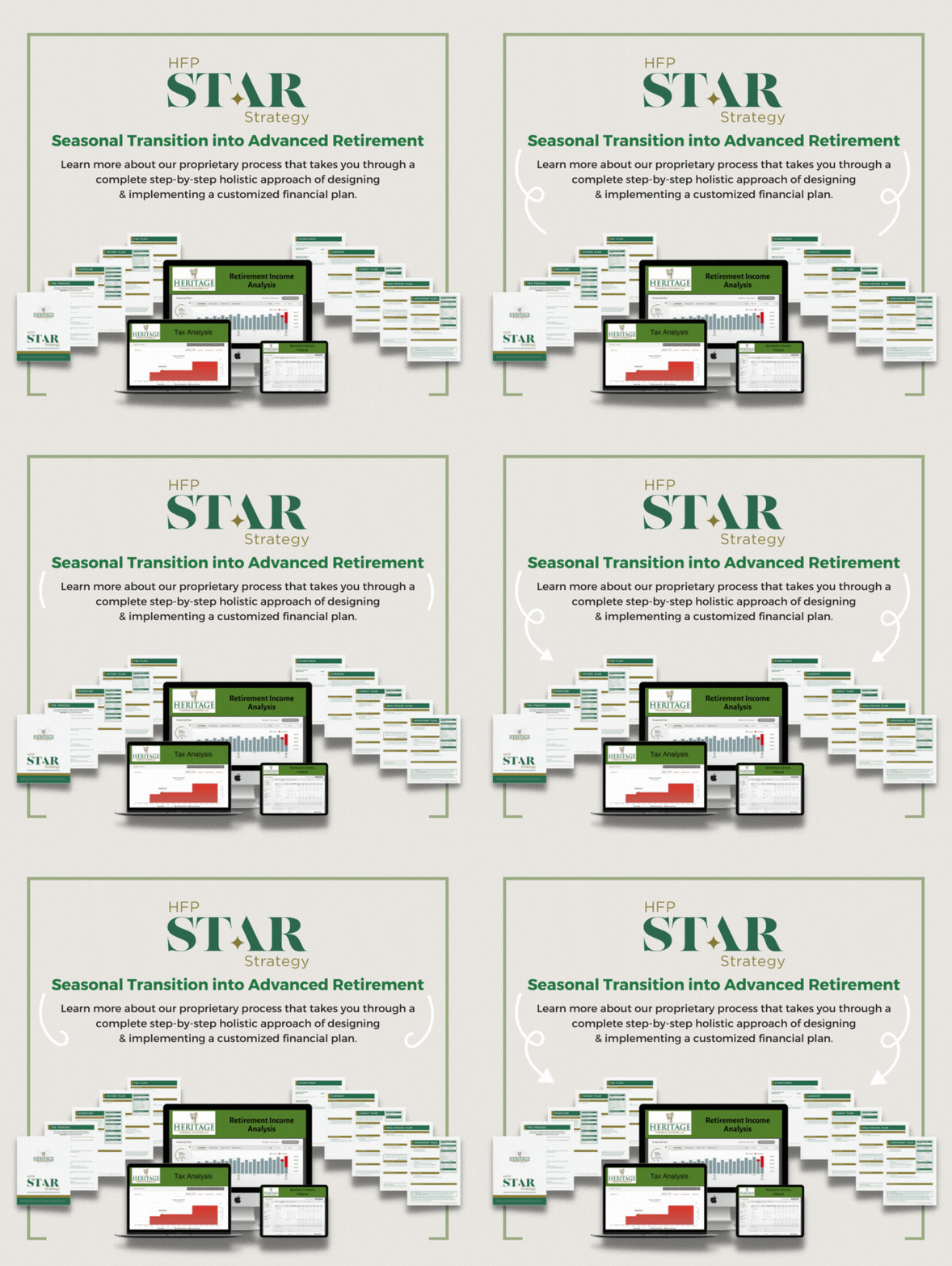
Click here to learn more about our HFP STAR Strategy process.
Sources
1 . Internal Revenue Service (IRS) – Required Minimum Distribution Rules & Retirement Income Guidance
https://www.irs.gov/retirement-plans
2. Social Security Administration (SSA) – Income Taxes and Your Social Security Benefits
https://www.ssa.gov/benefits/retirement/planner/taxes.html
3. Medicare.gov – Medicare Premiums and IRMAA Income-Related Adjustments
https://www.medicare.gov