




For many people, April feels like the finish line for taxes. Returns are filed, documents are put away, and there’s a sense of closure around the previous year’s financial picture.
But in retirement, April is often not the end of tax planning—it’s the beginning.
Once tax season is behind you, you have something valuable: clarity. You can see what your income looked like, how your withdrawals were taxed, and where there may have been surprises. This makes April one of the most important times of the year to begin planning for what comes next.
Rather than waiting until year-end, early awareness allows for more flexibility, more options, and more thoughtful decisions.
Why Looking Back Helps You Plan Forward
Your most recently filed tax return is more than just a record—it’s a snapshot of how your retirement strategy is functioning in real time.
It can reveal patterns that may not have been obvious before. For example, you may notice that your taxable income was higher than expected, that a greater portion of your Social Security benefits became taxable, or that certain withdrawals pushed you closer to higher income thresholds.
These insights are not problems—they are opportunities.
By reviewing your previous year’s outcome, you can begin to make adjustments that better align your income, tax exposure, and long-term goals moving forward.
The Advantage of Acting Early
One of the most important advantages retirees have is time—not just over the course of retirement, but within each calendar year.
Tax planning opportunities often depend on timing. Decisions made earlier in the year can be more flexible, while those made later may feel more limited.
For example, acting early allows for:
- Adjustments to withdrawal strategies before income becomes fixed
- Consideration of Roth conversion opportunities during lower-income periods
- Greater control over capital gains realization
- More flexibility in managing tax brackets
When planning is delayed until the end of the year, many of these options become more constrained.
April provides a window where you are informed by the past but not yet locked into the future.
Why This Matters in Today’s Retirement Landscape
Retirement today is more dynamic than it has been in previous generations. Income often comes from multiple sources, and each of those sources interacts differently within the tax system.
In addition, tax rules, income thresholds, and healthcare-related costs continue to evolve. Over a retirement that may span decades, these variables can shift multiple times.
Because of this, tax planning is no longer a once-a-year exercise. It becomes an ongoing process that benefits from periodic review and adjustment.
By beginning that process earlier in the year, retirees can respond more thoughtfully rather than reactively.
What to Look for After Tax Season
Once your return is complete, there are several areas worth reviewing more closely.
First, consider whether your income came from the sources you expected and whether the tax outcome aligned with your expectations. If there were surprises, it may be helpful to understand what caused them.
Next, evaluate how your withdrawal strategy influenced your overall tax picture. In some cases, adjusting the timing or source of withdrawals can improve efficiency over time.
It may also be helpful to consider how your current approach could impact future years, particularly as Required Minimum Distributions begin or increase.
These reviews are not about making immediate changes. They are about building awareness that supports better decision-making throughout the year.
Common Patterns That Emerge
After tax season, certain themes often appear.
Some retirees realize that a higher portion of their income was taxable than anticipated. Others discover that withdrawals from tax-deferred accounts increased their tax exposure more than expected.
In some cases, individuals may notice that they are approaching income thresholds that could influence Medicare premiums or other financial considerations.
These patterns are not uncommon—and they are often manageable when identified early.
A More Proactive Approach to Tax Planning
At Heritage Financial Planning, we encourage clients to think of tax planning as a year-round process rather than a seasonal task.
Through our HFP S.T.A.R. Strategy (Seasonal Transition into Advanced Retirement), we help clients evaluate how income, taxes, and long-term planning decisions interact over time. This includes reviewing past outcomes, identifying opportunities for improvement, and making thoughtful adjustments throughout the year.
The goal is not to predict every outcome or eliminate every tax liability. Instead, it is to create a strategy that evolves alongside your financial life.
Moving Forward with Clarity
April may feel like the end of tax season—but in many ways, it’s the most valuable time to begin planning for the year ahead.
With a clear understanding of where you’ve been, you can make more informed decisions about where you’re going.
If it has been some time since you reviewed your retirement strategy from a tax perspective, this may be an ideal opportunity to do so. Even small adjustments made early in the year can have a meaningful impact over time.
At Heritage Financial Planning, we work with individuals and families to build retirement strategies that adapt thoughtfully across each phase of retirement. Through our HFP S.T.A.R. Strategy, we provide a structured, personalized approach designed to bring clarity to complex decisions.
If you’d like to explore how your current plan aligns with your long-term tax strategy, we invite you to schedule a conversation with our team.
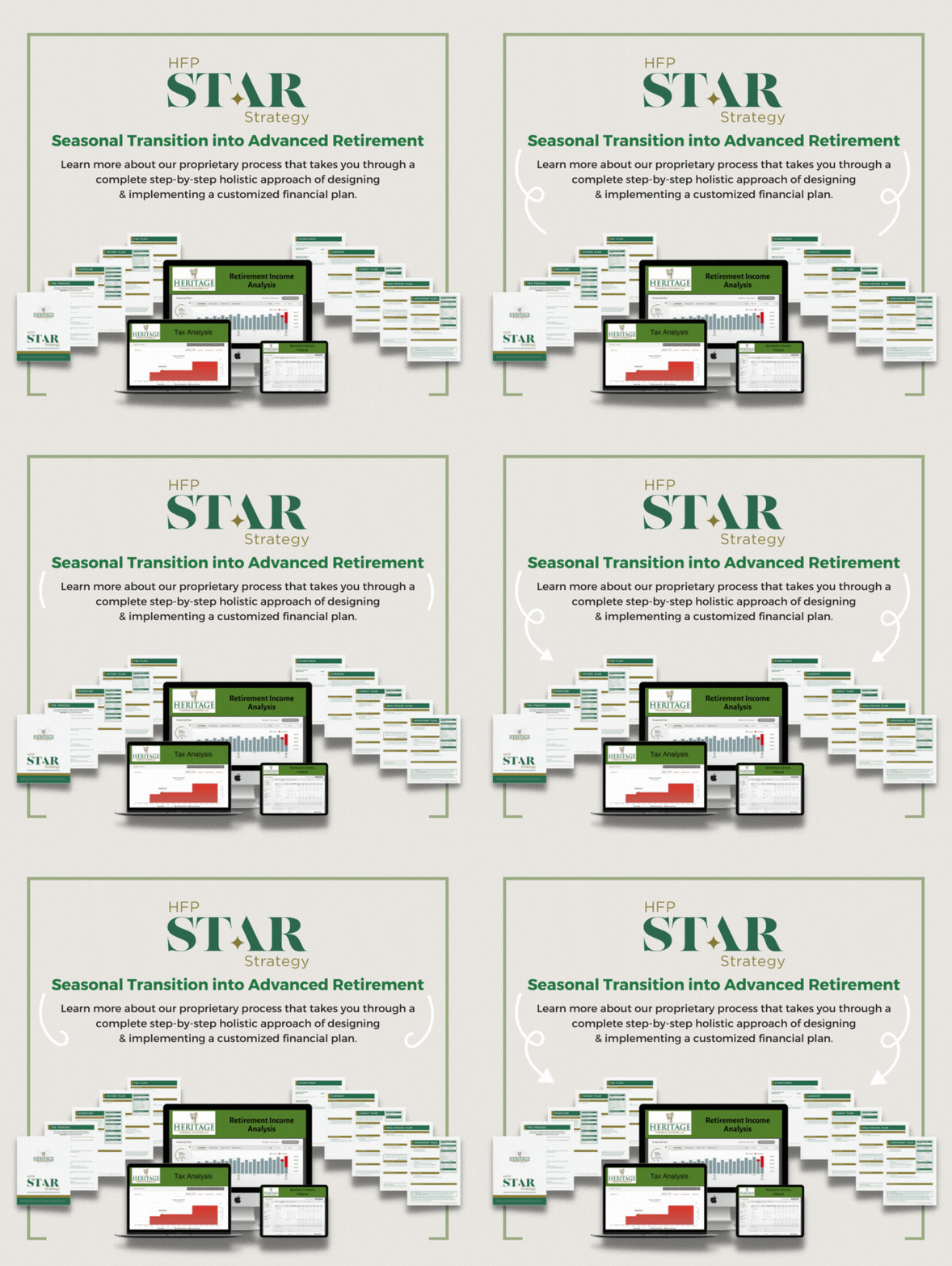
Click here to learn more about our HFP STAR Strategy process.
Sources
1 .Internal Revenue Service (IRS) – Tax Withholding Estimator & Retirement Income Guidance
https://www.irs.gov
2 .Fidelity Investments – Tax Planning Strategies for Retirement
https://www.fidelity.com/viewpoints/retirement
3 .Vanguard – Tax-Efficient Investing and Withdrawal Strategies
https://www.vanguard.com