




For many people approaching retirement, Medicare is viewed as a safeguard—something that brings predictability and relief after years of private insurance costs. While Medicare does provide meaningful coverage, it is often misunderstood. What surprises many retirees is not what Medicare covers, but what it doesn’t—and how certain costs can quietly compound over time.
As we move toward 2026, healthcare expenses continue to be one of the most significant and least predictable parts of a retirement budget. Even individuals who have saved diligently can find that overlooked Medicare-related expenses put unexpected strain on their income plan.
Understanding where these surprise costs can come from—and how they fit into a broader retirement strategy—is essential for protecting your nest egg and maintaining long-term financial confidence.
Why Medicare Costs Matter More Than Ever
Healthcare expenses tend to rise as we age, and unlike many other retirement costs, they are not entirely discretionary. Medical needs, prescription drugs, and coverage gaps don’t always align neatly with a fixed income.
At the same time, retirees today are navigating retirement in a more complex environment. Longer life expectancies, changing Medicare rules, income-based premium adjustments, and evolving healthcare needs all contribute to uncertainty. Without thoughtful planning, Medicare-related costs can disrupt even well-designed retirement plans.
This is why Medicare planning is not a one-time decision—it’s an ongoing part of a holistic retirement strategy.
Surprise Expense #1: Income-Based Medicare Premiums (IRMAA)
One of the most common Medicare surprises is the Income-Related Monthly Adjustment Amount, often referred to as IRMAA. These additional premiums apply to Medicare Part B and Part D when a retiree’s income exceeds certain thresholds.
What catches many people off guard is how income is defined for Medicare purposes. IRMAA is based on modified adjusted gross income from two years prior, not current income. A one-time financial event—such as selling property, converting retirement accounts, or realizing capital gains—can trigger higher premiums years later.
For retirees who assumed their Medicare premiums would remain stable, these adjustments can meaningfully increase annual healthcare costs. Because IRMAA brackets are tiered, even modest income increases can push someone into a higher premium category.
From a planning perspective, this highlights the importance of coordinating tax strategy, income planning, and Medicare decisions—especially during the early years of retirement.
Surprise Expense #2: Prescription Drug Costs and Coverage Gaps
Medicare Part D provides prescription drug coverage, but it is far from uniform. Plans vary widely in terms of premiums, deductibles, formularies, and out-of-pocket costs. What works well one year may be far less effective the next, depending on health changes or plan revisions.
Even with recent reforms aimed at improving affordability, retirees may still encounter higher-than-expected costs for certain medications—particularly specialty drugs or brand-name prescriptions. Formularies can change annually, and a medication that was once affordable may suddenly fall into a higher cost tier.
Another challenge is the assumption that Part D plans are “set it and forget it.” In reality, annual plan reviews are essential. Without them, retirees may unknowingly overpay for coverage that no longer fits their needs.
Prescription expenses are often unpredictable, which makes them especially important to factor into retirement cash flow planning.
Surprise Expense #3: Long-Term Care and Services Medicare Doesn’t Cover
Perhaps the most significant misunderstanding about Medicare is what it excludes. While Medicare covers many acute and short-term medical services, it does not cover most long-term care needs.
This includes extended stays in nursing homes, assisted living facilities, and ongoing custodial care—services that many retirees may eventually require. Even limited in-home care can become expensive over time, and these costs are typically paid out-of-pocket unless alternative planning strategies are in place.
Long-term care expenses don’t arrive all at once. They often begin gradually, then escalate. Without preparation, they can place pressure on retirement income, investment portfolios, and legacy goals.
Planning for these possibilities doesn’t mean assuming the worst—it means building flexibility into your retirement strategy so that care decisions are guided by personal needs, not financial constraints.
How These Costs Can Affect a Retirement Plan
When Medicare-related expenses are underestimated, the impact often shows up elsewhere. Higher healthcare costs may require increased portfolio withdrawals, potentially affecting long-term sustainability. They can also influence tax planning, Social Security timing, and decisions around housing or lifestyle spending.
For couples, the financial implications may extend beyond one lifetime. Healthcare costs for a surviving spouse can change significantly, particularly if income levels or coverage needs shift.
This is why Medicare planning should never exist in isolation. It works best when integrated with income planning, tax efficiency strategies, risk management, and long-term goals—all core components of a comprehensive retirement plan.
A More Thoughtful Way to Plan for Medicare Costs
At Heritage Financial Planning, we believe Medicare decisions should support—not disrupt—your overall retirement strategy. That means looking beyond premiums and focusing on how healthcare costs interact with income sources, tax exposure, and future flexibility.
Rather than reacting to surprises as they occur, proactive planning helps retirees anticipate potential challenges and make informed adjustments over time. This approach supports clarity and confidence, even as circumstances evolve.
Bringing It All Together with the HFP S.T.A.R. Strategy
Preparing for retirement is about more than choosing investments or selecting insurance coverage—it’s about understanding how each decision fits into the bigger picture. Heritage Financial Planning’s proprietary HFP S.T.A.R. Strategy (Seasonal Transition into Advanced Retirement) is designed to do exactly that.
The S.T.A.R. Strategy provides a structured, personalized planning process that helps clients transition into retirement by aligning income planning, tax efficiency, risk management, and long-term clarity. Medicare and healthcare planning are addressed as part of this broader framework, ensuring they are coordinated with the rest of your financial life rather than treated as standalone decisions.
If you are approaching retirement—or already navigating it—and want to better understand how Medicare expenses may affect your plan, we encourage you to take a closer look at your current strategy. A thoughtful review today can help support greater confidence and flexibility in the years ahead.
To learn more about how the HFP S.T.A.R. Strategy works and how it may support your retirement goals, we invite you to contact Heritage Financial Planning’s office to schedule an appointment. We’re here to help you move forward with clarity, preparation, and peace of mind.
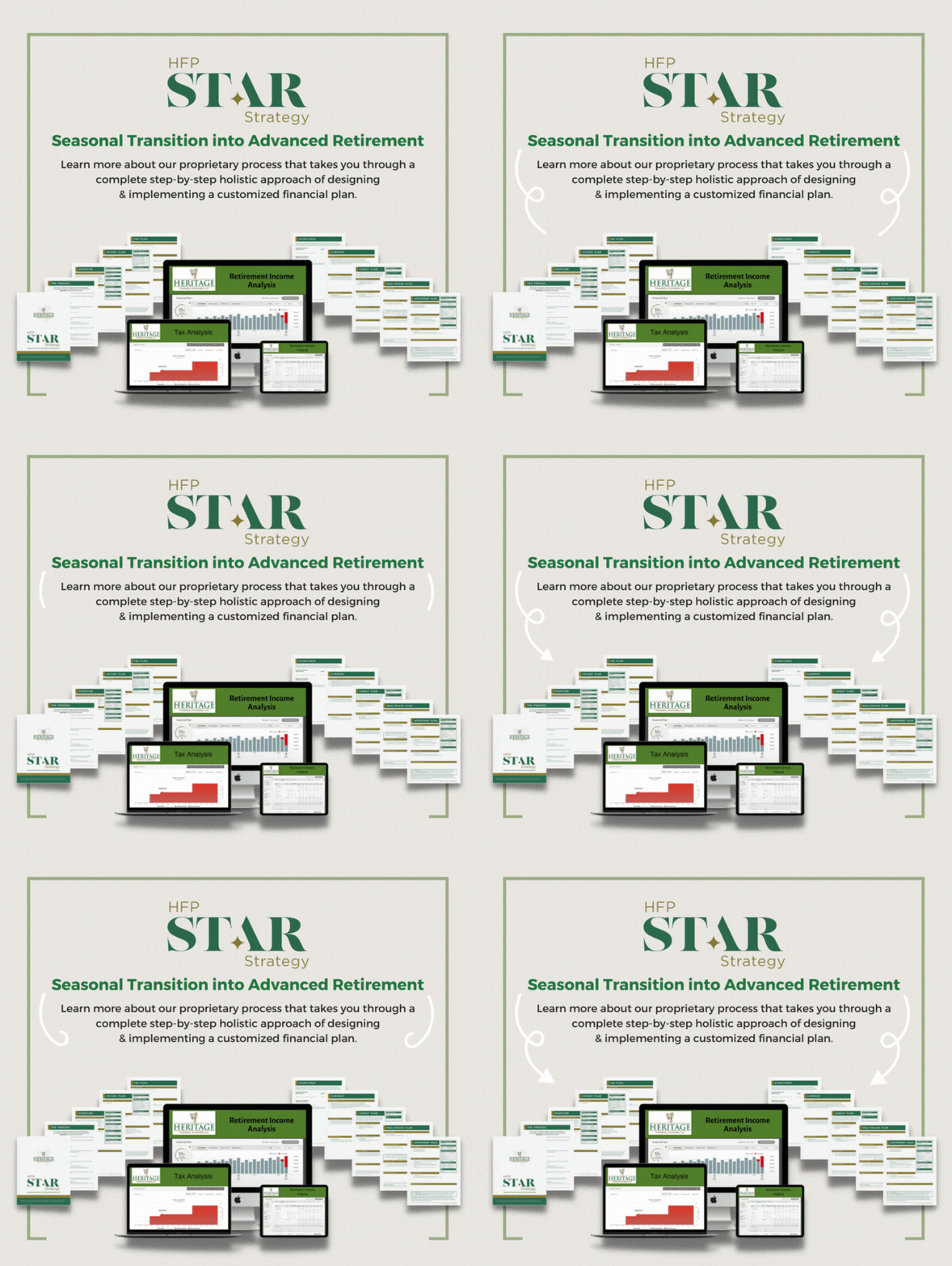
Click here to learn more about our HFP STAR Strategy process.
Sources:
- Money Talks News – moneytalksnews.com
- Centers for Medicare & Medicaid Services (CMS) – medicare.gov
- Social Security Administration (SSA) – ssa.gov
- Internal Revenue Service (IRS) – irs.gov
- Heritage Financial Planning – heritagefinancialplanning.net