



For many people approaching or living in retirement, caution feels responsible. After decades of working, saving, and planning, the instinct to protect what you’ve built is natural. It’s wise to avoid rash decisions, especially when markets fluctuate or headlines feel uncertain.
But there’s another side to caution that often goes unnoticed.
While avoiding impulsive moves is healthy, avoiding decisions altogether can quietly create its own form of risk. In retirement, “doing nothing” is not always neutral. Over time, inaction can affect income efficiency, tax exposure, healthcare planning, and long-term flexibility.
The goal is not to act quickly. It’s to act thoughtfully—and at the right time.
Why Waiting Feels Safer
During your working years, waiting often works in your favor. Income continues. Contributions build. Time smooths out market volatility. Delaying decisions rarely feels urgent because there’s a steady paycheck supporting the plan.
Retirement changes that dynamic.
Income now comes from assets, Social Security benefits, retirement accounts, or pensions. Tax strategies matter more. Healthcare enrollment timelines carry consequences. Withdrawal sequencing can influence long-term sustainability.
Even so, many retirees hesitate to adjust their plan because “nothing seems wrong.” Accounts look stable. Expenses feel manageable. So the assumption becomes: why change anything?
The challenge is that some risks are gradual. They don’t announce themselves with urgency. They accumulate quietly.
Income Coordination Doesn’t Improve on Its Own
Retirement income planning is not a one-time calculation. It is an ongoing coordination process.
For example:
-
Social Security claiming decisions can impact lifetime benefits.
-
Withdrawal strategies from IRAs and taxable accounts affect annual tax liability.
-
Required Minimum Distributions (RMDs), as outlined by the IRS, begin at specific ages and can increase taxable income if not planned for in advance.
-
Medicare premiums may be influenced by income levels.
Waiting to review income sources may mean missing opportunities to improve tax efficiency or reduce future surprises.
Proactive planning doesn’t mean making constant changes. It means evaluating whether the current strategy still supports your evolving lifestyle and tax picture.
Tax Planning Is Time-Sensitive
Taxes in retirement can feel unpredictable because income sources change from year to year. Some years may include capital gains. Others may involve Roth conversions. RMDs can alter taxable income thresholds.
According to IRS guidance, retirement account distributions, Social Security taxation rules, and contribution limitations are structured around specific regulations. These rules do not automatically optimize themselves.
Waiting may result in:
-
Higher cumulative lifetime taxes than necessary
-
Missed Roth conversion windows
-
Unexpected increases in Medicare premiums due to income thresholds
Tax planning is not about minimizing this year’s bill alone. It’s about viewing retirement through a long-term lens.
When couples or individuals delay these conversations, opportunities often narrow rather than expand.
Healthcare Timing Matters
Healthcare planning is another area where inaction can create avoidable complications.
Enrollment periods for Medicare are time-sensitive. Delays may result in penalties or coverage gaps. Income-related premium adjustments can also affect overall healthcare costs.
Beyond Medicare enrollment, long-term care considerations and healthcare funding strategies deserve periodic review. Ignoring them doesn’t reduce the likelihood of needing care—it simply reduces preparation time.
In today’s retirement landscape, where longevity has increased and healthcare costs continue to evolve, waiting without a strategy may quietly limit flexibility.
Why This Matters More Today
Modern retirement lasts longer than previous generations experienced. It is not uncommon for retirement to span 25 or 30 years.
That extended timeline introduces new layers of complexity:
-
Market volatility will occur.
-
Tax rules may change.
-
Spending patterns will evolve.
-
Healthcare costs may rise.
-
Personal priorities may shift.
In this environment, “set it and forget it” planning rarely works as intended.
Doing nothing can unintentionally freeze a strategy in place while the world around it changes.
Proactive reviews help ensure your retirement plan remains aligned with your life—not just with assumptions made years earlier.
Common Signs It’s Time for a Review
Not every adjustment requires urgency. However, certain indicators suggest a review may be helpful:
-
You haven’t reviewed your withdrawal strategy in several years
-
Your tax bill has increased unexpectedly
-
You’ve experienced a major life event (retirement, relocation, inheritance)
-
You’re unsure how your healthcare costs will evolve
-
You and your spouse disagree on investment risk
A review does not automatically mean making changes. Often, it simply provides reassurance that your strategy remains appropriate.
Moving Forward Without Pressure
Proactive planning should never feel rushed. Retirement decisions deserve thoughtfulness, not impulse.
At Heritage Financial Planning, our role is not to pressure clients into action. It is to help them move forward with clarity and structure.
The HFP S.T.A.R. Strategy—Seasonal Transition into Advanced Retirement—was built around this philosophy. Retirement is not a single event but a series of evolving phases. Through structured conversations around income coordination, tax efficiency, and risk management, we help clients evaluate decisions gradually and intentionally.
This process allows progress without pressure.
A Thoughtful Path Ahead
Avoiding impulsive decisions is wise. But avoiding thoughtful review can quietly introduce risk over time.
Retirement planning is not about reacting to every headline. It is about ensuring your strategy evolves alongside your life.
If it has been some time since your retirement plan was reviewed—or if you simply want reassurance that you’re on track—this may be an ideal time for a conversation. We invite you to schedule a retirement planning review with Heritage Financial Planning. Through our HFP S.T.A.R. Strategy, we provide a structured, personalized approach designed to support long-term clarity and confidence, at a pace that feels comfortable for you.
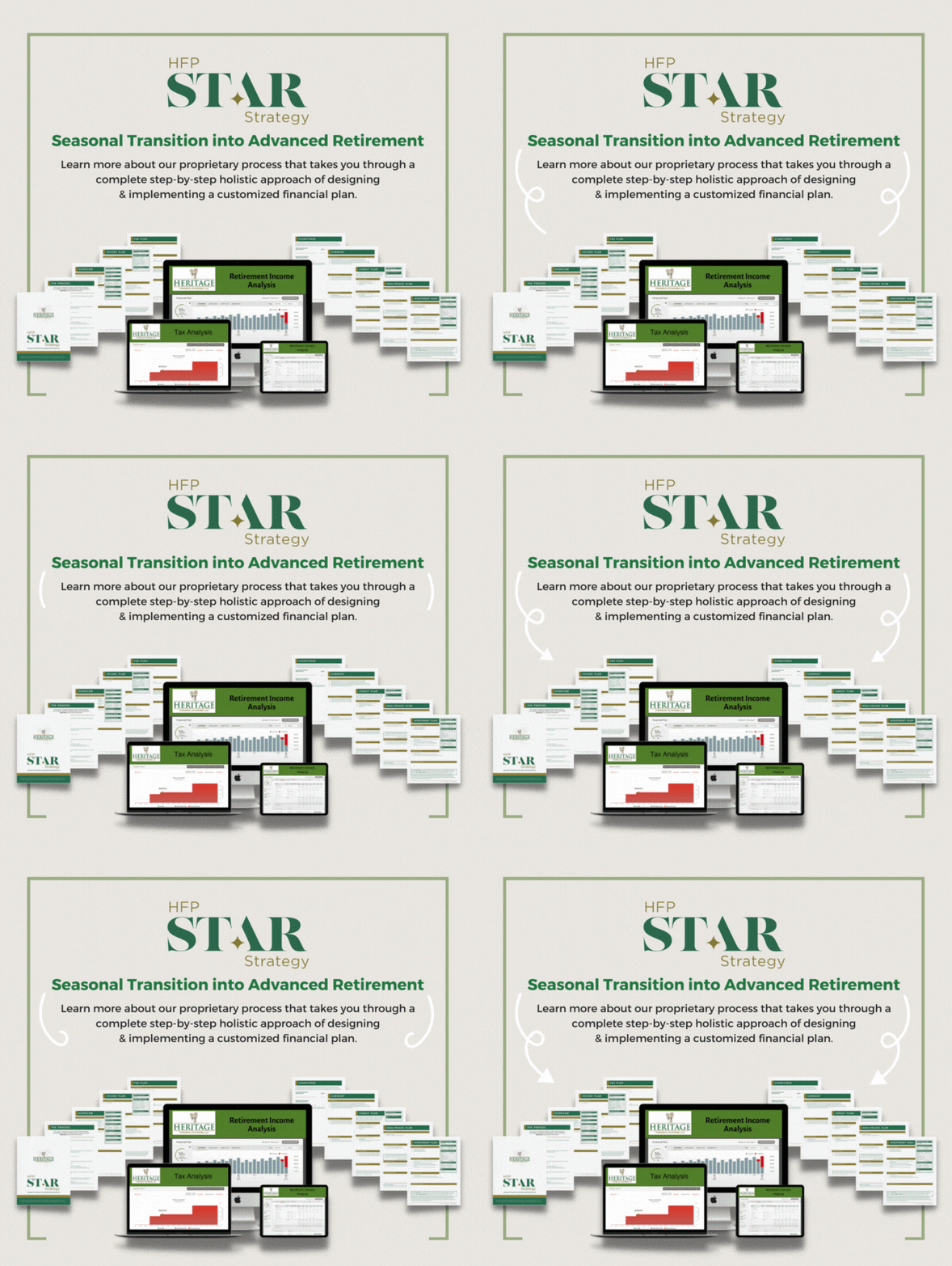
Click here to learn more about our HFP STAR Strategy process.
Sources:
1. Internal Revenue Service (IRS) – irs.gov
2. CFP Board – cfp.net
3. Heritage Financial Planning – heritagefinancialplanning.net