




Retirement planning requires discipline long before retirement begins. Saving consistently, investing regularly, and maintaining a long-term perspective are all essential habits during your working years. These behaviors build the financial foundation that supports your future retirement lifestyle.
However, many retirees are surprised to discover that discipline becomes even more important once paychecks stop.
The financial decisions made during retirement can influence income sustainability, tax exposure, and long-term financial stability for decades. While retirement is often imagined as a time to relax and enjoy the freedom earned after years of work, it also introduces a new phase of financial responsibility—one that requires thoughtful planning and ongoing attention.
Understanding why discipline matters in retirement can help individuals and couples approach this next stage of life with greater clarity and confidence.
The Shift From Saving to Spending
During your career, retirement planning largely focuses on accumulation. Contributions grow over time, and investment gains compound alongside those contributions. Paychecks provide stability, and many people contribute regularly to employer-sponsored retirement plans such as 401(k)s or individual retirement accounts (IRAs).
This structure creates a relatively predictable rhythm. Income flows in. Savings grow gradually. Market fluctuations may occur, but continued contributions often help smooth out volatility over time.
Retirement introduces a different phase: distribution.
Instead of adding funds to accounts, retirees begin withdrawing income from them. This shift fundamentally changes how financial planning works.
Now the focus moves from how much you can save to how your savings will support income for the rest of your life. Investment strategies, tax planning, and spending decisions begin interacting in new ways.
For example, retirees must consider:
- How much income can be withdrawn sustainably each year
- Which accounts should be used first for withdrawals
- How taxes may affect retirement income
- How market fluctuations may influence withdrawal strategies
The discipline that once supported saving must now support thoughtful spending and withdrawal decisions.
Why Discipline Matters During Market Volatility
Market fluctuations are a natural part of investing. Economic cycles, geopolitical events, interest rate changes, and investor sentiment can all influence market performance.
During working years, market volatility often feels less personal because contributions continue. Investors may even benefit from buying investments at lower prices when markets decline.
In retirement, however, the relationship with markets changes.
Because retirees may rely on investment assets to generate income, market movements can feel more immediate and emotionally significant. A downturn may raise concerns about whether savings will last long enough.
In these moments, it can feel tempting to make quick changes to investment strategies. Some retirees consider moving entirely into conservative assets after a market decline, while others may attempt to time the market by shifting allocations based on short-term expectations.
While these reactions are understandable, sudden changes can sometimes disrupt long-term strategies designed to balance income needs and growth potential.
Maintaining discipline during periods of volatility helps retirees avoid decisions driven primarily by fear or short-term uncertainty. Instead, disciplined investors focus on the structure of their plan and the long-term objectives it was designed to support.
Income Planning Requires Ongoing Attention
Another reason discipline matters in retirement is that income planning becomes more complex.
Many retirees receive income from multiple sources, including:
- Social Security benefits
- Retirement accounts such as IRAs or 401(k)s
- Taxable investment accounts
- Possible pensions or part-time income
Each of these income streams has different rules, tax implications, and timing considerations.
For example, withdrawals from tax-deferred accounts are generally subject to income tax. Social Security benefits may also be partially taxable depending on total income levels. In addition, Required Minimum Distributions (RMDs) must begin at certain ages under IRS guidelines.
Coordinating these income sources thoughtfully can help retirees manage tax exposure while maintaining consistent income throughout retirement.
This coordination rarely happens automatically. It requires periodic review to ensure the strategy continues to align with changes in income needs, tax rules, and personal circumstances.
Taxes Become More Visible in Retirement
During working years, taxes are often withheld automatically from paychecks, making them feel relatively predictable.
In retirement, taxes can become more noticeable because income may come from multiple sources that are taxed differently.
For example, retirees may face decisions such as:
- When to begin Social Security benefits
- Whether to perform Roth conversions
- How to manage capital gains from taxable accounts
- How RMDs affect annual income levels
Without thoughtful planning, retirees may experience unexpected tax consequences. With discipline and proactive review, however, tax strategies can often be coordinated more effectively over time.
The goal is not necessarily to minimize taxes in any single year but to consider how decisions today may influence overall tax exposure across retirement.
Why This Matters in Today’s Retirement Landscape
Modern retirement looks very different from previous generations.
In the past, many workers relied on defined benefit pensions that provided predictable income for life. Today, retirement income more commonly depends on personal savings, investment portfolios, and Social Security benefits.
At the same time, life expectancies have increased. It is not uncommon for retirement to last 25 or 30 years—or even longer.
This extended timeline means retirement planning must account for multiple decades of potential economic changes, market cycles, healthcare costs, and lifestyle shifts.
In this environment, discipline becomes an important stabilizing force. Rather than attempting to predict every future development, disciplined retirees focus on maintaining strategies that can adapt gradually over time.
A Structured Planning Framework
At Heritage Financial Planning, we recognize that retirement is not a single event. It is a series of evolving phases, each with unique financial considerations.
To help clients navigate this transition, we developed the HFP S.T.A.R. Strategy—Seasonal Transition into Advanced Retirement.
This structured planning process is designed to guide clients through the key stages of retirement by focusing on four essential areas:
- Income planning
- Tax efficiency
- Risk management
- Long-term financial clarity
By reviewing these elements regularly, retirees can maintain discipline without feeling restricted. Instead of reacting to every market headline or economic development, they can rely on a thoughtful framework that adapts as retirement unfolds.
The goal is not perfection. It is preparation.
Looking Ahead
Retirement discipline is not about rigidity. It is about consistency—maintaining thoughtful strategies even when conditions change.
Markets will experience periods of growth and decline. Tax rules may evolve. Personal priorities may shift over time. A disciplined retirement plan allows individuals and families to navigate these changes without losing sight of long-term objectives.
For many retirees, the most valuable step is simply reviewing their plan periodically to ensure it still aligns with their lifestyle goals and financial realities.
If you would like to review how your retirement strategy supports long-term income stability, Heritage Financial Planning is here to help guide that process. Through our HFP S.T.A.R. Strategy, we work with individuals and families to create retirement plans designed to evolve thoughtfully alongside life’s changes.
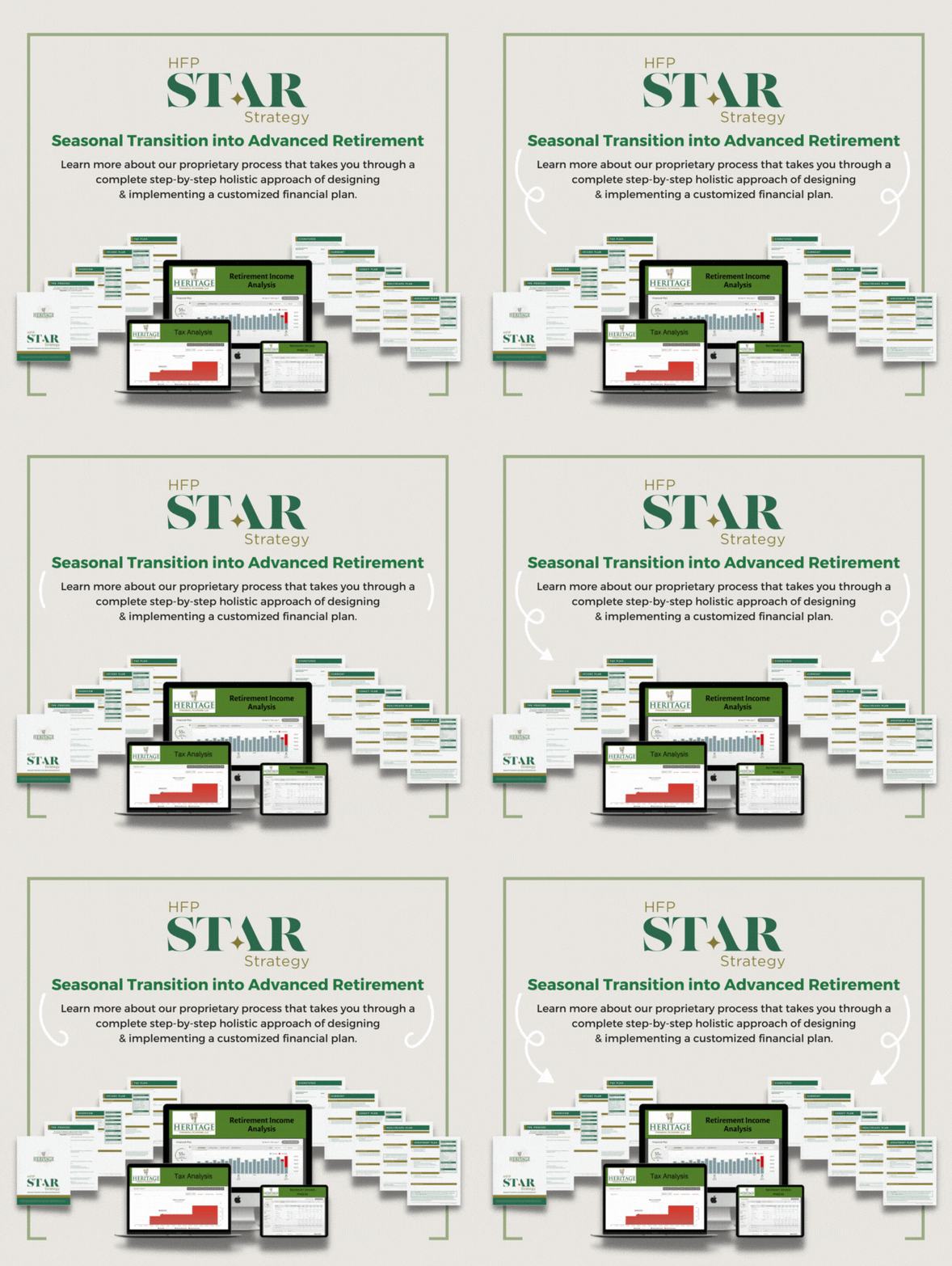
Click here to learn more about our HFP STAR Strategy process.
Sources:
1. Internal Revenue Service – irs.gov
2. CFP Board – cfp.net
3. FINRA – finra.org
4. Heritage Financial Planning – heritagefinancialplanning.net