


Living longer is often viewed as a positive outcome—and it is. Advances in healthcare, lifestyle awareness, and overall quality of life have made it increasingly common for people to spend decades in retirement.
But while longevity is something to celebrate, it also introduces new considerations for retirement planning.
Living longer doesn’t just mean your money needs to last longer. It means your income, healthcare needs, lifestyle priorities, and financial strategy will all evolve over time. Retirement is no longer a short phase—it’s a dynamic, multi-decade journey that requires flexibility and thoughtful planning.
Understanding longevity as more than just a number can help you approach retirement with greater clarity and confidence.
Why Longevity Changes the Planning Mindset
For many people, retirement planning begins with a simple question: Do I have enough?
While this is an important starting point, longevity shifts the conversation toward a more complex question: Will my plan continue to work over time?
A retirement that lasts 25 to 30 years—or longer—introduces multiple layers of uncertainty. Markets will fluctuate. Inflation will impact purchasing power. Healthcare costs may increase. Personal goals and priorities may shift.
A plan that works well in the early years of retirement may not look the same in later years.
This is why longevity planning is not just about extending a timeline. It’s about preparing for change.
Income Planning Over a Longer Horizon
One of the most immediate impacts of longevity is on income planning.
When retirement spans multiple decades, income must be structured not only to meet today’s needs but also to adapt over time. This includes considering how income sources will evolve and how they interact with each other.
For example, early retirement may rely more heavily on personal savings, while later years may incorporate Social Security benefits or Required Minimum Distributions (RMDs). Each of these stages introduces different tax implications and planning considerations.
A thoughtful income strategy considers not only how much income is needed, but how it will be sustained across different phases of retirement.
Healthcare Becomes a Larger Part of the Picture
As longevity increases, healthcare becomes a more prominent factor in retirement planning.
While it’s difficult to predict specific healthcare needs, it is reasonable to expect that costs may increase over time. This can include routine care, insurance premiums, and potentially long-term care considerations.
Planning for longevity means acknowledging that healthcare is not a static expense. It evolves alongside age and personal circumstances.
Incorporating flexibility into your plan can help account for these changes without disrupting your overall financial strategy.
Lifestyle and Spending Patterns Change
Another important aspect of longevity planning is recognizing that spending patterns are not constant.
In the early years of retirement, spending may be higher due to travel, hobbies, and lifestyle activities. This is often a time of exploration and flexibility.
As retirement progresses, spending may shift toward more routine expenses, with a greater emphasis on stability and predictability. Later in retirement, priorities may continue to evolve, and simplicity often becomes more valuable.
A plan built around a fixed spending assumption may not fully capture these changes. Instead, longevity planning encourages a more adaptable approach—one that reflects how life unfolds over time.
Why Flexibility Is Essential
Perhaps the most important takeaway from longevity planning is the need for flexibility.
It is not realistic to predict every variable that may arise over a 20- or 30-year retirement. Markets will change, tax rules may evolve, and personal circumstances will shift.
Rather than trying to anticipate every outcome, effective planning focuses on building a framework that can adapt.
This includes:
- Adjusting income strategies as needed
- Revisiting investment allocations over time
- Evaluating tax implications across different phases
- Aligning financial decisions with changing priorities
Flexibility does not mean uncertainty—it means being prepared to make thoughtful adjustments when needed.
Why This Matters in Today’s Retirement Landscape
Today’s retirees face a different environment than previous generations.
Many individuals are responsible for managing their own retirement income rather than relying on traditional pensions. At the same time, longer life expectancies mean that financial decisions must support a longer timeline.
Economic conditions, inflation, and healthcare costs all play a role in shaping retirement outcomes. Over time, even small changes in these factors can influence how a plan performs.
This makes longevity planning not just helpful—but essential.
By approaching retirement as a long-term, evolving phase, individuals can create strategies that remain aligned with their goals over time.
A More Adaptive Approach to Retirement Planning
At Heritage Financial Planning, we help clients move beyond static assumptions and toward a more dynamic approach.
Through our HFP S.T.A.R. Strategy (Seasonal Transition into Advanced Retirement), we guide individuals and families through the different phases of retirement, focusing on income planning, tax efficiency, risk management, and long-term clarity.
This approach recognizes that retirement is not a single stage, but a series of transitions. By reviewing and adjusting strategies over time, clients can maintain confidence even as circumstances change.
The goal is not to create a perfect plan, but to create one that evolves.
Moving Forward with Confidence
Longevity is one of the greatest opportunities of modern retirement—but it also requires a different kind of planning.
By understanding how income, healthcare, lifestyle, and financial strategies evolve over time, you can build a plan that supports not just how long you live, but how well you live.
If your current retirement plan has not been reviewed with longevity in mind, this may be a valuable time to take a closer look.
At Heritage Financial Planning, we work with individuals and families to develop strategies designed to adapt across every phase of retirement. Through our HFP S.T.A.R. Strategy, we provide a structured, personalized approach that helps bring clarity and confidence to long-term planning.
If you’d like to explore how your plan aligns with a longer retirement horizon, we invite you to schedule a conversation with our team.
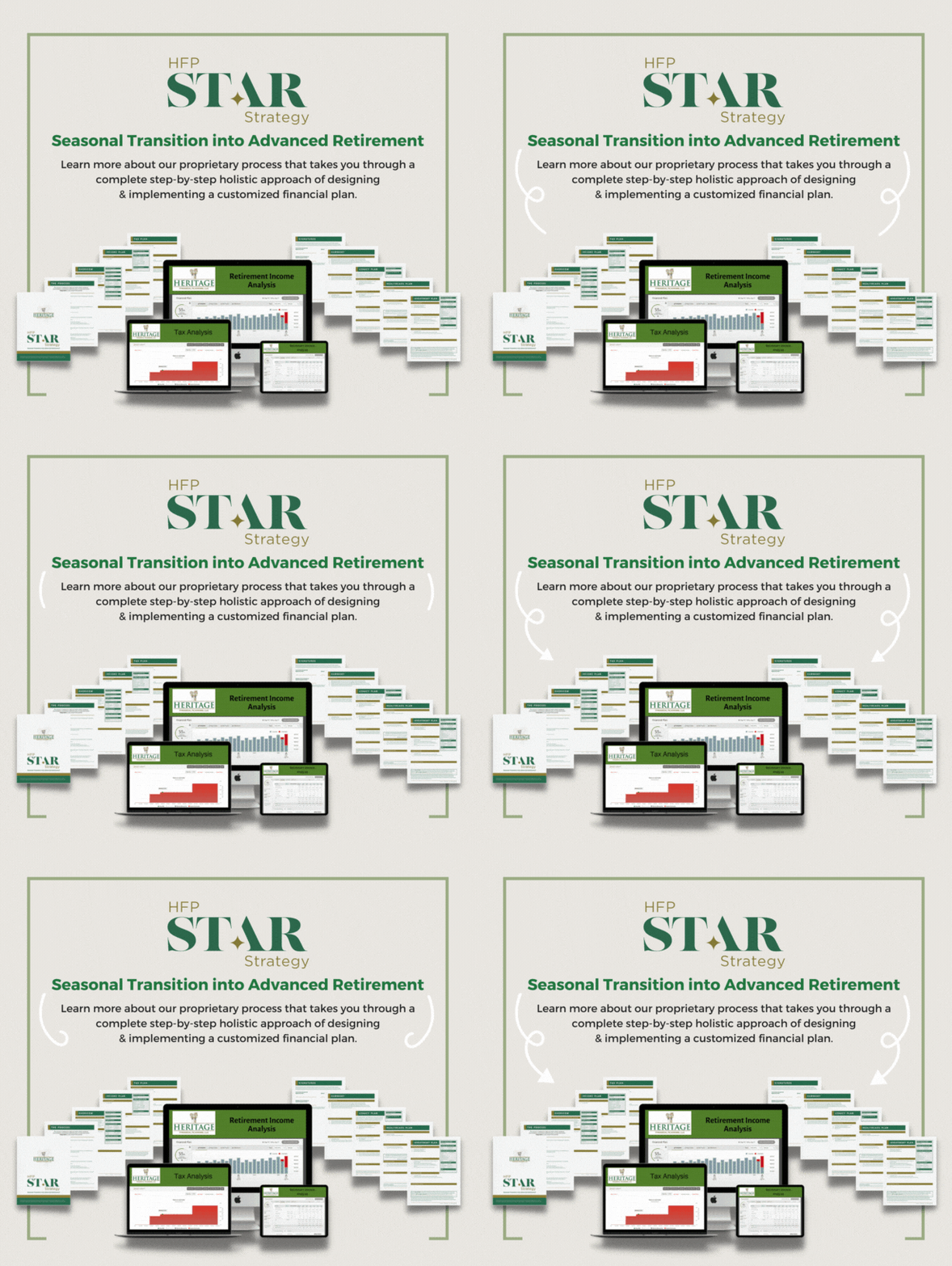
Click here to learn more about our HFP STAR Strategy process.
Sources:
1 . Social Security Administration (SSA) – Life Expectancy and Retirement Planning Tools
https://www.ssa.gov/benefits/retirement/planner/lifeexpectancy.html
2 . Fidelity Investments – Retirement Health Care Costs and Planning
https://www.fidelity.com/viewpoints/retirement/health-care-costs
3 . U.S. Department of Health & Human Services – Aging and Long-Term Care Resources
https://acl.gov