




Retirement planning can feel complex on its own. When two people are involved—each with their own experiences, comfort levels, and financial instincts—it can feel even more complicated.
It’s very common for spouses to approach retirement with different attitudes toward risk. One partner may prioritize long-term growth and feel comfortable with market fluctuations. The other may value stability and worry about protecting what has already been saved. Neither approach is wrong. In fact, both perspectives are valid—and often necessary.
The challenge isn’t the difference itself. The challenge is learning how to plan together in a way that respects both viewpoints while keeping the retirement lifestyle you both want in focus.
Why Risk Tolerance Differences Are So Common
Risk tolerance is shaped by more than numbers. It’s influenced by personality, work history, past market experiences, and even family upbringing.
For example:
-
A spouse who lived through a significant market downturn while nearing retirement may feel cautious about future volatility.
-
A partner who has worked in a growth-oriented industry may be more comfortable with calculated investment risk.
-
One spouse may think primarily about income stability.
-
The other may focus on preserving purchasing power over a 25–30 year retirement.
These differences don’t signal a problem. They reflect life experience.
The key is recognizing that retirement planning isn’t about choosing one mindset over the other. It’s about integrating both into a coordinated strategy.
Reframing the Conversation
Many couples unintentionally frame retirement decisions around market performance:
“Should we take more risk?”
“Should we move everything to safety?”
While investment allocation is important, it’s often more productive to shift the discussion toward lifestyle goals.
Questions such as:
-
What level of monthly income do we need to feel comfortable?
-
How important is flexibility for travel or family support?
-
What does financial security mean to each of us?
-
How do we want our plan to adjust if markets experience volatility?
When decisions are anchored in lifestyle priorities instead of short-term market movements, conversations become less emotional and more collaborative.
The Importance of a Coordinated Income Plan
In retirement, income planning often becomes more important than portfolio performance alone.
Couples typically draw income from multiple sources:
-
Social Security benefits
-
Retirement accounts such as 401(k)s or IRAs
-
Taxable investment accounts
-
Possibly pensions or part-time income
Each of these income streams carries different tax implications and timing considerations. According to guidance from the IRS and Social Security Administration, coordination matters when determining withdrawal strategies and claiming decisions.
A structured retirement income strategy can help couples understand:
-
How much income can be sustainably distributed
-
How tax exposure may change year to year
-
How to adjust income during periods of market volatility
-
How to preserve flexibility for unexpected expenses
When both spouses see how income planning works within the broader retirement strategy, differences in risk tolerance often feel less threatening.
Why This Matters in Today’s Retirement Landscape
Modern retirement can span decades. Market cycles, inflation, healthcare costs, and evolving tax rules all require thoughtful attention.
Today’s retirees are also more responsible for their own financial outcomes than previous generations. Defined contribution plans have largely replaced pensions, meaning couples must manage longevity risk and market risk simultaneously.
In this environment, overly aggressive investing may create unnecessary stress for one spouse. At the same time, overly conservative positioning may increase long-term purchasing power concerns for the other.
A balanced, diversified approach—grounded in income planning and risk management—helps bridge this gap.
Common Mistakes to Watch For
When couples struggle with risk differences, a few patterns often appear:
-
Allowing one spouse to dominate financial decisions without full discussion
-
Avoiding difficult conversations altogether
-
Making reactive portfolio changes during market volatility
-
Ignoring tax planning when reallocating assets
Open dialogue and structured planning can prevent these issues from escalating.
Blending Growth and Stability
Successful retirement planning doesn’t require identical risk tolerance. It requires alignment.
A thoughtful strategy may include:
-
Growth-oriented investments to help offset inflation over time
-
More stable assets to support short- and mid-term income needs
-
Cash reserves for near-term expenses
-
Periodic portfolio reviews to adjust as retirement progresses
This type of layered approach acknowledges both partners’ concerns.
The goal isn’t to eliminate risk entirely—because that’s rarely realistic. It’s to manage risk intentionally within a broader financial planning framework.
A Holistic Approach to Joint Retirement Planning
At Heritage Financial Planning, we recognize that retirement decisions are rarely just about numbers. They involve trust, communication, and clarity.
Our approach focuses on:
-
Income coordination
-
Tax efficiency
-
Risk management
-
Long-term lifestyle sustainability
Rather than asking couples to choose between “growth” or “safety,” we help them build a retirement strategy that reflects shared priorities and adapts over time.
The HFP S.T.A.R. Strategy—Seasonal Transition into Advanced Retirement—provides a structured, phased process for navigating retirement transitions. Instead of solving everything at once, we work through income planning, tax considerations, and risk alignment step by step. This often makes discussions more productive and less emotionally charged.
Moving Forward Together
If you and your spouse have different comfort levels around financial risk, you’re not alone—and you’re not doing anything wrong.
Differences can become strengths when approached thoughtfully. A coordinated retirement plan can allow both partners to feel heard, respected, and confident in the direction of their financial future.
Retirement planning is not about proving who is “right.” It’s about building a strategy that supports your shared goals.
If you’d like to review your current retirement strategy or explore how your plan can better reflect both perspectives, we invite you to schedule a conversation with Heritage Financial Planning. Through our HFP S.T.A.R. Strategy, we help couples transition into retirement with clarity, structure, and confidence—at a pace that feels comfortable for both of you.
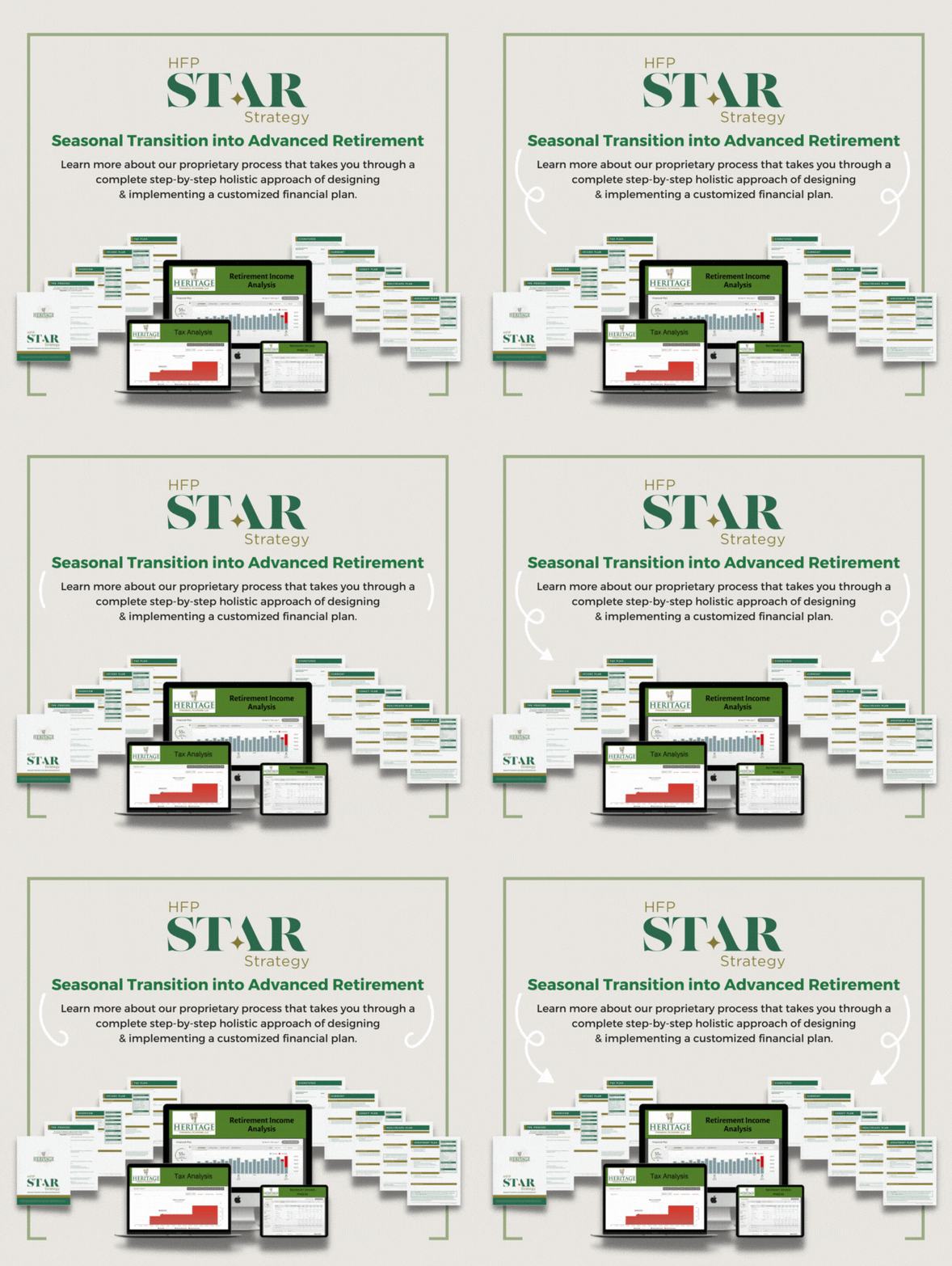
Click here to learn more about our HFP STAR Strategy process.
Sources
1. CFP Board – cfp.net
2. FINRA – finra.org
3. Internal Revenue Service (IRS) – irs.gov
4. Social Security Administration – ssa.gov