




Market volatility often receives significant attention in financial news. Sharp market swings—whether up or down—tend to dominate headlines and conversations. For retirees and those approaching retirement, these movements can feel especially personal. After all, your savings are no longer just growing in the background—they are now a key source of income.
Recent global events—including geopolitical tensions and conflicts that have influenced energy prices, supply chains, and market sentiment—have added another layer of uncertainty. When these events make headlines, it can feel like markets are reacting to forces beyond anyone’s control.
It’s completely understandable that periods of volatility can create concern.
But volatility itself is not always the problem it is sometimes portrayed to be.
Understanding what volatility actually means—and just as importantly, what it doesn’t—can help retirees approach market fluctuations with greater confidence and clarity.
Volatility Is a Normal Part of Investing
Financial markets have always experienced cycles of growth, decline, and recovery. These movements reflect a combination of economic conditions, interest rates, corporate performance, global events, and investor behavior.
While current geopolitical developments may feel unique, markets have historically responded to a wide range of global events—economic shifts, political changes, and international conflicts among them.
Organizations such as FINRA emphasize that short-term market movements do not necessarily determine long-term outcomes. Markets rarely move in a straight line, and periods of uncertainty have historically been followed by periods of recovery and growth.
For retirees, recognizing that volatility is expected—not exceptional—can help reduce the emotional weight associated with market swings.
Why Volatility Feels Different in Retirement
Even though volatility is normal, it often feels different once you retire.
During your working years, market fluctuations may have felt less impactful because you were still contributing to your accounts. In fact, lower market prices during downturns could even present opportunities to accumulate investments at reduced values.
In retirement, however, the dynamic changes.
Instead of contributing to your portfolio, you may begin withdrawing from it. This shift can make market declines feel more immediate, as retirees naturally begin to wonder how fluctuations might affect their income and long-term sustainability.
When market movements are tied to global headlines—such as geopolitical tensions or disruptions in energy markets—it can amplify that concern, making volatility feel more personal than it actually is.
This is where perspective becomes especially important.
Volatility is not inherently harmful—but how your plan interacts with volatility matters.
Volatility vs. Income Strategy
For retirees, the key concern is not market volatility itself, but how withdrawals align with market conditions.
This is why retirement planning often emphasizes income coordination and diversification.
A well-structured retirement strategy may include:
-
Investments designed for long-term growth
-
Assets intended to support short- and mid-term income needs
-
Cash reserves or conservative allocations for near-term withdrawals
This layered approach allows retirees to draw income without relying entirely on investments that may be experiencing short-term volatility.
For example, during periods when markets are reacting to global uncertainty, a retiree may rely more heavily on stable income sources or reserves rather than adjusting their entire investment strategy.
The goal is not to eliminate volatility—it is to plan for it.
Why Planning Reduces Emotional Pressure
One of the most overlooked benefits of a well-designed retirement plan is the sense of clarity it provides.
When retirees understand how their income strategy is structured, volatility often becomes easier to tolerate. Instead of reacting to each market movement—or each headline—they can rely on the framework of their plan.
Without that structure, market fluctuations can feel unpredictable and stressful. With it, volatility becomes something to monitor—not something that requires immediate action.
This distinction can make a meaningful difference in how retirement feels on a day-to-day basis.
Why This Matters in Today’s Retirement Landscape
Today’s retirees face a different financial landscape than previous generations.
Longer life expectancies mean retirement can last 25 to 30 years or more. Over that time, it is almost certain that markets will experience multiple periods of volatility—including those influenced by global economic and geopolitical events.
At the same time, many retirees rely more heavily on personal savings and investment portfolios than on traditional pensions. This places greater importance on how portfolios are structured and how income is generated.
Additionally, factors such as inflation, healthcare costs, and evolving tax rules can influence retirement planning over time—sometimes in ways that are connected to broader global developments.
In this environment, avoiding volatility altogether is not realistic. Instead, successful retirement planning focuses on building strategies that can adapt to changing conditions while continuing to support long-term goals.
Common Mistakes to Watch For
When volatility increases—especially during periods of global uncertainty—retirees sometimes feel pressure to act quickly. While this reaction is understandable, certain behaviors can unintentionally create additional challenges:
-
Making sudden portfolio changes based on short-term market movements
-
Attempting to time the market in response to headlines
-
Moving entirely to conservative assets without considering long-term income needs
-
Losing focus on income planning and tax coordination
Recognizing these tendencies can help retirees pause, reflect, and evaluate decisions within the context of their overall plan.
A Balanced Perspective
Volatility can feel uncomfortable—but discomfort does not necessarily mean danger.
A thoughtful retirement strategy anticipates that markets will fluctuate and incorporates flexibility to navigate those changes. Rather than reacting to every movement, disciplined planning focuses on maintaining alignment with long-term objectives.
At Heritage Financial Planning, we help clients approach volatility with perspective through our HFP S.T.A.R. Strategy (Seasonal Transition into Advanced Retirement). This structured process emphasizes income coordination, tax awareness, and risk management—helping clients understand how each piece of their plan works together.
When the plan is clear, market fluctuations—and even headline-driven uncertainty—often feel more manageable.
Moving Forward With Confidence
Market volatility is a natural part of investing, and it is likely to occur at various points throughout retirement—including during times of global uncertainty.
The goal is not to avoid it entirely, but to understand how your plan is designed to respond when it happens.
If recent market activity—or global headlines—have caused you to question your strategy, it may be helpful to review your current plan. A thoughtful conversation can often provide clarity and reassurance—helping you stay focused on what matters most over the long term.
At Heritage Financial Planning, we work with individuals and families to build retirement strategies designed to evolve alongside changing markets and life circumstances. Through our HFP S.T.A.R. Strategy, we provide a structured, personalized approach that supports confidence—not just during calm markets, but during uncertain ones as well.
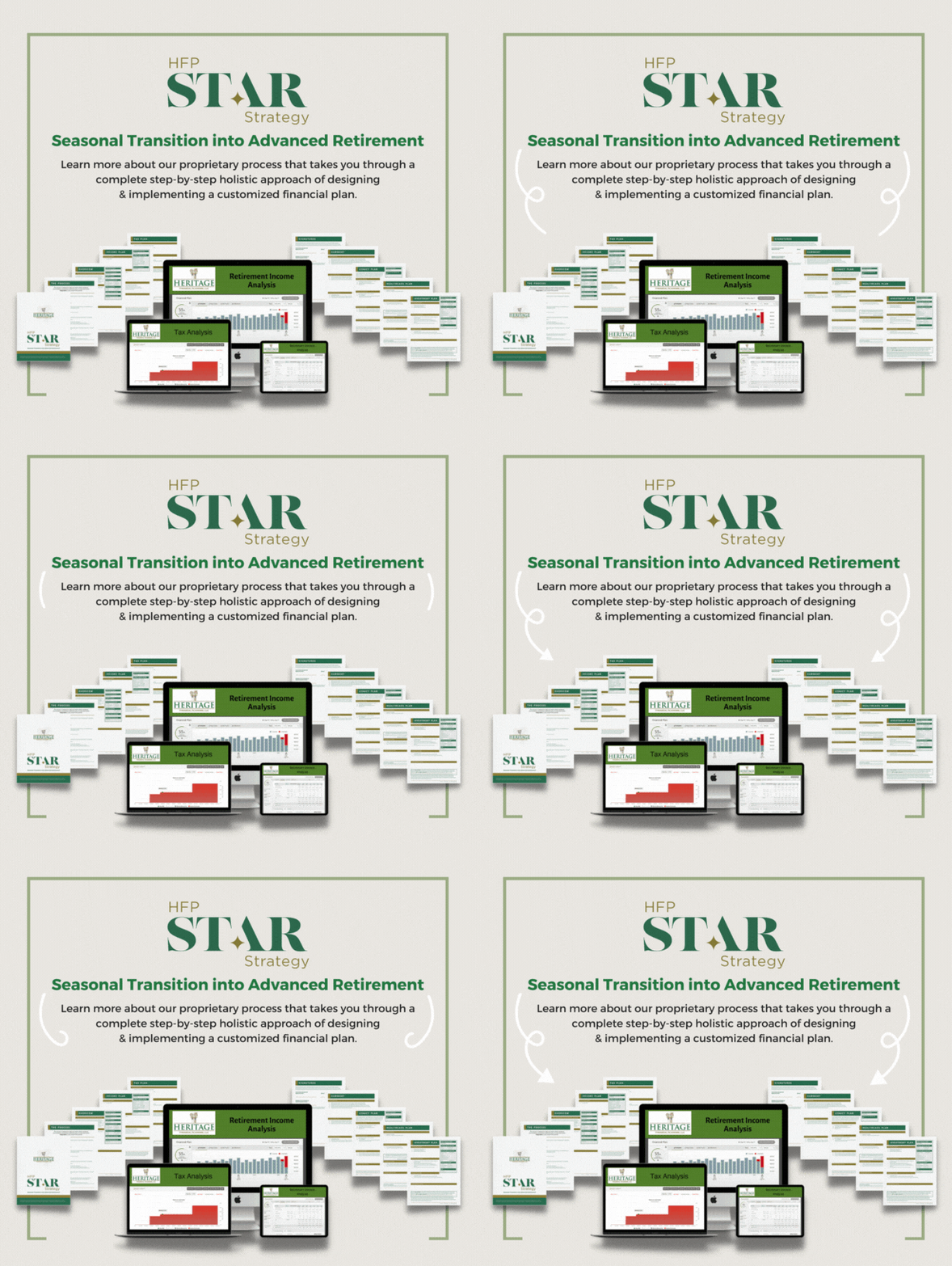
Click here to learn more about our HFP STAR Strategy process.
Sources:
- FINRA – finra.org
- CFP Board – cfp.net
- Reuters – reuters.com
- Associated Press (AP News) – apnews.com
- U.S. Energy Information Administration (EIA) – eia.gov