



One of the most common concerns among retirees is finding the right balance between growth and security.
After years of saving and building a portfolio, it’s natural to want to protect what you’ve accumulated. At the same time, retirement may last 25 to 30 years—or longer—which means your investments still need the potential to grow over time.
This creates a tension many retirees feel:
How do I stay invested without feeling overly exposed to market risk?
The answer isn’t about choosing between growth and safety. It’s about understanding how to balance both in a way that supports your long-term goals.
Understanding Risk in Retirement
Risk in retirement is often associated with market fluctuations, but in reality, it takes several different forms:
- Market risk – The possibility that investment values fluctuate due to economic or market conditions
- Inflation risk – The risk that rising costs reduce your purchasing power over time
- Longevity risk – The possibility of outliving your savings
- Tax risk – The impact of changing tax rules or inefficient withdrawal strategies
Each of these risks plays a role in retirement planning. Focusing too heavily on one while ignoring others can unintentionally create imbalances.
For example, moving entirely into conservative investments may reduce short-term market exposure—but it could also increase the risk that your portfolio doesn’t keep pace with inflation over time.
Similarly, focusing only on growth without considering income stability may create unnecessary stress during periods of market volatility.
A balanced retirement strategy acknowledges that risk cannot be eliminated—but it can be managed.
Why This Feels Different in Retirement
During your working years, managing risk often feels more straightforward. You are contributing to your accounts regularly, and time provides flexibility to recover from market downturns.
In retirement, however, the dynamic changes.
Instead of contributing to your portfolio, you begin relying on it. Withdrawals replace contributions, and your investments now serve a different purpose: supporting your income.
This shift can make market fluctuations feel more immediate and personal.
Even normal market movements may feel uncomfortable when tied directly to your financial security. As a result, some retirees consider stepping away from the market entirely to avoid that discomfort.
While this reaction is understandable, it can create new challenges if it reduces the long-term sustainability of your plan.
The Role of Diversification
One of the most effective ways to balance growth and security is through diversification.
Diversification involves spreading investments across different asset types, time horizons, and purposes. Instead of relying on a single strategy, a diversified approach allows different parts of your portfolio to serve different roles.
For example:
- Some investments may focus on long-term growth to help offset inflation
- Others may prioritize stability and income for near-term needs
- Cash or conservative assets may be used to support shorter-term expenses
This type of structure can help retirees feel more comfortable staying invested, even during periods of market volatility.
Rather than viewing the portfolio as a single entity, diversification allows it to function as a coordinated system.
Income Planning as a Stabilizing Factor
Investment strategy is only one part of retirement planning. Income planning plays an equally important role.
Retirement income often comes from multiple sources, such as Social Security, retirement accounts, taxable investments, and, in some cases, pensions. Coordinating these sources thoughtfully can help create a more stable income stream.
For example, having a plan for which accounts to draw from—and when—can help reduce the need to make reactive decisions during market downturns.
A well-structured income plan can also provide clarity. When retirees understand where their income is coming from and how it is supported, market fluctuations often feel less disruptive.
Why Regular Reviews Matter
Even a well-designed retirement plan should not remain static.
Life changes. Markets evolve. Tax rules shift. Personal priorities adjust over time.
Periodic reviews help ensure that your plan continues to align with your goals. These reviews are not necessarily about making frequent changes, but about confirming that your strategy remains appropriate.
For example, a review might identify opportunities to:
- Adjust withdrawal strategies
- Rebalance investments
- Improve tax efficiency
- Align risk exposure with current needs
These small, thoughtful adjustments can help maintain balance over time.
A Thoughtful Planning Approach
At Heritage Financial Planning, we recognize that retirement is not about choosing extremes. It is about creating a strategy that reflects your unique goals, concerns, and circumstances.
Through our HFP S.T.A.R. Strategy (Seasonal Transition into Advanced Retirement), we help clients structure retirement plans that balance income stability with long-term growth potential.
This approach focuses on:
- Coordinating income sources
- Managing tax exposure
- Structuring investments to align with time horizons
- Reviewing plans as retirement evolves
Rather than reacting to short-term market changes, clients can rely on a strategy designed to adapt over time.
The goal is not to remove all uncertainty—but to create a plan that helps you navigate it with greater confidence.
Moving Forward with Clarity
Retirement planning is about balance, not extremes.
It’s not about eliminating risk entirely, nor is it about taking unnecessary risks in pursuit of growth. It’s about finding a thoughtful middle ground—one that supports both your current lifestyle and your long-term financial security.
If you’ve found yourself questioning whether your current strategy strikes that balance, you’re not alone. Many retirees revisit their plans as their needs and priorities evolve.
At Heritage Financial Planning, we help individuals and families evaluate how their retirement plans manage risk while supporting long-term goals. Through our HFP S.T.A.R. Strategy, we provide a structured, personalized process designed to help you move forward with clarity, confidence, and a sense of control over your financial future.
If you’d like to review your current plan or explore how it can better align with your retirement goals, we invite you to schedule a conversation with our team.
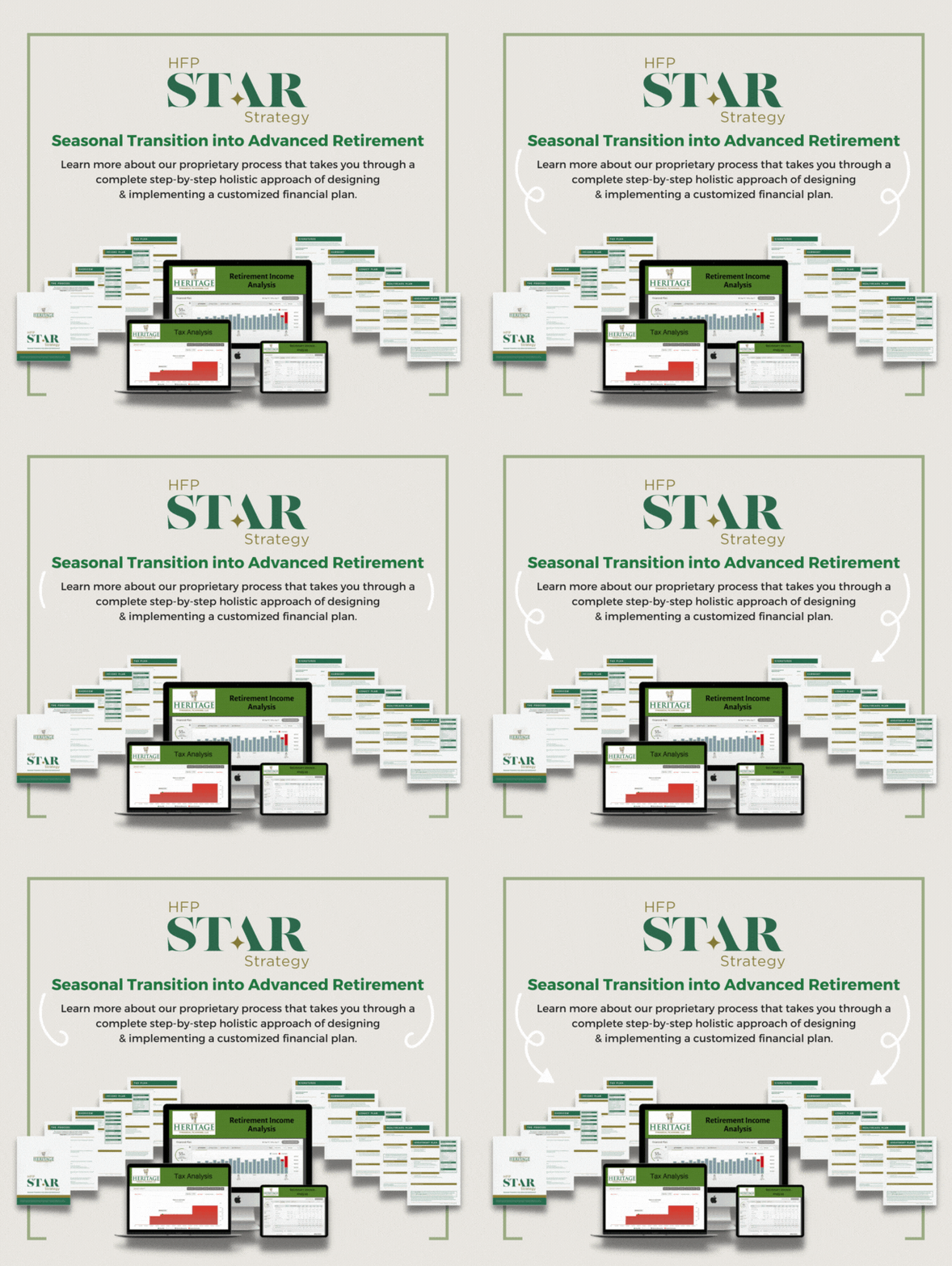
Click here to learn more about our HFP STAR Strategy process.
Sources
- S. Securities and Exchange Commission (SEC) – Investor Bulletin: Asset Allocation
https://www.sec.gov/oiea/investor-alerts-and-bulletins/ib_assetallocation - Vanguard – Principles for Investing Success
https://investor.vanguard.com/investor-resources-education - Morningstar – Portfolio Diversification and Risk Management Insights
https://www.morningstar.com/portfolio-strategy