




For many people approaching retirement, decision-making suddenly feels heavier than it did earlier in life. Even individuals who have saved consistently, worked with professionals, and done “everything right” often find themselves hesitating. Simple questions—Should I retire now or wait another year? Should we adjust income? Should we change investments?—can feel surprisingly difficult to answer.
This hesitation is rarely a sign of poor preparation or lack of intelligence. More often, it’s the result of uncertainty—and the emotional weight that comes with a major life transition.
Why Retirement Decisions Carry More Emotional Weight
One of the biggest reasons retirement decisions feel harder is that the structure you relied on for decades begins to change. During your working years, income is predictable. Decisions often feel reversible. If something doesn’t work perfectly, there’s usually another paycheck coming to help smooth things out.
In retirement, that safety net can feel less obvious. When paychecks stop, decisions can feel more permanent. There’s no simple “reset button,” and that perception alone can create pressure. Even well-thought-out choices may feel risky simply because the stakes feel higher.
This emotional shift is normal—but it’s often misunderstood. Many retirees assume their hesitation means something is wrong with their plan, when in reality it reflects a very human response to change.
The Myth of Needing Certainty
Another reason retirement decisions feel so difficult is the belief that you need certainty before moving forward. People often wait for clearer markets, more stable headlines, or perfect timing. Unfortunately, retirement doesn’t come with guaranteed clarity.
Markets fluctuate. Tax rules evolve. Healthcare costs change. Personal priorities shift over time. Waiting for complete certainty can result in extended indecision—not because the plan is flawed, but because certainty is simply unavailable.
Confidence in retirement planning doesn’t come from predicting the future correctly. It comes from knowing your plan can adapt when the future unfolds differently than expected.
Why Flexibility Matters More Than Precision
Many retirement plans are built around precise assumptions—rates of return, fixed spending projections, or static timelines. While these assumptions can be useful starting points, they don’t always reflect real life.
Retirement is rarely linear. Spending patterns change. One spouse may retire earlier than the other. Healthcare costs may increase unexpectedly. Markets will experience both positive and challenging periods.
A flexible strategy allows decisions to feel less final and more adjustable. When you know your plan includes room to adapt—whether that means adjusting income, revisiting tax strategies, or rebalancing risk—decisions feel less intimidating.
Flexibility doesn’t remove uncertainty, but it reduces the fear of getting something “wrong.”
The Role of Emotional Decision-Making
It’s also important to recognize that retirement decisions are not purely financial. They are deeply emotional. Retirement affects identity, routine, purpose, and family dynamics. These factors can quietly influence financial choices, even when spreadsheets look sound.
Fear of making a mistake, concern about burdening loved ones, or anxiety about outliving savings can all slow decision-making. These feelings are common—and they deserve to be acknowledged, not dismissed.
A productive planning process creates space for these conversations. When emotional concerns are addressed alongside financial considerations, clarity often improves naturally.
Breaking Big Decisions Into Manageable Phases
One of the most effective ways to reduce decision fatigue is to stop treating retirement as a single, irreversible event. Retirement is not one decision—it’s a series of transitions that unfold over time.
The HFP S.T.A.R. Strategy (Seasonal Transition into Advanced Retirement) is designed around this reality. Instead of requiring clients to solve everything at once, the process breaks retirement into manageable phases. Each phase focuses on the decisions most relevant to that stage—income coordination, tax efficiency, risk management, and long-term clarity.
By approaching retirement as a progression rather than a deadline, decisions feel less overwhelming. Clarity builds gradually, and confidence grows through understanding rather than pressure.
Why This Matters in Today’s Retirement Landscape
Modern retirement is more complex than it was for previous generations. Longer lifespans, changing tax rules, evolving healthcare costs, and market volatility all require ongoing attention. A static plan built years ago may not reflect today’s reality—or tomorrow’s.
Understanding why decisions feel harder can help retirees stop blaming themselves for hesitation. In many cases, the issue isn’t readiness—it’s the need for a planning framework that acknowledges uncertainty instead of fighting it.
Moving Forward With Confidence
If retirement decisions feel heavier than expected, it doesn’t mean you’re behind or unprepared. It often means you’re thoughtful—and aware that these choices matter.
Confidence in retirement planning doesn’t come from perfect answers. It comes from having a structured, flexible approach that evolves as your life does. Sometimes, a single planning conversation can relieve more stress than months of internal debate.
At Heritage Financial Planning, we help individuals and families navigate these transitions using our HFP S.T.A.R. Strategy, a personalized process designed to support clarity, flexibility, and long-term confidence throughout retirement. If you find yourself hesitating or unsure about your next step, we invite you to schedule a conversation with our team to review your current strategy and explore what comes next—thoughtfully, calmly, and at your pace.
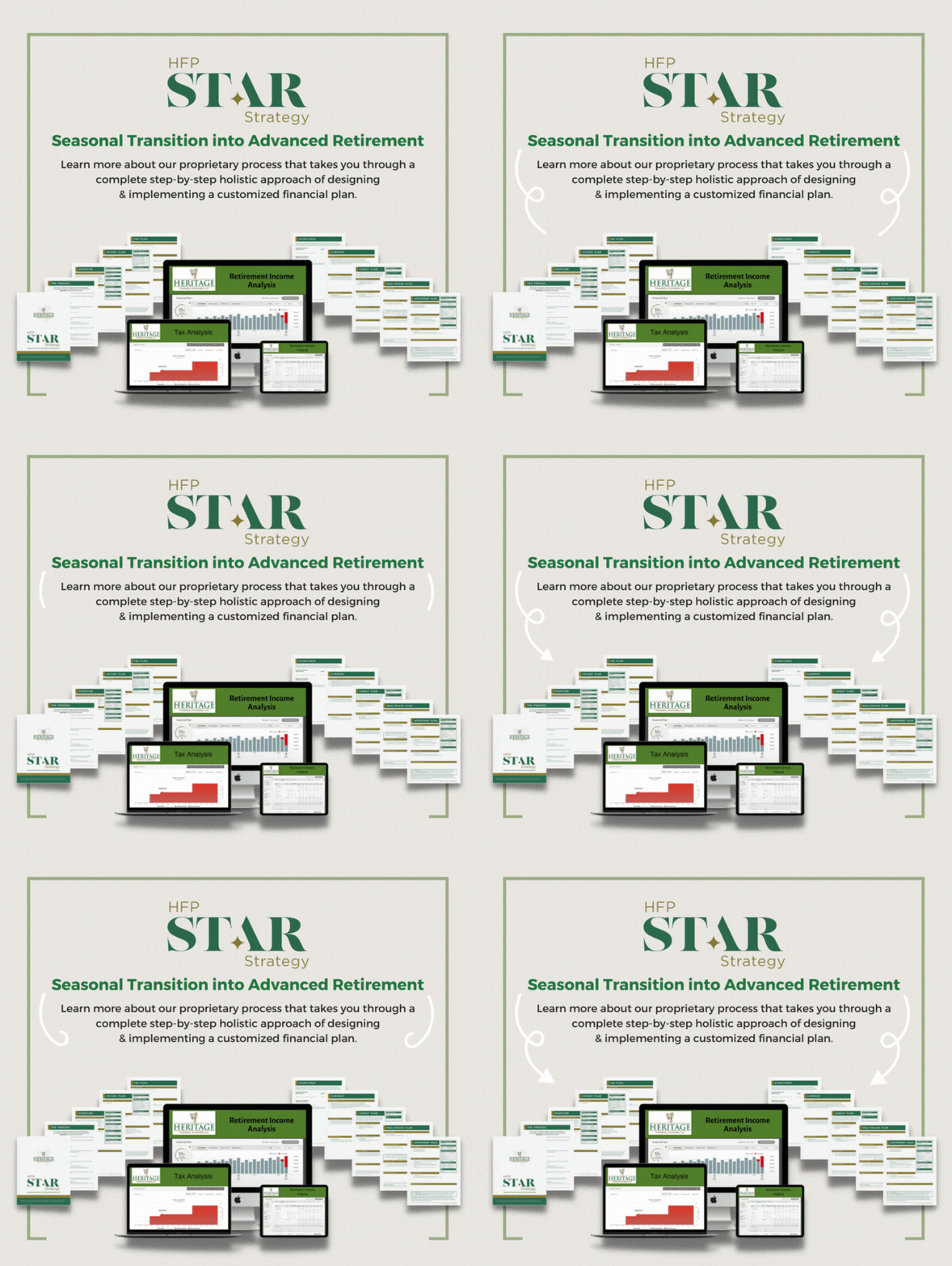
Click here to learn more about our HFP STAR Strategy process.