




When people think about retirement, age is often the first thing that comes to mind.
Some envision retiring at 62 when Social Security benefits become available. Others focus on age 65 because of Medicare eligibility. Still others view full retirement age or a specific birthday as the milestone that determines when retirement begins.
While age plays an important role in retirement planning, it does not determine whether someone is actually ready to retire.
Two individuals who are the exact same age can have dramatically different levels of retirement preparedness. One may be positioned to retire comfortably with confidence and flexibility, while the other may need additional years of planning and preparation.
The difference often has little to do with age itself and much more to do with preparation.
Understanding this distinction can help shift the focus from arbitrary milestones to the factors that truly influence retirement success.
The Myth of the “Right Retirement Age”
Many people spend years asking a simple question:
“What age should I retire?”
While understandable, the question can sometimes be misleading.
Retirement readiness is rarely determined by a single number on a calendar.
In reality, retirement is influenced by a combination of factors including income needs, healthcare planning, taxes, investment strategy, lifestyle goals, and personal priorities. These factors vary significantly from person to person.
Someone who has built a comprehensive retirement plan may be ready to retire earlier than expected. Another individual may choose—or need—to work longer despite reaching traditional retirement milestones.
This is why retirement planning works best when it focuses on readiness rather than age alone.
Financial Readiness Is More Than a Portfolio Balance
One of the biggest misconceptions about retirement is that preparedness can be measured solely by account balances.
While savings are certainly important, retirement readiness extends beyond how much money you’ve accumulated.
The more important question is whether those assets can support the lifestyle you envision.
For example, two retirees may each have a portfolio worth $1 million. However, if one has significant pension income, lower expenses, and a well-coordinated withdrawal strategy, their retirement picture may look very different from someone who relies entirely on portfolio withdrawals.
Retirement readiness is about how the pieces work together—not simply how much exists in any one account.
A strong retirement plan considers income sustainability, tax efficiency, healthcare expenses, inflation, and risk management in addition to investment balances.
Understanding Your Retirement Income Plan
One of the most important elements of retirement readiness is understanding how income will be generated after paychecks stop. During your working years, income arrives consistently. Retirement changes that dynamic completely.
Instead of receiving wages from an employer, retirees often rely on multiple income sources, including:
- Social Security benefits
- Retirement accounts such as IRAs and 401(k)s
- Investment portfolios
- Pensions
- Other savings or income-producing assets
Each source may begin at a different time and carry different tax implications. A retiree who understands how these income streams work together often feels more confident than someone who is focused solely on the size of their portfolio.
Readiness comes from knowing how your plan functions—not just knowing how much you’ve saved.
Healthcare Planning Is a Major Piece of Readiness
Healthcare is another area that often separates retirement preparedness from retirement age. Many individuals underestimate the role healthcare costs play in long-term retirement planning.
Even after becoming eligible for Medicare, retirees may still face premiums, deductibles, prescription costs, and other healthcare-related expenses. Longer life expectancies make healthcare planning increasingly important because healthcare needs tend to evolve over time.
Retirement readiness means having a strategy for addressing these costs rather than hoping they remain manageable.
Retirement Is About Lifestyle, Too
Financial preparedness is only part of the equation. Retirement also introduces significant lifestyle changes. For decades, work provides structure, purpose, routine, and social interaction. Retirement changes all of those things.
Many people spend years preparing financially while spending very little time considering what retirement life will actually look like.
Questions worth considering include:
- How will you spend your time?
- What activities bring fulfillment?
- How will your daily routine change?
- What goals have you postponed during your working years?
Retirement is not simply the absence of work. It is the creation of a new phase of life. Preparing for that transition is just as important as preparing financially.
Why Flexibility Matters More Than Perfection
Many people delay retirement because they feel their plan is not perfect. The reality is that no retirement plan will ever account for every future possibility. Markets will fluctuate. Tax laws may change. Healthcare costs may evolve. Personal priorities will almost certainly shift over time.
The goal is not perfection. The goal is flexibility.
A well-designed retirement plan provides room for adjustments while maintaining a clear overall direction. Retirees who understand this often feel more comfortable making decisions because they know their plan can adapt as circumstances change.
Why This Matters in Today’s Retirement Landscape
Today’s retirees face a different environment than previous generations. People are living longer. Healthcare costs continue to rise. Traditional pensions are less common. Individuals bear greater responsibility for generating and managing their own retirement income.
At the same time, economic conditions can change rapidly. Inflation, interest rates, market volatility, and tax policy all influence retirement planning decisions. These realities make preparation more important than ever.
Retirement readiness is not about reaching a certain age. It is about building a strategy that can support you through a retirement that may last thirty years or more.
A More Comprehensive Approach to Retirement Readiness
At Heritage Financial Planning, we believe retirement readiness should be measured by preparation—not by birthdays. Through our HFP S.T.A.R. Strategy (Seasonal Transition into Advanced Retirement), we help clients evaluate retirement from a comprehensive perspective. This includes income planning, tax efficiency, healthcare considerations, investment strategy, risk management, and long-term lifestyle goals.
Rather than focusing solely on when retirement begins, we focus on helping clients navigate the years that follow. Because retirement isn’t a single event. It’s a multi-decade phase of life that deserves thoughtful preparation.
Moving Forward with Confidence
The question isn’t whether you’ve reached a certain age. The question is whether your plan is prepared to support the retirement you envision.
True retirement readiness comes from understanding how your income, investments, taxes, healthcare plans, and lifestyle goals work together. It comes from having a strategy that can adapt as life evolves.
At Heritage Financial Planning, we help individuals and families evaluate retirement readiness through our HFP S.T.A.R. Strategy, providing a structured and personalized process designed to create clarity and confidence.
If you’re wondering whether your retirement plan is truly ready—not just your age—we invite you to schedule a conversation with our team
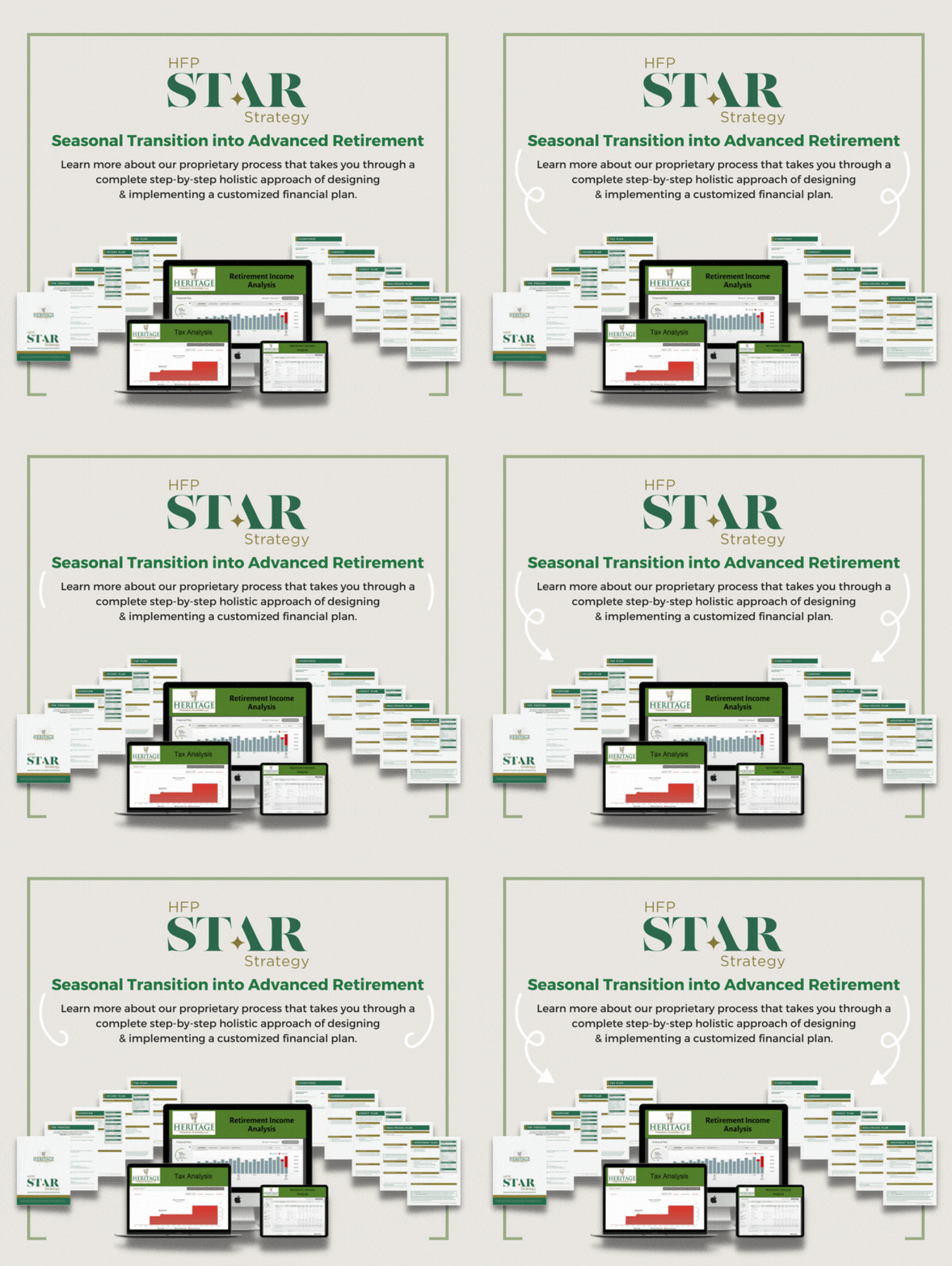
Click here to learn more about our HFP STAR Strategy process.
Sources:
1 .Social Security Administration – Retirement Benefits Overview
https://www.ssa.gov/retirement
2 . Medicare.gov – Medicare Eligibility and Coverage Information
https://www.medicare.gov
3 . Fidelity Investments – Retirement Planning Resources
https://www.fidelity.com/retirement-planning