




Many people spend decades preparing for retirement. They contribute to retirement accounts, pay off mortgages, reduce debt, and work diligently toward a target retirement date. On paper, they appear ready. Their savings have grown, their investments are in place, and retirement feels within reach. Yet for many retirees, there is a gap between what they expected retirement to look like and what retirement actually becomes.
This gap is rarely the result of poor decisions or a lack of effort. More often, it develops because retirement is far more complex than simply reaching a certain account balance. Assumptions that seemed reasonable ten or twenty years ago may not accurately reflect the realities retirees face today.
Understanding this retirement gap can help individuals prepare more effectively, make better decisions, and avoid surprises that could impact their long-term financial confidence.
Expectations vs. Reality
For many people, retirement is imagined as a permanent vacation. After years of work, retirees look forward to traveling, spending time with family, pursuing hobbies, and enjoying a slower pace of life. While these benefits are certainly part of retirement, the reality is often more nuanced. Retirement introduces an entirely new set of financial and personal decisions. Instead of focusing on saving and accumulating assets, retirees must shift their attention toward generating income, managing taxes, controlling healthcare costs, and maintaining financial flexibility for an unknown number of years.
The structure that employment once provided—including a regular paycheck, employer-sponsored healthcare, and retirement plan contributions—disappears. In its place comes the responsibility of creating a sustainable financial strategy that can support decades of retirement living. Many retirees discover that the transition is not simply financial; it’s psychological as well. The habits that helped build wealth are often different from the habits required to spend wealth responsibly and confidently.
The Income Gap
One of the most common retirement gaps involves income expectations. Many individuals focus heavily on the size of their retirement accounts. They may know how much they have saved, but they often have less clarity about how those assets will actually create income throughout retirement. Accumulation and distribution are fundamentally different phases of financial planning.
During your working years, the primary goal is to grow assets. During retirement, the goal becomes creating reliable income while preserving enough flexibility to handle unexpected events.
This raises important questions:
- How much can be withdrawn annually without creating unnecessary risk?
- How should income be generated during market downturns?
- Which accounts should be used first?
- How can income be coordinated with Social Security and other sources?
- How can taxes be managed throughout retirement?
Many retirees discover that having substantial savings and having a sustainable income strategy are not necessarily the same thing. What matters most is not simply how much you’ve accumulated, but whether those assets are structured to support your lifestyle throughout retirement.
The Healthcare Gap
Healthcare is another area where expectations and reality often diverge. While many people understand that healthcare expenses will increase with age, the actual costs can still come as a surprise.
Retirement healthcare expenses may include:
- Medicare premiums
- Medicare supplement or Advantage plan costs
- Prescription medications
- Deductibles and co-pays
- Dental care
- Vision care
- Hearing-related expenses
- Long-term care services
These expenses often rise gradually over time, making them easy to underestimate during the planning process. Additionally, healthcare inflation has historically outpaced general inflation in many areas, meaning costs can increase faster than expected.
The challenge is not simply preparing for healthcare costs today. It’s preparing for how those costs may evolve over the next twenty to thirty years. A comprehensive retirement strategy should consider healthcare as an ongoing component of retirement rather than a one-time expense.
The Longevity Gap
One of the most significant retirement planning challenges is longevity. Advances in healthcare, nutrition, and medical technology have helped many people live longer than previous generations. While increased longevity is a positive development, it also creates new financial considerations.
A retirement that lasts thirty years requires a very different planning approach than one lasting ten or fifteen years. Many retirees underestimate the impact of living longer because it is difficult to visualize just how many financial decisions will occur over multiple decades.
Longer retirements increase exposure to:
- Inflation
- Market volatility
- Healthcare expenses
- Tax law changes
- Unexpected family obligations
- Major life transitions
Retirement is no longer simply about reaching age 65. For many individuals, it involves planning for a multi-decade chapter of life that may be nearly as long as their working career.
The Inflation Gap
Inflation is another retirement reality that often receives less attention than it deserves. Even moderate inflation can significantly impact purchasing power over time. A retiree who spends $60,000 annually today may need substantially more income twenty years from now to maintain the same lifestyle. The challenge is that inflation does not affect every category equally. Housing costs, insurance premiums, healthcare expenses, food prices, and utility costs can all increase at different rates.
Because inflation works gradually, its effects are often overlooked until spending begins to feel noticeably different. Retirement plans that fail to account for inflation risk creating a widening gap between expected purchasing power and actual purchasing power over time.
The Tax Gap
Taxes are another frequently overlooked component of retirement planning. Many individuals assume that taxes will automatically decrease after they stop working. In reality, retirement introduces a new set of tax considerations. Withdrawals from traditional retirement accounts may be taxable. Social Security benefits can be partially taxable. Required Minimum Distributions (RMDs) can increase taxable income. Investment gains may create additional tax obligations.
Without proper planning, taxes can reduce retirement income more than expected. A proactive tax strategy can help retirees better understand how various income sources interact and potentially create opportunities for greater efficiency over time.
Why This Matters Today
Today’s retirees face a retirement landscape that looks very different than it did for previous generations. People are living longer. Healthcare costs continue to rise. Market volatility remains a reality. Tax laws evolve. Inflation impacts everyday expenses.
At the same time, many retirees are seeking more active and fulfilling retirements than previous generations. Travel, second careers, volunteer work, family support, and lifestyle goals all create additional planning considerations.
The retirement gap often emerges not because individuals failed to save, but because their plans were built around assumptions that no longer fully reflect today’s realities.
Bridging the Gap
The good news is that closing the retirement gap does not require perfection. It requires preparation. Successful retirement planning is not about predicting every future event. It is about creating a framework that can adapt as circumstances change.
Regular reviews, thoughtful adjustments, and ongoing monitoring can help retirees stay aligned with their goals while responding to new opportunities and challenges. The most effective retirement plans are often those that remain flexible enough to evolve over time.
A More Adaptive Process
Through the HFP S.T.A.R. Strategy, Heritage Financial Planning helps clients approach retirement as a dynamic process rather than a one-time event.
Rather than focusing solely on asset accumulation, the strategy emphasizes the broader factors that influence retirement success, including:
- Sustainable income planning
- Tax-efficient distribution strategies
- Risk management
- Healthcare considerations
- Long-term flexibility
- Ongoing plan adjustments
Because retirement itself evolves, retirement planning should evolve as well.
Moving Forward
Retirement is not simply a finish line. It is the beginning of a new chapter that may last decades. The decisions made before and during retirement can have lasting effects on income, taxes, healthcare costs, and overall financial confidence. By identifying potential gaps before they become problems, retirees can position themselves to navigate the years ahead with greater clarity and flexibility.
If you’d like to evaluate whether your current retirement strategy addresses the realities of retirement—not just the expectations—our team at Heritage Financial Planning would be happy to start a conversation.
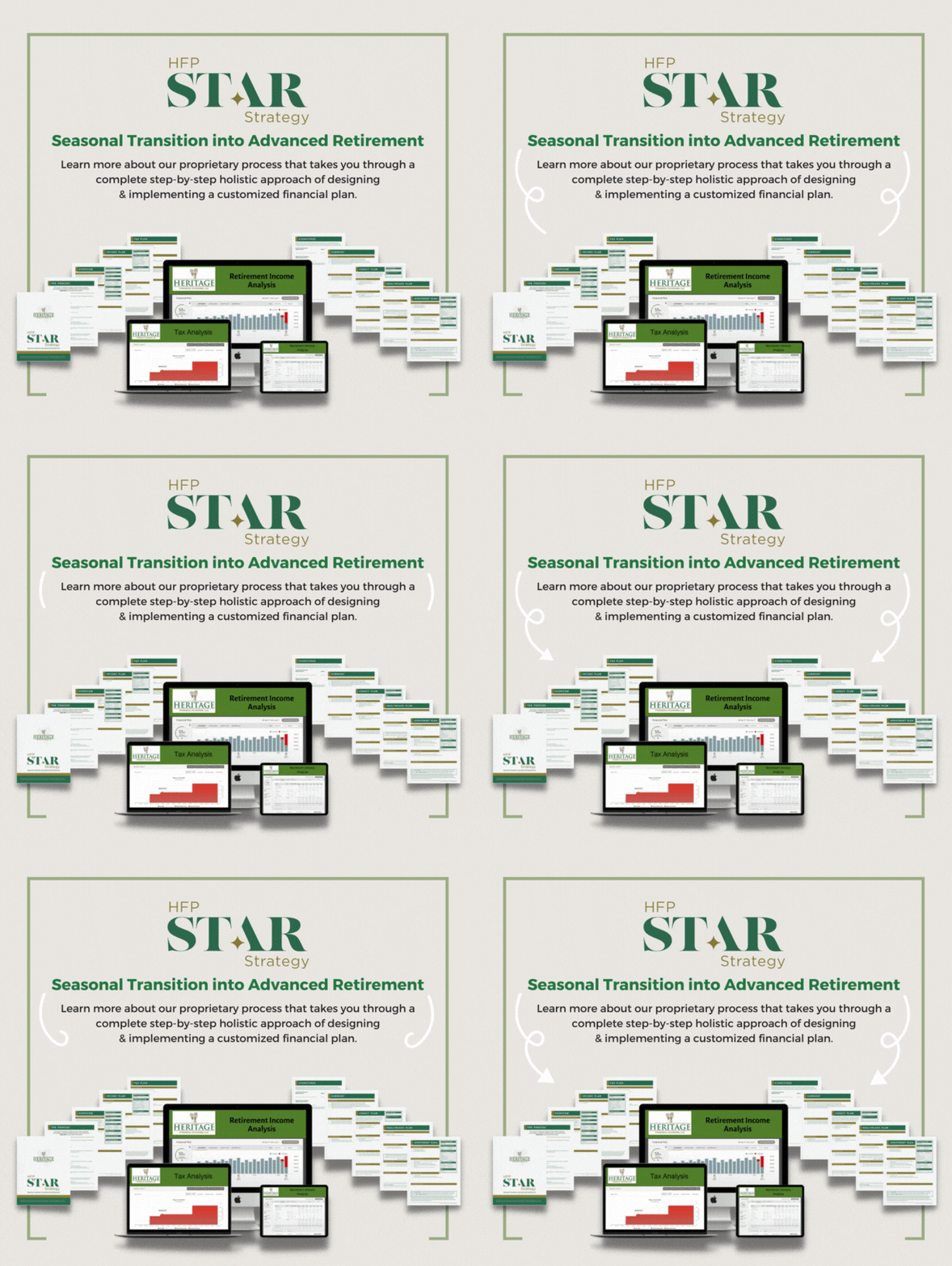
Click here to learn more about our HFP STAR Strategy process.
Sources:
- J.P. Morgan Asset Management. 2025 Guide to Retirement. Available at: https://am.jpmorgan.com
- Employee Benefit Research Institute. 2025 Retirement Confidence Survey. Available at: https://www.ebri.org
- Fidelity Investments. 2025 Retiree Health Care Cost Estimate. Available at: https://www.fidelity.com