




Social Security Was Never Designed to Fully Fund Your Retirement
For many Americans, Social Security has long been viewed as a cornerstone of retirement income. It provides an important source of financial support, but it was never intended to replace your paycheck entirely. As retirement planning continues to evolve, understanding the future of Social Security has become increasingly important for individuals and families preparing for life after work.
At Heritage Financial Planning, one of the most common concerns we hear from pre-retirees is whether Social Security will still be there when they retire. While the program is not expected to disappear, its long-term financial outlook highlights why building a retirement strategy that extends beyond Social Security has never been more important.
What Is the Current Outlook for Social Security?
According to the latest projections from the 2025 Social Security Trustees Report, the combined Social Security trust funds are expected to face funding shortfalls in the mid-2030s if Congress does not enact reforms. Even if the trust funds become depleted, ongoing payroll tax revenue would continue to finance a significant portion of scheduled benefits.
Current estimates suggest that approximately 81% of scheduled benefits could still be paid after trust fund depletion under current law. While that means Social Security would continue, a reduction of nearly one-fifth in scheduled benefits could significantly impact retirement income for future retirees.
Although policymakers have repeatedly expressed support for preserving Social Security, the timing and nature of future reforms remain uncertain. That uncertainty makes proactive retirement planning even more valuable.
Why Is Social Security Facing Financial Challenges?
Several long-term trends are placing pressure on the Social Security system.
First, Americans are living longer than previous generations. While longer life expectancy is certainly positive, it also means benefits are paid over a greater number of years.
Second, the population is aging. As Baby Boomers continue entering retirement, there are fewer workers paying payroll taxes relative to the growing number of beneficiaries receiving benefits.
In addition, changing workforce demographics, wage growth patterns, and economic shifts have affected the program’s long-term funding. Despite ongoing discussions in Washington, legislative reforms have yet to be implemented, allowing these funding challenges to continue.
What Should Gen X and Millennials Do Now?
If you’re currently in your 30s, 40s, or 50s, uncertainty surrounding Social Security shouldn’t create panic—but it should encourage thoughtful planning.
Rather than assuming you’ll receive your full projected benefit decades from now, it may be prudent to build retirement projections using more conservative estimates. Planning with a potential reduction in benefits can create an additional margin of safety and help reduce surprises later in life.
Another important step is increasing your personal retirement savings whenever possible.
While many financial planning guidelines have historically suggested saving 10% to 15% of annual income, individuals who begin saving later or who want greater flexibility in retirement may benefit from targeting 15% to 20% of gross income, depending on their goals, age, and overall financial picture. The appropriate savings rate varies from person to person, which is why personalized retirement planning is so valuable.
The more retirement income you can generate from your own savings and investments, the less dependent you’ll be on future policy decisions.
Your Social Security Claiming Strategy Matters
Even if future legislative changes occur, how and when you claim Social Security remains one of the most important retirement decisions you’ll make.
For individuals born in 1960 or later, the current Full Retirement Age (FRA) is 67.
Choosing to begin benefits as early as age 62 results in a permanently reduced monthly benefit. For many retirees, that reduction can approach 30% compared to waiting until Full Retirement Age.
On the other hand, delaying benefits beyond Full Retirement Age increases your monthly benefit through Delayed Retirement Credits, which currently add approximately 8% per year until age 70.
Because these increases are guaranteed by Social Security—not dependent on market performance—they can substantially enhance lifetime retirement income for individuals with longer life expectancies.
The right claiming strategy depends on many factors, including:
- Your health and expected longevity
- Your spouse’s benefits
- Other retirement income sources
- Tax considerations
- Your anticipated retirement lifestyle
- Legacy and estate planning goals
There is no universal “best age” to claim Social Security. The most effective decision is the one that aligns with your complete retirement income strategy.
What Future Changes Could Affect Benefits?
While no one can predict exactly what Congress will do, several proposals have been discussed over the years to strengthen Social Security’s long-term finances.
Potential reforms could include:
- Increasing or eliminating the payroll tax wage cap
- Adjusting the benefit calculation formula
- Raising the Full Retirement Age for younger workers
- Modifying Cost-of-Living Adjustment (COLA) calculations
- Increasing payroll tax rates
- Applying means testing for higher-income retirees
Some combination of these changes could eventually become law. Remaining informed—and maintaining flexibility within your retirement plan—can help you adapt as policy evolves.
Build Retirement Income That Doesn’t Depend on One Source
One of the biggest retirement planning mistakes is relying too heavily on a single income source.
Social Security plays an important role, but a comprehensive retirement income strategy typically includes multiple sources working together, such as:
- Employer-sponsored retirement plans like 401(k)s or 403(b)s
- Traditional and Roth IRAs
- Personal investment accounts
- Pension benefits, where available
- Guaranteed income solutions when appropriate
- Cash reserves for short-term needs
- Tax-efficient withdrawal strategies
Diversifying income sources can provide greater financial stability and flexibility throughout retirement, regardless of future legislative changes.
Your Retirement Road
The journey to retirement rarely follows a perfectly straight path. Markets fluctuate. Tax laws evolve. Government programs change. Life itself brings unexpected opportunities and challenges.
That’s why we believe retirement planning should be flexible—not static.
Whether you’re just beginning to build wealth, approaching retirement, or fine-tuning your income strategy, having a personalized plan that adapts over time can help you stay focused on what matters most: achieving financial confidence and enjoying the retirement you’ve worked so hard to earn.
Rather than reacting to headlines about Social Security, focus on the elements you can control today. Consistent saving, thoughtful investment decisions, tax-aware planning, and a well-designed income strategy can help position you for long-term success regardless of what policy changes may come.
Navigate Retirement with the HFP S.T.A.R. Strategy
At Heritage Financial Planning, we understand that preparing for retirement involves much more than choosing investments or deciding when to claim Social Security. Every financial decision—from taxes and healthcare to income planning and estate considerations—works together to shape your retirement experience.
That’s why we’ve developed our HFP S.T.A.R. Strategy (Seasonal Transition into Advanced Retirement), a comprehensive planning process designed to help clients confidently transition from their working years into retirement. Our process evaluates retirement income, Social Security timing, tax strategies, investment allocation, healthcare planning, risk management, and legacy objectives as part of one coordinated retirement plan.
Instead of focusing on a single financial product or one retirement milestone, the HFP S.T.A.R. Strategy provides an organized framework that adapts as your life changes, helping you make informed decisions throughout every season of retirement.
If you’re wondering how future Social Security changes could affect your retirement—or simply want greater confidence in your long-term financial plan—we invite you to schedule a conversation with our team. Together, we’ll help you build a retirement strategy designed around your goals, your priorities, and the future you envision.
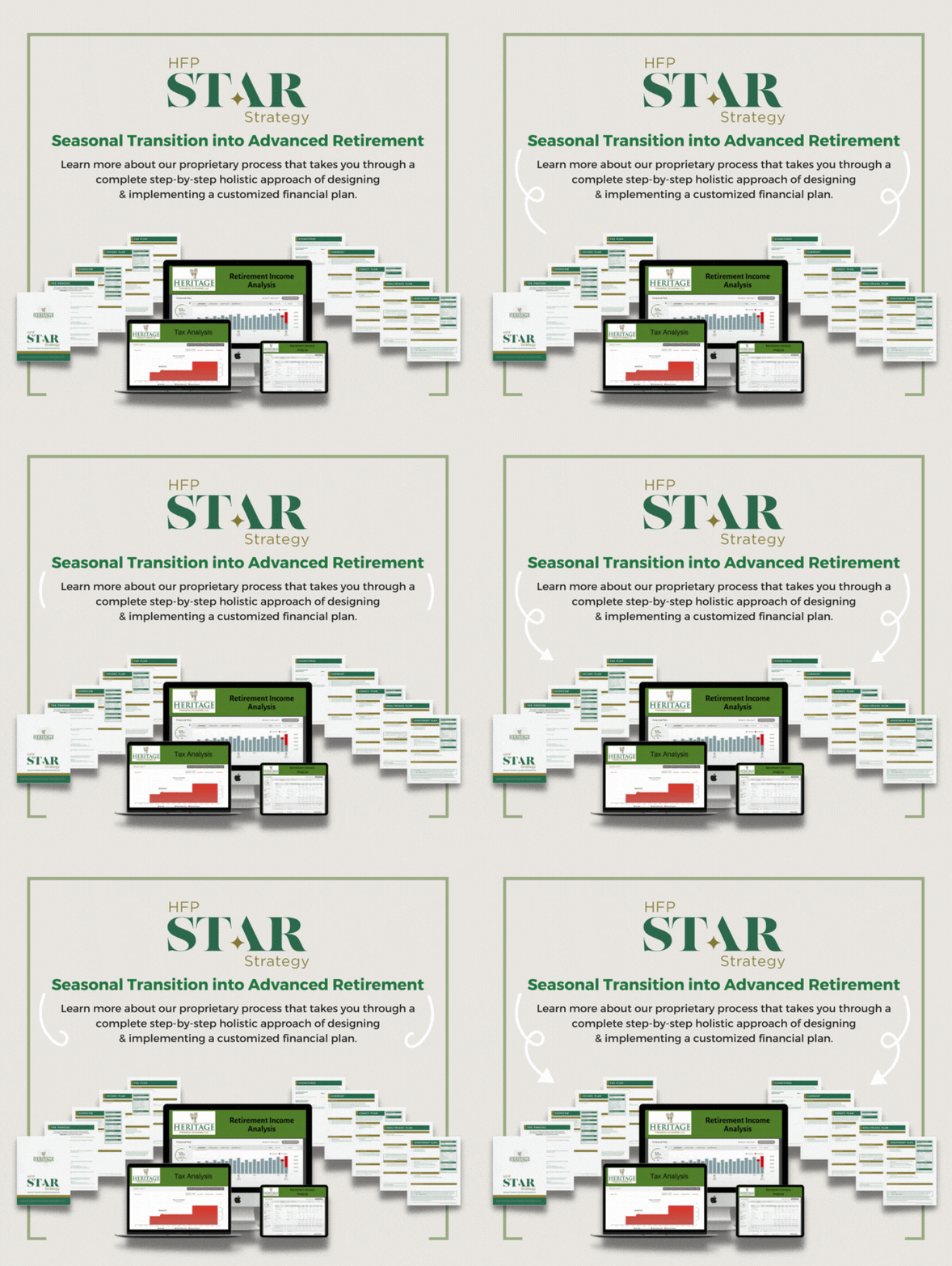
Click here to learn more about our HFP STAR Strategy process.
Sources
- Social Security Administration. 2025 Annual Report of the Board of Trustees of the Federal Old-Age and Survivors Insurance and Federal Disability Insurance Trust Funds. https://www.ssa.gov/OACT/TR/2025/
- Social Security Administration. Retirement Benefits. https://www.ssa.gov/retirement
- Congressional Budget Office (CBO). The 2025 Long-Term Budget Outlook. https://www.cbo.gov/publication/61439