


When people think about retirement income, it’s often framed as a single number. A monthly amount. A withdrawal rate. A target that, once reached, feels like the finish line.
But sustainable income in retirement is not defined by a single number.
It is defined by the ability to maintain income over time—while adapting to changing conditions.
Retirement today can span 25 to 30 years or more. Over that time, markets will shift, inflation will affect purchasing power, tax rules may evolve, and personal needs will change. A strategy that works in the first few years of retirement may not look the same two decades later.
This is why sustainable income is less about hitting a target—and more about building a flexible, long-term plan.
Why Sustainability Matters More Than the Starting Number
It’s natural to focus on how much income you can generate at the start of retirement. However, sustainability goes beyond that initial figure.
A plan that produces a higher income early on may not necessarily support long-term stability if it doesn’t account for future changes. On the other hand, a more balanced approach may provide consistency over time, even as conditions evolve.
This shift in perspective is important.
Rather than asking, “How much can I take today?” sustainable planning asks, “How can my income continue to support me throughout retirement?”
That distinction can influence how decisions are made across investments, withdrawals, and overall strategy.
The Role of Inflation Over Time
One of the most significant factors affecting sustainable income is inflation.
Over time, the cost of everyday expenses—housing, healthcare, food, and transportation—tends to increase. Even modest inflation can have a meaningful impact when compounded over decades.
For retirees, this means that income needs may grow over time, even if lifestyle expectations remain the same.
A sustainable income strategy takes this into account by incorporating growth-oriented elements alongside more stable income sources. The goal is not to eliminate inflation risk, but to acknowledge it and plan accordingly.
Market Fluctuations and Income Stability
Markets naturally move through cycles of growth, decline, and recovery. While these fluctuations are a normal part of investing, they can feel more significant in retirement—especially when income depends on investment assets.
Sustainable income planning considers how withdrawals interact with market conditions.
Rather than relying on a single source of income, many strategies incorporate a combination of assets designed for different purposes. Some may support near-term income needs, while others are positioned for long-term growth.
This structure can help reduce the need to make reactive decisions during periods of volatility.
The goal is not to avoid market movement, but to create a plan that can navigate it.
Evolving Needs Over a Multi-Decade Retirement
Another key aspect of sustainable income is recognizing that needs change over time.
In the early years of retirement, spending may be higher due to travel and lifestyle activities. Later, priorities may shift toward healthcare, stability, and simplicity.
These changes are natural, but they require a plan that can adjust.
A fixed income strategy may not fully account for how life evolves. In contrast, a flexible approach allows for adjustments as needs and priorities shift.
Sustainability is not about maintaining the same income indefinitely—it is about maintaining the ability to meet your needs as they change.
The Importance of Coordination
Sustainable income is not just about individual components—it is about how those components work together.
Retirement income often comes from multiple sources, including Social Security, retirement accounts, and investment portfolios. Coordinating these sources thoughtfully can help create a more consistent and predictable income stream.
This coordination also plays a role in tax efficiency, timing of withdrawals, and long-term flexibility.
Without coordination, income may become uneven or less efficient. With it, retirees can approach their financial decisions with greater clarity.
Why This Matters in Today’s Retirement Landscape
Today’s retirees face a financial environment that is more dynamic than ever.
Longer life expectancies mean that income must be sustained over a longer period of time. Inflation continues to influence purchasing power. Market conditions can shift quickly. Healthcare costs remain an important consideration.
At the same time, many individuals are responsible for managing their own retirement income, rather than relying on traditional pension structures.
This combination makes sustainable income planning essential.
It is not about predicting the future—it is about preparing for it.
A More Structured Approach to Sustainable Income
At Heritage Financial Planning, we approach sustainable income as part of a broader, integrated strategy.
Through our HFP S.T.A.R. Strategy (Seasonal Transition into Advanced Retirement), we help clients build income plans that are designed to evolve over time. This includes evaluating how income is generated, how it is distributed, and how it aligns with long-term goals.
By reviewing these elements regularly, clients can make thoughtful adjustments as conditions change—rather than reacting to uncertainty.
The goal is to create a plan that supports both stability and flexibility.
Moving Forward with Confidence
Sustainable income is not about finding a perfect number—it is about creating a strategy that can support you throughout retirement.
By considering factors such as inflation, market fluctuations, and evolving needs, you can build a plan that adapts alongside your life.
If your current retirement strategy has not been reviewed with long-term sustainability in mind, this may be a valuable opportunity to take a closer look.
At Heritage Financial Planning, we work with individuals and families to develop income strategies designed to provide clarity and confidence over time. Through our HFP S.T.A.R. Strategy, we offer a structured, personalized approach to navigating the complexities of retirement.
If you’d like to explore how your plan supports long-term financial stability, we invite you to schedule a conversation with our team.
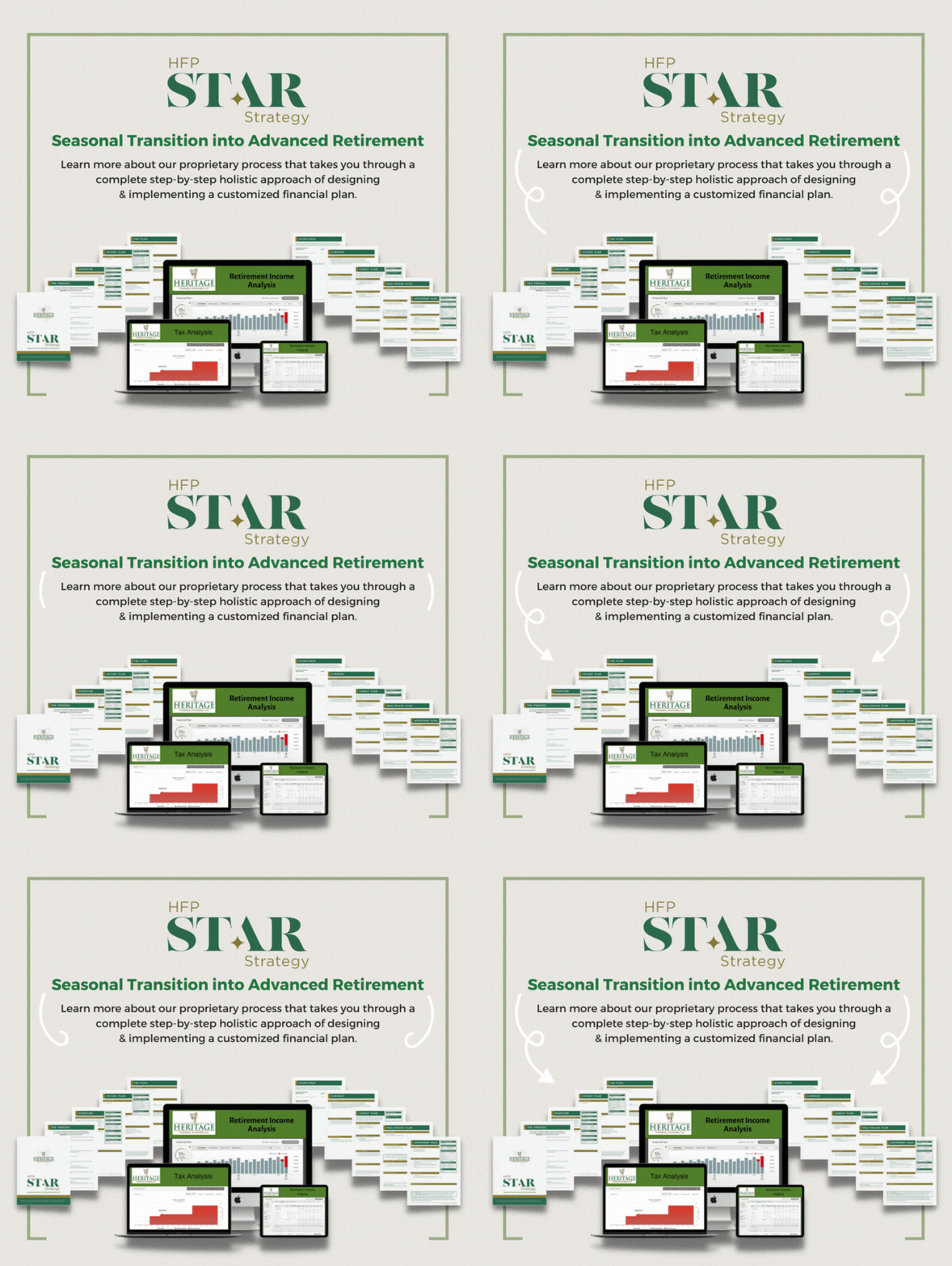
Click here to learn more about our HFP STAR Strategy process.
Sources:
1 . Fidelity Investments – Creating a Retirement Income Strategy
https://www.fidelity.com/viewpoints/retirement/income-strategy
2 . U.S. Securities and Exchange Commission (SEC) – Investor Bulletin: Making Your Money Last in Retirement
https://www.sec.gov/oiea/investor-alerts-and-bulletins
3 . Vanguard – Sustainable Withdrawal Strategies for Retirement Income
https://investor.vanguard.com/investor-resources-education/retirement