

Retirement is changing. Longer life expectancies, varying levels of retirement savings, and a growing number of older Americans choosing to remain in the workforce are reshaping what retirement looks like. Instead of viewing retirement as a single milestone, many people now see it as a gradual transition that unfolds over several years.
As this shift continues, employers are adapting by offering phased retirement opportunities, flexible work arrangements, and enhanced retirement education. At Heritage Financial Planning, we believe this evolution also changes how individuals should approach retirement planning. Today’s retirement decisions affect not only savings strategies, but also income planning, healthcare, taxes, and long-term financial confidence.
Moving Beyond an Accumulation-Only Mindset
For decades, retirement planning focused primarily on accumulating assets. While building retirement savings remains essential, today’s retirees face a much broader set of challenges.
Longer retirements increase longevity risk. Market volatility can affect withdrawal strategies. Rising healthcare costs add uncertainty. Most importantly, retirees must transition from growing their assets to creating sustainable income that may need to last 25 to 30 years or longer.
Because of this, retirement planning should extend well beyond contribution rates and account balances. It should also include retirement readiness, income distribution planning, healthcare coordination, and strategies for navigating a gradual transition into retirement rather than an abrupt stop.
Updated Contribution Opportunities for 2026
Recent retirement plan updates provide additional opportunities for workers approaching retirement.
For 2026:
- The elective deferral limit increased to $24,500.
- The standard catch-up contribution limit increased to $8,000.
- Individuals ages 60 through 63 may continue using the enhanced catch-up contribution of $11,250.
- The Roth catch-up wage threshold increased to $150,000, affecting when certain catch-up contributions must be made on a Roth basis.
These expanded contribution opportunities can help many late-career employees strengthen retirement savings during their highest earning years. However, the rules have also become more complex, making it increasingly important to understand how income levels, tax treatment, and contribution timing work together.
Flexible Retirement Requires Flexible Planning
One size no longer fits all when it comes to retirement.
Some individuals want to gradually reduce their workload while maintaining benefits. Others prefer consulting, mentoring, or part-time roles before fully retiring. Many simply need several additional working years to improve their financial readiness or qualify for Medicare and Social Security benefits.
Without thoughtful planning, these transitions can become financially inefficient or unnecessarily stressful.
A well-designed retirement strategy considers how employment decisions interact with retirement income, healthcare coverage, taxes, and long-term financial goals. Instead of viewing retirement as a single event, it becomes a coordinated process with multiple planning milestones.
Defined Contribution Plans Remain the Foundation
For many Americans, defined contribution plans such as 401(k)s remain the cornerstone of retirement savings.
However, the biggest challenge for workers nearing retirement is no longer simply saving more. It is determining how those assets will ultimately support retirement.
Investment allocation, sequence-of-returns risk, withdrawal timing, Social Security coordination, and healthcare expenses all become increasingly important during the final working years.
For example, someone planning to continue working until age 68 may make different investment and withdrawal decisions than someone hoping to retire at age 63. Likewise, an individual expecting consulting income early in retirement may structure distributions differently than someone relying immediately on investment income.
These decisions deserve careful coordination rather than a generic retirement approach.
Defined Benefit Plans Continue to Require Careful Oversight
Defined benefit pension plans face a different set of planning considerations.
For 2026, the annual benefit limit under Internal Revenue Code Section 415(b)(1)(A) increased to $290,000, up from $280,000.
While this increase primarily affects higher-income participants, employers and plan administrators should continue monitoring compensation limits, benefit calculations, and regulatory requirements carefully.
Additionally, pension strategies remain influenced by changing interest rates, investment performance, pension risk transfer activity, and workforce demographics. Later retirement ages can also affect plan liabilities, funding assumptions, and long-term workforce planning.
Retirement Planning Extends Beyond Investments
Successful retirement planning involves much more than investment management.
As people work longer, retirement decisions increasingly overlap with healthcare planning, insurance coverage, tax strategies, and employee benefits.
Employees transitioning to reduced schedules or phased retirement may experience changes to disability coverage, life insurance eligibility, employer matching contributions, or healthcare benefits. Understanding these changes before reducing work hours can help avoid costly surprises.
Employers also benefit by aligning retirement planning with succession planning, helping preserve institutional knowledge while creating smoother leadership transitions.
Communication Matters More Than Ever
Education plays a critical role in retirement success.
Many retirement education programs still focus primarily on saving consistently and maintaining diversified investments. While those concepts remain important, individuals approaching retirement often have more immediate questions:
- When should I claim Social Security?
- Should I continue working part-time?
- How will Medicare fit into my healthcare strategy?
- How should I coordinate withdrawals from different retirement accounts?
- What tax consequences should I expect?
Providing timely education several years before retirement allows individuals to make more informed decisions while they still have flexibility to adjust their plans.
Retirement Readiness Is About More Than Account Balances
A healthy retirement portfolio alone does not necessarily mean someone is ready to retire.
True retirement readiness also includes understanding:
- How retirement income will be generated.
- How taxes may affect withdrawals.
- How healthcare costs fit into the overall plan.
- How working longer—or retiring earlier—could impact long-term financial security.
- How lifestyle goals align with available financial resources.
This becomes especially important for higher-income earners who may encounter more complex tax rules, contribution limits, and retirement income planning decisions.
Helping Employers and Employees Navigate Longer Careers
Flexible retirement pathways create meaningful benefits for both employers and employees.
Organizations benefit by retaining experienced workers, supporting succession planning, and reducing knowledge loss through gradual transitions. Employees gain additional flexibility, greater financial confidence, and more control over how and when they retire.
Rather than viewing retirement as a sudden departure from the workforce, today’s environment encourages a more thoughtful progression that balances career goals, financial security, healthcare needs, and personal priorities.
As retirement continues to evolve, planning strategies must evolve alongside it.
The Heritage Financial Planning Difference: Our HFP S.T.A.R. Strategy
At Heritage Financial Planning, we recognize that retirement isn’t simply about reaching a certain age or accumulating a target account balance. It’s about successfully navigating one of life’s biggest transitions with confidence and clarity.
That’s why we’ve developed our proprietary HFP S.T.A.R. Strategy (Seasonal Transition into Advanced Retirement). This comprehensive planning process is designed to help individuals prepare for every phase of retirement by coordinating the financial decisions that matter most. Rather than focusing on investments alone, our strategy integrates retirement income planning, tax efficiency, Social Security timing, Medicare considerations, risk management, estate planning coordination, and long-term lifestyle goals into one personalized retirement roadmap.
Whether you’re planning to retire in the next few years, considering a phased retirement, or already enjoying retirement, the HFP S.T.A.R. Strategy helps ensure every piece of your financial life works together as you move through each season of retirement.
If you’re ready to build a retirement strategy designed around your unique goals and circumstances, contact Heritage Financial Planning today to schedule an appointment. We’d welcome the opportunity to help you prepare for a confident and financially secure retirement.
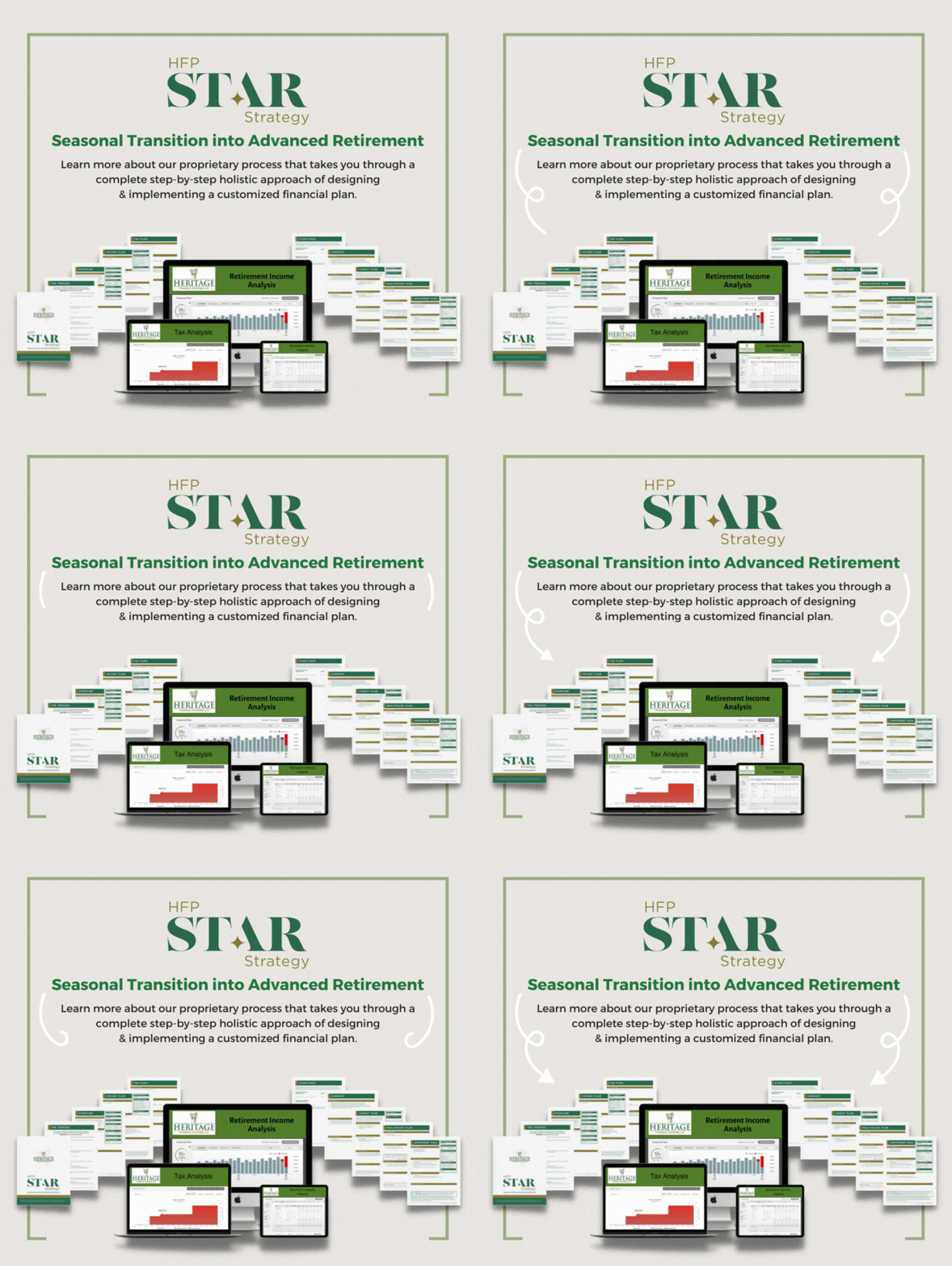
Click here to learn more about our HFP STAR Strategy process.
Sources
1 . Internal Revenue Service. IRS Announces 2026 Retirement Plan Contribution Limits. https://www.irs.gov/newsroom/irs-announces-401k-limit-increases-and-retirement-plan-updates-for-2026
2 . U.S. Department of Labor, Employee Benefits Security Administration. Retirement Plans and ERISA Resources. https://www.dol.gov/agencies/ebsa
3 . Employee Benefit Research Institute (EBRI). Retirement Confidence Survey and Research Publications. https://www.ebri.org/publications/retirement-confidence-survey