

One of the most common challenges in retirement is finding the right balance between enjoying today and preparing for tomorrow.
After years of saving and planning, retirement is meant to be a time to experience more freedom—travel, hobbies, time with family, and the ability to enjoy life without the structure of a work schedule. At the same time, retirement may last decades, which means financial decisions made early on can have long-term implications.
This creates a natural tension.
Spending too cautiously may limit the very experiences retirement is meant to provide. On the other hand, spending too freely may introduce uncertainty later in life. The key is not choosing one approach over the other, but finding a thoughtful balance between the two.
Why This Balance Can Be Difficult
During your working years, financial decisions are often guided by steady income. A paycheck provides consistency, making it easier to plan, save, and spend within a predictable structure.
In retirement, that structure changes.
Instead of earning income, you are drawing from savings and investments. This shift can make spending feel more permanent. Without a paycheck to replenish accounts, even routine expenses can feel more significant.
This is why many retirees naturally lean toward caution. The desire to “make it last” can lead to under-spending, even when resources are sufficient.
At the same time, others may feel encouraged to make the most of early retirement years, focusing more heavily on lifestyle and experiences without fully considering how spending patterns may evolve over time.
Both perspectives are understandable—but neither represents a complete approach on its own.
Understanding How Spending Evolves Over Time
One of the most helpful ways to approach this balance is to recognize that spending in retirement is not constant.
In the early years of retirement, expenses often increase. This is typically when retirees are most active—traveling, exploring hobbies, and enjoying the flexibility they’ve worked toward.
As time goes on, spending patterns often shift. Travel may become less frequent, and expenses may become more centered around daily living and healthcare. Later in retirement, simplicity and predictability often take priority.
These changes are natural, but they highlight the importance of having a plan that can adapt.
Rather than assuming a fixed spending level for the entire retirement period, a more flexible approach allows for adjustments as life evolves.
The Role of Income Strategy
At the center of this balance is a well-structured income strategy.
Retirement income often comes from multiple sources, including Social Security, retirement accounts, and investment portfolios. Coordinating these sources thoughtfully can help create a more stable and predictable income stream.
A clear income strategy can provide confidence in your spending decisions. When you understand how your income is generated and how it is designed to support your lifestyle, it becomes easier to enjoy the present without feeling uncertain about the future.
This structure also helps reduce the emotional aspect of spending. Rather than questioning each decision, retirees can rely on a plan that has already accounted for both short-term enjoyment and long-term sustainability.
Why Flexibility Matters More Than Precision
It can be tempting to try to calculate the “perfect” spending level in retirement. However, retirement is not static, and life rarely follows a perfectly predictable path.
Unexpected expenses, market fluctuations, healthcare needs, and lifestyle changes can all influence how a plan unfolds.
This is why flexibility is often more valuable than precision.
A flexible plan allows for adjustments over time, helping retirees respond thoughtfully to changes rather than reacting out of uncertainty. It also provides room to enjoy opportunities as they arise, without feeling locked into a rigid structure.
Why This Matters in Today’s Retirement Landscape
Today’s retirees face a financial environment that is more dynamic than ever.
Longer life expectancies mean that retirement can span 25 to 30 years or more. Over that time, inflation may impact purchasing power, markets may fluctuate, and personal priorities may evolve.
At the same time, many individuals are responsible for managing their own retirement income, rather than relying on traditional pensions. This places greater importance on how income is structured and how spending decisions are made.
Without a balanced approach, it is easy to lean too far in one direction—either limiting enjoyment or creating unnecessary risk.
Finding that middle ground is essential.
A More Thoughtful Planning Approach
At Heritage Financial Planning, we help clients approach retirement with both clarity and flexibility.
Through our HFP S.T.A.R. Strategy (Seasonal Transition into Advanced Retirement), we guide individuals and families in building retirement plans that support both current lifestyle goals and long-term financial stability.
This includes evaluating income strategies, reviewing spending patterns, and making adjustments over time as circumstances change.
Rather than focusing on a single point in time, our approach considers how retirement unfolds across different phases—allowing for thoughtful decisions at each stage.
Moving Forward with Confidence
Retirement is not about choosing between enjoying today and protecting tomorrow. It is about creating a plan that allows for both.
By understanding how spending evolves, structuring income thoughtfully, and maintaining flexibility, retirees can approach this phase of life with greater confidence.
If you find yourself questioning whether your current plan strikes the right balance, you are not alone. Many retirees revisit their strategy as their priorities and circumstances evolve.
At Heritage Financial Planning, we work with individuals and families to build retirement strategies designed to adapt over time. Through our HFP S.T.A.R. Strategy, we provide a structured, personalized process that helps bring clarity to financial decisions—both today and in the years ahead.
If you’d like to explore how your plan aligns with your long-term goals, we invite you to schedule a conversation with our team.
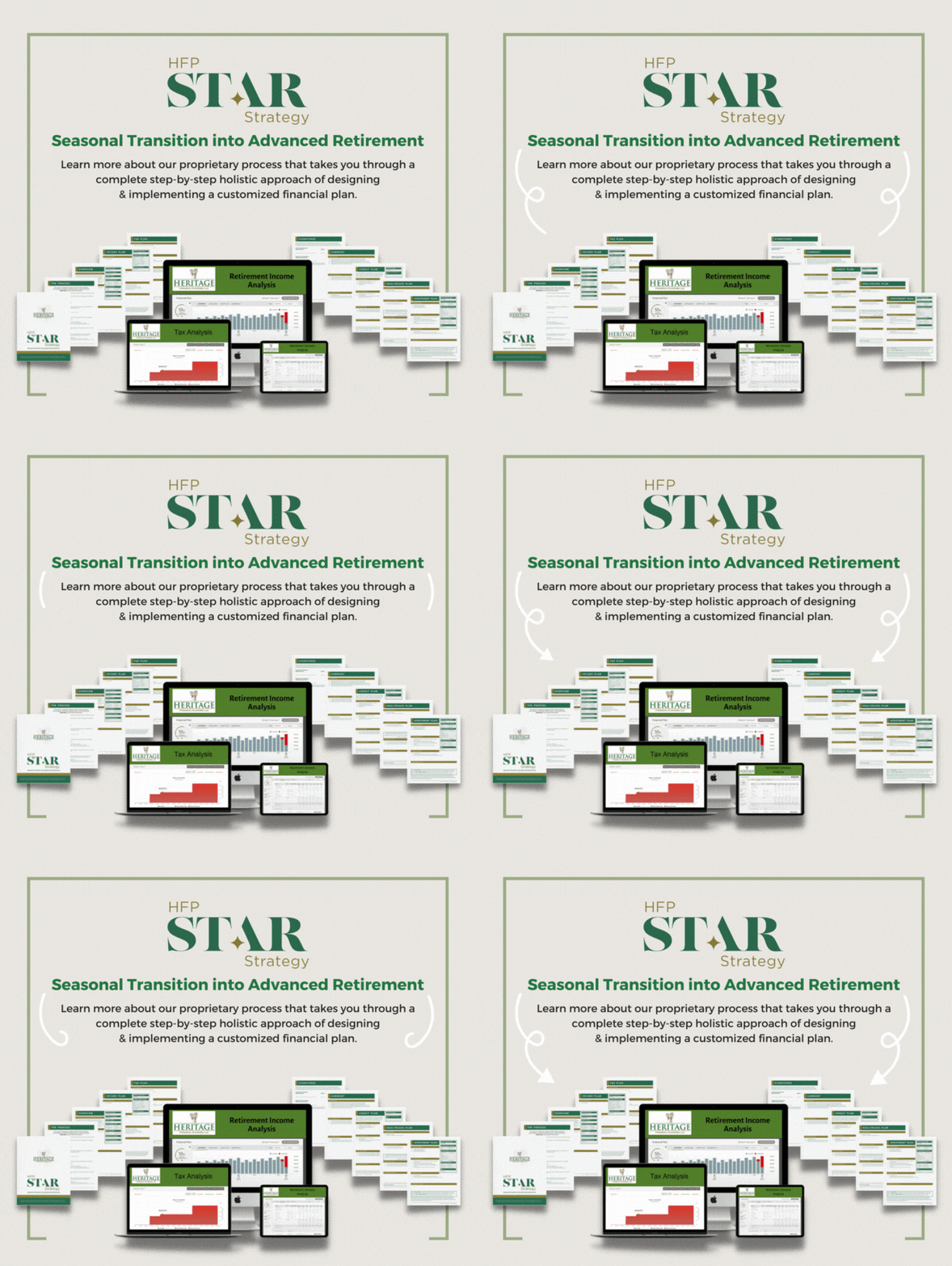
Click here to learn more about our HFP STAR Strategy process.
Sources:
1 . Fidelity Investments – Retirement Spending and Income Strategies
https://www.fidelity.com/viewpoints/retirement
2 . Vanguard – Spending in Retirement: Balancing Income and Growth
https://investor.vanguard.com/investor-resources-education/retirement
3 . U.S. Bureau of Labor Statistics – Consumer Expenditures in Retirement
https://www.bls.gov