




Be intentional about how your home fits into your overall retirement strategy
For many Americans, their home represents much more than a place to build memories. It is often the largest asset they own and can play a significant role in their retirement plan. While investment accounts, pensions, and Social Security often receive the most attention, your home may be one of the most powerful financial tools available when preparing for retirement.
As we move through 2026, elevated home values, higher borrowing costs, and evolving retirement lifestyles have made housing decisions more important than ever. Whether you’re planning to remain in your current home, relocate, downsize, or leverage your home equity, making intentional decisions today can strengthen your financial confidence tomorrow.
Your Home Can Reduce Retirement Income Needs
One of the biggest financial advantages of owning a home is the opportunity to enter retirement with little or no mortgage debt.
A paid-off home can dramatically reduce your monthly expenses, allowing your retirement income to stretch much further. For example, eliminating a $2,000 monthly mortgage payment means your investment portfolio may need to generate substantially less income each year. Using the commonly referenced 4% withdrawal guideline as a simple illustration, that reduction in annual expenses could translate into needing hundreds of thousands of dollars less in retirement savings. While every situation is unique, lowering fixed monthly expenses can have a meaningful impact on long-term retirement planning.
Reducing housing costs also provides flexibility during periods of market volatility. When your essential monthly expenses are lower, you may be less likely to withdraw larger amounts from your investment accounts during market downturns, helping preserve your retirement assets over time.
Home Equity Can Provide Financial Flexibility
For many retirees, the equity accumulated in their home becomes an additional financial resource.
Depending on your goals, home equity may be used in several different ways, including:
- Downsizing to reduce expenses and potentially free up additional retirement savings.
- Establishing a Home Equity Line of Credit (HELOC) before retirement as an emergency liquidity resource.
- Selling and relocating to an area with a lower cost of living.
- Exploring a reverse mortgage when appropriate to supplement retirement income while remaining in your home.
Each of these strategies offers potential advantages, but each also involves important financial, tax, and lifestyle considerations. The right solution depends on your overall retirement objectives rather than any single financial product or strategy.
Should You Pay Off Your Mortgage Early?
One of the most common questions we receive is whether it’s better to pay off a mortgage before retirement or continue investing those extra dollars.
The answer depends on several factors.
From an emotional perspective, many individuals appreciate the peace of mind that comes with entering retirement mortgage-free. Eliminating debt can reduce financial stress and create greater confidence when transitioning away from a regular paycheck.
From a purely financial standpoint, however, the decision may be less straightforward. If your mortgage carries a relatively low fixed interest rate, investing additional funds over many years could potentially generate higher long-term returns. Of course, investing also involves market risk, and future returns are never guaranteed.
Mortgage interest may also continue to provide tax benefits for some homeowners who itemize deductions, although fewer taxpayers qualify following changes to federal tax law.
Rather than viewing this as an all-or-nothing decision, we often help clients evaluate how mortgage payments fit within their overall retirement income strategy, tax picture, investment allocation, and risk tolerance.
Housing Decisions Should Evolve With Your Stage of Life
Your housing strategy should change as your life changes.
In Your 30s and Early 40s
These years are often focused on building equity while balancing career growth and family needs.
It’s also an ideal time to begin thinking long term. Ask yourself:
- Will this home still meet your needs in retirement?
- Could you eventually relocate closer to family?
- Would downsizing improve your financial flexibility later?
Building equity today may create more opportunities in the future.
In Your Mid-40s Through Mid-50s
As retirement begins moving from a distant goal to a realistic timeline, housing decisions deserve more attention.
Children may be leaving home, maintenance needs may be increasing, and retirement savings typically become a higher priority.
This is often an appropriate time to evaluate:
- Whether accelerating mortgage payoff makes sense.
- If your current home is larger than you’ll eventually need.
- Whether relocating could reduce long-term living expenses.
- How housing costs fit within your projected retirement income plan.
Making these decisions several years before retirement generally provides more flexibility than waiting until retirement is only months away.
Creative Housing Strategies May Support Retirement Income
For some retirees, a home can become more than a residence—it can also become a source of supplemental income.
Depending on your circumstances, you might consider:
- Converting your current residence into a rental property after moving.
- Purchasing a smaller home while investing excess proceeds.
- Renting a portion of your home for additional income.
- Using a reverse mortgage as part of a comprehensive retirement income strategy.
These approaches are not appropriate for everyone, and they each involve financial, legal, tax, and lifestyle considerations. That’s why personalized planning is so important before making major housing decisions.
Today’s Housing Market Requires Careful Planning
The housing landscape continues to present both opportunities and challenges in 2026.
Home values remain elevated in many markets, creating significant equity for long-term homeowners. At the same time, mortgage interest rates remain considerably higher than the historically low levels many homeowners secured several years ago, making refinancing less attractive for many families.
Construction and renovation costs also remain relatively expensive, meaning homeowners should carefully evaluate whether remodeling projects are likely to provide meaningful value or improve long-term retirement goals.
Rather than making housing decisions based solely on current market conditions, we encourage clients to consider how every decision supports their broader retirement strategy.
Your home should complement your retirement plan—not complicate it.
Planning Matters
Retirement planning isn’t simply about accumulating assets. It’s about making thoughtful decisions that work together to support the lifestyle you want throughout retirement.
Your home is one of those decisions.
Whether you’re deciding when to pay off your mortgage, considering downsizing, evaluating home equity strategies, or determining where you’ll ultimately retire, these choices deserve to be integrated into your overall financial plan.
The earlier these conversations begin, the more options you’ll typically have available.
The HFP S.T.A.R. Strategy: Bringing Every Piece of Retirement Together
At Heritage Financial Planning, we believe successful retirement planning goes far beyond managing investments. Through our proprietary HFP S.T.A.R. Strategy (Seasonal Transition into Advanced Retirement), we help individuals and families coordinate every major aspect of retirement into one comprehensive, personalized plan.
Rather than looking at your home, investments, taxes, Social Security, Medicare, income planning, and legacy goals as separate decisions, our process helps bring them together into a strategy designed to evolve with each season of retirement. We work closely with our clients to identify opportunities, prepare for potential risks, and build a retirement roadmap that reflects their unique goals and priorities.
Whether you’re still building equity, approaching retirement, or already enjoying retirement, understanding how your home fits within your overall financial picture can help create greater confidence and long-term financial stability.
If you’re ready to take a more comprehensive approach to retirement planning, we invite you to contact Heritage Financial Planning to schedule an appointment. Together, we can help ensure every piece of your retirement strategy—including your home—is working toward the future you envision.
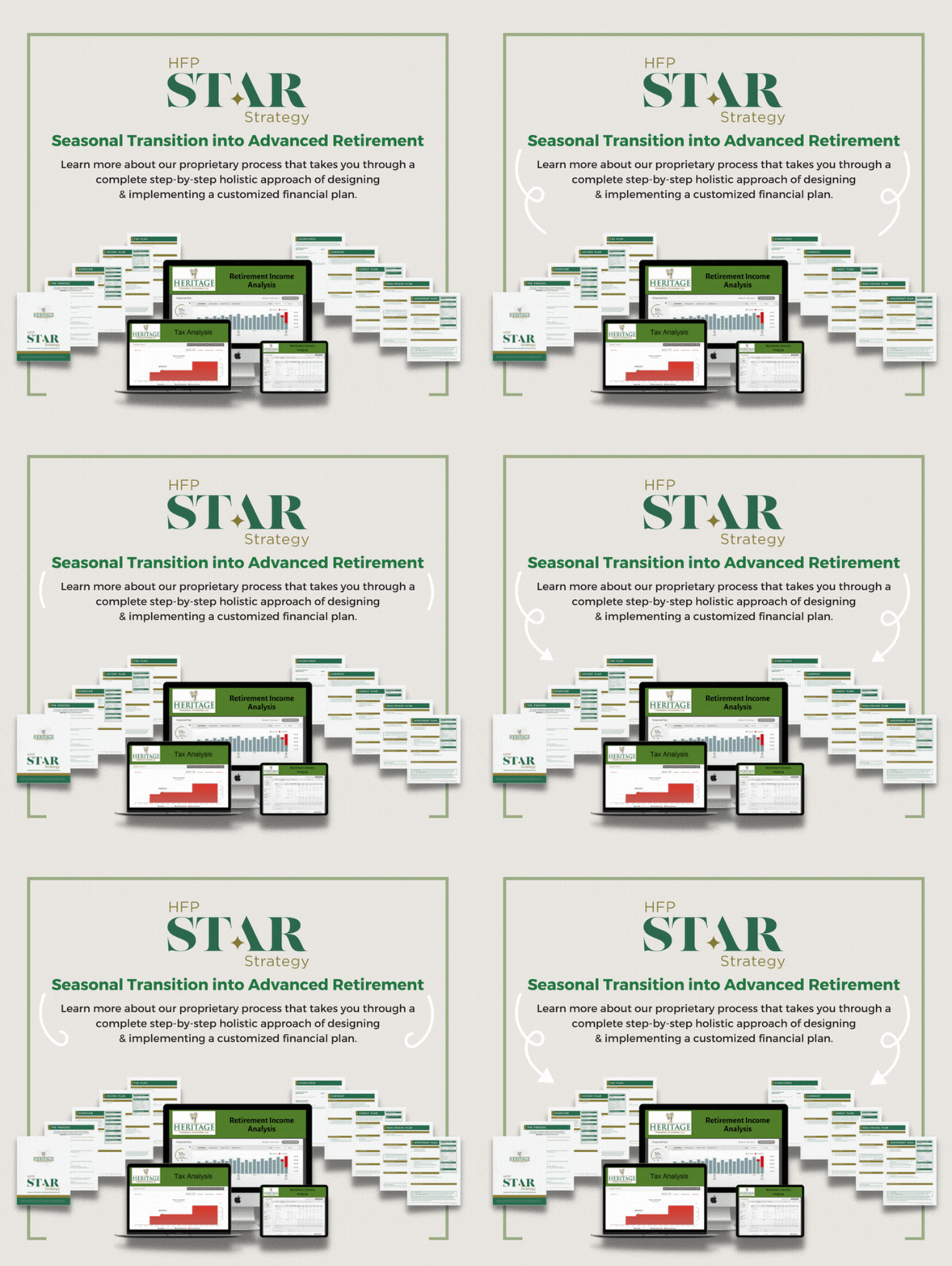
Click here to learn more about our HFP STAR Strategy process.
Sources:
Consumer Financial Protection Bureau. What Is Home Equity and How Can It Be Used? https://www.consumerfinance.gov/ask-cfpb/what-is-home-equity-en-1851/
U.S. Department of Housing and Urban Development (HUD). Home Equity Conversion Mortgages (HECM) for Seniors. https://www.hud.gov/program_offices/housing/sfh/hecm
Fidelity Investments. Planning for Retirement: Housing Decisions That Can Impact Your Retirement Plan. https://www.fidelity.com/learning-center/personal-finance/retirement/retirement-planning