




A retirement strategy designed for the unique financial journey women often experience
Every retirement journey is personal, but women frequently face financial challenges that deserve special attention. Longer life expectancies, time away from the workforce for caregiving, differences in lifetime earnings, and evolving family responsibilities can all influence retirement outcomes.
At Heritage Financial Planning, we believe successful retirement planning starts with recognizing those unique circumstances and creating a strategy designed to support long-term financial confidence. By combining disciplined investing, thoughtful tax planning, and personalized retirement income strategies, women can build wealth while preparing for decades of financial independence.
Planning for a Longer Retirement
One of the biggest factors affecting retirement planning for women is longevity. According to current life expectancy data, women in the United States continue to outlive men on average by several years. While living longer is certainly something to celebrate, it also means retirement savings often need to last longer while covering increasing healthcare costs and the effects of inflation.
A retirement that lasts 25 to 35 years requires a different mindset than one lasting only 15 to 20 years. That’s why we often encourage clients to think beyond simply reaching retirement and instead focus on maintaining financial security throughout every stage of retirement.
For many women, maintaining an appropriate level of growth investments—even during the years approaching retirement—can help portfolios continue keeping pace with inflation. While every situation is different, gradually adjusting investment allocations over time instead of making sudden shifts toward overly conservative investments may help balance long-term growth opportunities with risk management.
The right investment mix should always reflect your personal goals, comfort with market fluctuations, income needs, and overall retirement plan.
Maximize Your Highest Earning Years
Many women experience career interruptions due to raising children, caring for aging parents, returning to school, or supporting family members. These gaps can reduce lifetime earnings and limit opportunities to contribute to retirement accounts.
Because of this, making the most of your highest earning years becomes especially important.
One of the greatest advantages investors have is time. Starting early—even with modest contributions—allows compound growth to work over many decades.
For example, someone who contributes consistently during their twenties may accumulate substantially more retirement savings than someone who waits another decade, even if the later investor contributes significantly larger monthly amounts.
The lesson isn’t necessarily to invest large amounts immediately—it is simply to begin.
Small, consistent contributions often produce better long-term results than waiting until you feel financially “ready.”
Whenever possible, consider increasing retirement contributions as your income grows, after receiving raises, or when bonuses become available. Gradually increasing savings over time can make a significant difference without dramatically affecting your lifestyle.
Take Advantage of Tax-Advantaged Retirement Accounts
One of the smartest ways to build long-term wealth is by fully utilizing available retirement savings accounts.
Employer-sponsored retirement plans, such as a 401(k), remain one of the most effective retirement savings tools available. If your employer offers matching contributions, contributing enough to receive the full match is often one of the easiest ways to increase retirement savings.
Depending on your circumstances, Traditional and Roth IRAs may also play an important role in your retirement strategy.
Traditional IRAs may provide current-year tax advantages, while Roth IRAs offer qualified tax-free withdrawals during retirement, providing valuable tax flexibility later in life.
Health Savings Accounts (HSAs) have also become an increasingly valuable planning tool.
For individuals enrolled in eligible high-deductible health plans, HSAs offer three significant tax advantages:
- Tax-deductible contributions
- Tax-deferred investment growth
- Tax-free withdrawals for qualified medical expenses
Since healthcare often becomes one of the largest retirement expenses, allowing HSA assets to grow over many years can provide an additional source of tax-efficient retirement income for future medical costs.
Build an Investment Strategy That Supports Long-Term Goals
Investment success isn’t usually about finding the next hot stock.
More often, it’s about creating a disciplined strategy that can weather changing markets while keeping costs low and staying focused on long-term objectives.
Many investors choose diversified portfolios built around low-cost index funds and exchange-traded funds (ETFs). These investments can help reduce expenses while providing broad market exposure across multiple asset classes.
For investors seeking a simpler approach, professionally managed target-date funds may provide diversified portfolios that automatically become more conservative as retirement approaches. Even so, it’s important to ensure the selected fund aligns with your personal retirement timeline and overall financial goals.
Not every financial objective fits neatly inside a retirement account.
If you’re planning to purchase a home, help fund a child’s education, launch a business, or prepare for other major life goals before retirement, taxable investment accounts can provide valuable flexibility. While these accounts don’t offer the same tax benefits as retirement plans, they generally allow greater access to funds without early withdrawal restrictions.
A well-rounded financial strategy often includes both retirement and non-retirement investment accounts working together.
Retirement Planning Goes Beyond Investments
Building wealth is only one piece of preparing for retirement.
A comprehensive financial plan should also include strategies designed to protect the wealth you’ve accumulated.
Estate planning allows you to determine how assets will be distributed, designate trusted decision-makers, and provide clarity for loved ones during difficult times. Essential documents such as wills, powers of attorney, healthcare directives, and beneficiary designations should be reviewed regularly.
Social Security planning can also have a meaningful impact on lifetime retirement income.
Women who experienced career interruptions or earned lower lifetime wages may have additional planning considerations. Choosing when to begin claiming Social Security benefits can significantly influence total lifetime income, making personalized analysis especially valuable.
Long-term care planning deserves equal attention.
Women are statistically more likely to require long-term care services and often spend more years living independently after the loss of a spouse. Preparing for these potential costs through dedicated savings, long-term care insurance, hybrid insurance solutions, or other planning strategies can help preserve retirement assets while providing greater peace of mind.
Stay Consistent and Review Your Plan Regularly
Retirement planning is not a one-time event—it is an ongoing process.
As life changes, your financial plan should evolve as well.
Annual reviews provide opportunities to:
- Evaluate investment performance.
- Rebalance your portfolio when appropriate.
- Adjust savings goals.
- Review retirement income projections.
- Update tax strategies.
- Revisit estate planning documents.
- Account for changing healthcare or family needs.
Technology has made it easier than ever to monitor investments, automate savings, and track financial progress. However, software alone cannot replace personalized guidance when making complex retirement decisions.
Having a trusted financial professional review your overall strategy can help identify opportunities, address risks, and keep your retirement plan aligned with your changing goals.
Most importantly, consistency often matters more than perfection.
Markets will fluctuate, tax laws will change, and life will present unexpected challenges. Remaining disciplined and committed to your long-term strategy can help you navigate uncertainty with greater confidence.
Retirement Planning with the HFP S.T.A.R. Strategy
At Heritage Financial Planning, we understand that retirement isn’t simply about accumulating assets—it’s about creating a coordinated strategy that helps you confidently transition into the next chapter of life.
That’s why we’ve developed our proprietary HFP S.T.A.R. Strategy® (Seasonal Transition into Advanced Retirement). Rather than focusing on a single investment or financial product, our process evaluates every aspect of your retirement plan, including income planning, investment management, tax efficiency, Social Security timing, healthcare considerations, estate planning, and long-term financial sustainability.
We recognize that every woman’s retirement journey is unique. Whether you’re balancing career changes, caring for family members, planning for longevity, or preparing for retirement as a single individual or surviving spouse, our team works alongside you to build a personalized roadmap designed around your goals, priorities, and lifestyle.
Retirement should bring confidence—not uncertainty. If you’re ready to develop a retirement strategy that’s built around your unique financial future, we invite you to contact Heritage Financial Planning to schedule a conversation. Together, we can help you build a retirement plan designed to support lasting financial independence and peace of mind.
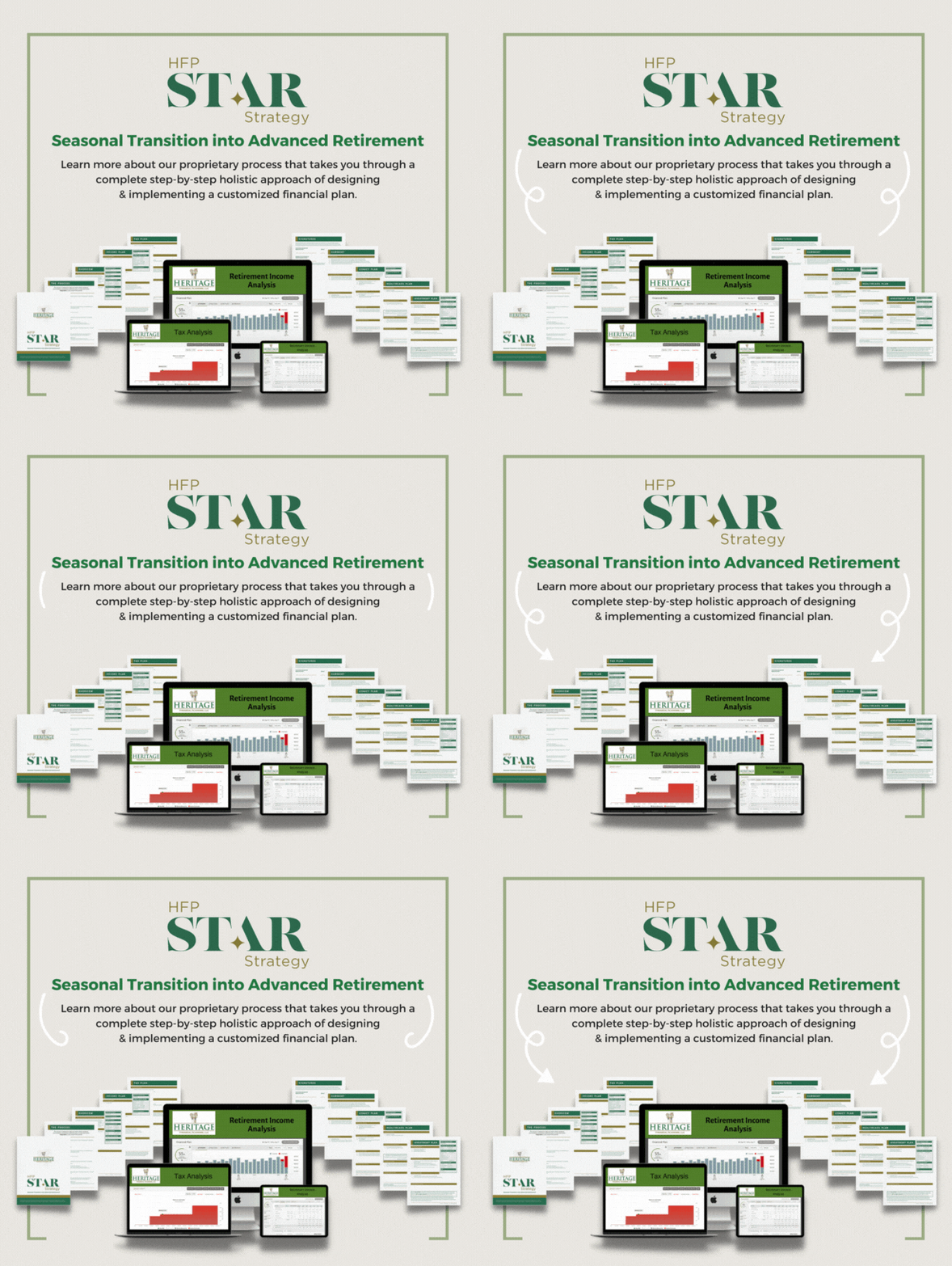
Click here to learn more about our HFP STAR Strategy process.
Sources:
1 . Social Security Administration. Retirement Benefits & Claiming Strategies. Updated 2026. https://www.ssa.gov/retirement
2 . Internal Revenue Service (IRS). Retirement Plans, IRAs, and Health Savings Accounts (HSAs). Updated 2026. https://www.irs.gov/retirement-plans
3 . U.S. Census Bureau. National Population Projections and Life Expectancy Trends. Updated 2026. https://www.census.gov/topics/population.html
4 . U.S. Department of Health & Human Services. Long-Term Care Information and Planning Resources. Updated 2026. https://acl.gov/ltc