




Retirement planning often begins with one central question:
Will I have enough money to support the life I want?
Estate planning tends to begin with another:
What happens to my assets when I’m gone?
Those questions may sound separate.
They really aren’t.
The decisions you make about income, investments, taxes, healthcare, beneficiaries, insurance, and spending throughout retirement can directly affect what eventually happens to your estate.
Likewise, the legacy you hope to leave can influence decisions you make throughout retirement.
That is why we believe retirement planning and estate planning should never operate independently.
They are different parts of the same financial story.
Your Retirement Plan Determines What Your Estate May Eventually Look Like
Estate planning begins long before assets transfer to beneficiaries.
It is shaped by the decisions you make during retirement.
Consider retirement spending.
Some retirees prioritize spending more during their active early years. Others hope to preserve a specific amount for children or grandchildren.
Neither approach is automatically right or wrong.
But they lead to very different financial plans.
The same is true of healthcare.
A longer retirement or significant healthcare and long-term-care expenses may reduce the assets eventually available to beneficiaries.
Investment decisions can affect both current income and future wealth.
Taxes can affect how much you keep and how much beneficiaries eventually receive.
Retirement planning therefore helps determine the financial resources that may one day become part of your estate.
Your Estate Goals Can Influence Retirement Decisions Today
The relationship works in the opposite direction, too.
Suppose leaving an inheritance is very important to you.
That goal may affect how you think about spending, investing, insurance, charitable giving, or which accounts you draw from first.
Perhaps you want to leave a family property to your children.
That may influence whether the property is sold to generate retirement income.
Maybe supporting grandchildren’s education is important.
That could lead to gifting strategies during your lifetime rather than waiting until death.
Or you may decide that leaving a large inheritance is not a major priority and that using your assets to enjoy retirement, travel, give to family now, or support charitable causes is more meaningful.
Those are not simply estate decisions.
They are retirement decisions.
Beneficiary Designations Connect the Two Plans
Beneficiary designations are one of the clearest examples of retirement and estate planning intersecting.
IRAs, 401(k)s, life insurance policies, annuities, and certain other assets may allow you to designate beneficiaries directly.
Those designations matter because certain assets can pass according to the beneficiary form rather than instructions contained elsewhere in an estate plan.
Imagine updating your will after a major family change but forgetting to review an IRA beneficiary designation completed many years earlier.
Your documents may no longer communicate one coordinated plan.
This is why beneficiary reviews should be part of both retirement and estate planning.
When financial accounts change, your legacy plan may need to change with them.
Retirement Accounts Come With Their Own Inheritance Rules
Retirement accounts deserve particular attention because beneficiaries may inherit both an asset and a set of tax rules.
Traditional IRA and 401(k) assets generally contain money that has not yet been subject to ordinary income tax.
When beneficiaries eventually withdraw inherited pre-tax retirement funds, distributions may generally be taxable.
The rules governing inherited retirement accounts can also vary depending on the beneficiary’s relationship to the original owner and other circumstances.
That makes retirement-account beneficiary planning different from simply deciding who should receive a checking account or personal property.
An inheritance of the same dollar amount can produce different outcomes depending on what type of asset is inherited.
This is another reason estate planning works best when someone understands the tax characteristics of the assets involved—not simply their total value.
Tax Planning Can Become Legacy Planning
Many tax decisions made during retirement can eventually affect beneficiaries.
Consider Roth conversions.
A Roth conversion may create taxable income today, but qualified Roth distributions can receive different tax treatment later.
That doesn’t mean Roth conversions should be completed simply for estate-planning purposes.
Rather, it illustrates how a retirement tax strategy can also have legacy consequences.
Charitable giving is another example.
Some retirees use Qualified Charitable Distributions from IRAs once eligible because they want to support charitable organizations while also coordinating distributions from retirement accounts.
Others may include charitable organizations as beneficiaries of certain accounts.
Again, the right approach is highly personal.
The larger point is that tax planning, retirement-income planning, and legacy planning frequently overlap.
Gifting During Retirement Can Be Part of the Plan
Many people automatically think of legacy as something that occurs after death.
But sometimes families prefer to give while they are alive.
Parents may want to help an adult child purchase a home.
Grandparents may help with education.
Others may provide annual gifts to family members or charitable organizations.
For 2026, the federal annual gift-tax exclusion is $19,000 per recipient. A married couple may generally each use an annual exclusion for qualifying gifts, potentially allowing $38,000 to be transferred to the same recipient under the annual-exclusion rules, subject to the applicable requirements.
However, the fact that a gift fits within an annual exclusion does not automatically mean the gift makes financial sense.
Before making substantial lifetime gifts, retirees should consider their own long-term income needs, healthcare possibilities, taxes, liquidity, and financial flexibility.
There is little value in creating a generous gifting strategy today if doing so leaves you financially vulnerable later.
Healthcare Can Change Both Plans
Healthcare is another major connection between retirement and estate planning.
A family might envision leaving significant assets to children.
But retirement may last decades, and healthcare or long-term-care expenses can alter that expectation significantly.
This doesn’t mean retirees should assume the worst.
It means legacy projections should leave room for uncertainty.
Retirement assets need to serve retirement first.
A legacy plan should therefore recognize that inheritance amounts may change depending on lifespan, health, market performance, spending, and other factors.
The goal is not to promise beneficiaries a number years in advance.
It is to establish priorities and create a structure capable of adapting.
Incapacity Planning Connects Financial and Estate Decisions
Estate planning is also about what happens if you cannot manage your finances while alive.
A properly structured financial power of attorney can allow a person you choose to act under specified circumstances and authority.
That becomes directly relevant to retirement planning.
Someone may need to access accounts, pay bills, coordinate with financial professionals, manage property, or address insurance matters.
If your estate documents and financial arrangements are not coordinated, even a well-intentioned family may face unnecessary difficulties.
Whoever could eventually manage your affairs should understand enough about your financial structure to know where to begin.
Your Financial Advisor and Estate Attorney Play Different Roles
Estate planning frequently requires an estate-planning attorney.
Financial advisors do not draft legal documents or replace legal counsel.
But financial planning can help uncover issues that need to be addressed by your attorney.
For example:
Do your beneficiary designations match your intentions?
How are your accounts titled?
What types of assets might beneficiaries inherit?
How could retirement distributions affect your legacy?
What insurance policies exist?
What are your charitable objectives?
Could your tax strategy affect heirs?
These financial questions can help make conversations with an estate attorney more productive.
Likewise, legal documents can inform how financial accounts should be structured and managed.
The strongest planning often happens when the different professionals involved are working toward the same objectives.
Why Coordination Matters More as Retirement Progresses
Early in retirement, the primary concern may be making sure your assets support you.
Later, attention may increasingly turn toward protecting a surviving spouse, simplifying financial affairs, supporting family, and transferring assets efficiently.
These priorities can evolve gradually.
That means your retirement and estate plan may need periodic review.
A plan created at 60 may need adjustments at 70.
A plan designed for two spouses may need to change after one spouse dies.
A beneficiary decision may need to change after a marriage, divorce, birth, death, or family conflict.
Estate planning is not separate from retirement because retirement itself changes the circumstances your estate plan must address.
Connecting Retirement and Legacy Through the HFP S.T.A.R. Strategy
At Heritage Financial Planning, our proprietary HFP S.T.A.R. Strategy—Seasonal Transition into Advanced Retirement was built around a holistic approach to retirement.
The process integrates five essential areas:
Income Planning
Age-Appropriate Investment Strategies
Tax Planning and Positioning
Healthcare Strategies
Legacy Planning
Legacy planning is not simply placed at the end as an afterthought.
It interacts with every other part of the strategy.
Income decisions can affect what remains for heirs.
Investment choices influence both retirement sustainability and future assets.
Tax decisions can affect both retirees and beneficiaries.
Healthcare expenses can influence long-term wealth.
Estate and beneficiary decisions determine how assets may eventually transfer.
By looking at these areas together, our goal is to help clients create a more coordinated financial picture throughout the different seasons of retirement.
We encourage clients to work with qualified estate-planning attorneys for legal advice and document preparation, while our team focuses on helping ensure the financial pieces of the plan support the broader goals being established.
If your retirement plan and estate plan have traditionally been treated as two completely separate conversations, it may be time to bring them together.
Contact Heritage Financial Planning to schedule an appointment and learn how our HFP S.T.A.R. Strategy can help coordinate the financial decisions surrounding your retirement, your family, and the legacy you hope to leave.
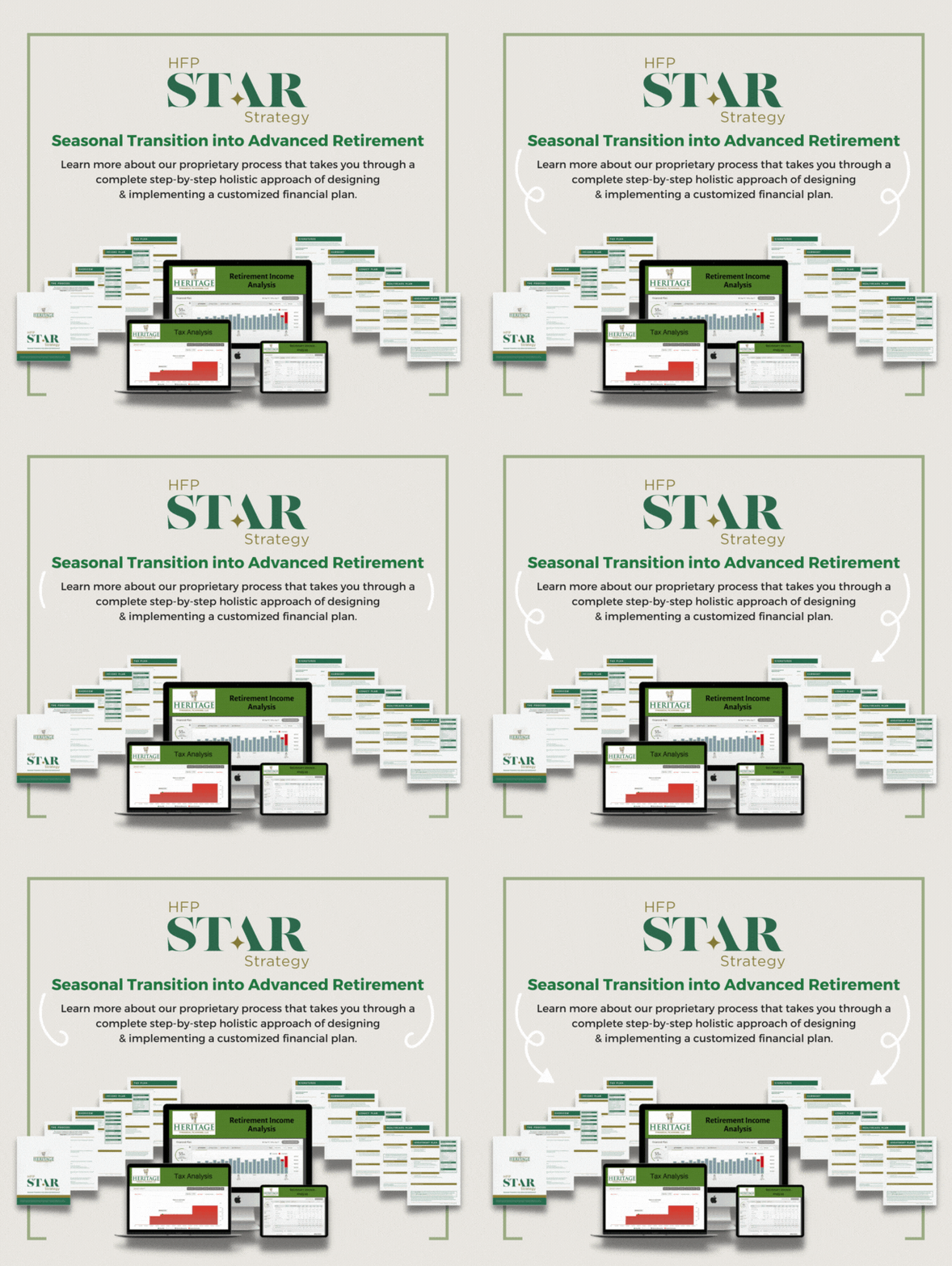
Click here to learn more about our HFP STAR Strategy process.
Sources:
1 . Internal Revenue Service — Frequently Asked Questions on Gift Taxes – https://www.irs.gov/businesses/small-businesses-self-employed/frequently-asked-questions-on-gift-taxes
2 . Internal Revenue Service — Publication 559, Survivors, Executors, and Administrators – https://www.irs.gov/publications/p559
3 . Heritage Financial Planning — HFP S.T.A.R. Strategy – https://heritagefinancialplanning.net/about/heritage-financial-star-strategy/