




The holidays have a way of bringing generosity to the surface. Maybe you want to make Christmas extra special for your grandchildren. Perhaps an adult child could use help with unexpected bills. You may want to pay for a family vacation, help with college costs, contribute toward a first home, or simply give your children a little financial breathing room.
For many retirees, being able to help family is one of the most rewarding parts of having built financial security. But there is an important question that can get lost in the emotion of giving:
How much can you afford to give without putting your own retirement at risk?
At Heritage Financial Planning, we believe generosity can absolutely be part of a retirement plan. The key is making sure you are giving from a position of financial strength rather than gradually becoming the family’s financial safety net.
When an Occasional Gift Becomes an Ongoing Commitment
There is a big difference between giving your grandchild a generous holiday gift and becoming responsible for someone else’s recurring expenses. The transition can happen gradually.
Maybe you help an adult child with one mortgage payment. Then another. You pay an unexpected medical bill. You begin covering a grandchild’s tuition. A family member needs help buying a car. Someone asks for a “temporary” loan. Then another financial emergency appears six months later.
None of these decisions may seem significant on its own. But taken together, they can begin changing your retirement cash flow. That is when generosity deserves a closer financial look.
Retirement Changes the Giving Equation
During your working years, you may have been able to replace money you gave away with future earnings. Retirement is different. Once employment income stops, your assets may need to support you for decades.
Money given away today is money that may no longer be available for:
- Future living expenses.
- Healthcare.
- Long-term care.
- Home repairs.
- Inflation.
- Market downturns.
- A surviving spouse.
- Unexpected emergencies.
That does not mean retirees should avoid helping family. It means the decision should reflect the fact that retirement assets have an important first job: supporting your retirement.
Ask Whether the Gift Is Affordable Before Asking Whether It Is Generous
Families often begin with the emotional question: “Do we want to help?” A stronger financial conversation adds another: “Can we help without weakening our own plan?”
Suppose a retired couple wants to give an adult child $20,000 toward a down payment. If they have substantial cash beyond what they need for near-term expenses and emergency reserves, that gift may fit comfortably within their plan. Another couple might need to withdraw that $20,000 from a traditional IRA.
Those two gifts may look identical to the recipient. They may not be identical financially for the retirees. That is why the source of the money matters.
A $20,000 Gift Can Cost More Than $20,000
Withdrawals from traditional IRAs are generally taxable in the year received, although the tax treatment can differ when an account contains nondeductible contributions or other special circumstances. That means someone who needs $20,000 in cash for a family gift may need to withdraw more than $20,000 from a tax-deferred account to cover the resulting federal and potentially state income taxes.
Additional taxable income may also interact with other parts of the retirement tax picture. Depending on someone’s circumstances, higher income can potentially affect the taxation of Social Security benefits or future Medicare income-related surcharges.
That does not automatically make the gift a bad idea. But it does mean retirees should consider the after-tax cost of generosity, not simply the amount written on the check.
Understand the 2026 Gift Tax Annual Exclusion
Gift-tax rules are another area that can create confusion. For 2026, the federal annual gift-tax exclusion is $19,000 per recipient. That means an individual can generally give up to $19,000 to each recipient during 2026 without using any of that person’s lifetime federal gift and estate tax exclusion, assuming the gift otherwise qualifies for the annual exclusion.
Each spouse has a separate annual exclusion. Under applicable rules, a married couple could therefore potentially give a combined $38,000 to one recipient in 2026.
However, the annual exclusion is frequently misunderstood. It is not an IRS recommendation for how much you should give. It is a tax rule. A retiree who can legally make a $19,000 gift without using lifetime exemption is not necessarily financially able to afford that gift.
Your retirement plan—not the federal annual exclusion—should help determine what level of giving is sustainable.
Giving More Than the Annual Exclusion Does Not Automatically Mean You Owe Gift Tax
There is another common misconception worth addressing. Giving someone more than the annual exclusion does not automatically mean you immediately owe federal gift tax. Depending on the circumstances, the excess may generally reduce part of your available lifetime federal gift and estate tax exclusion and may create a Form 709 gift-tax filing requirement.
For 2026, the federal basic gift and estate tax exclusion is $15 million per individual. Because gift and estate tax rules can become complicated quickly—particularly with larger transfers, property, trusts, gift splitting, or other arrangements—retirees considering significant gifts should coordinate with an appropriate tax or estate-planning professional.
The bigger retirement-planning point remains the same: Tax rules tell you what may be permitted. Your financial plan helps determine what is prudent.
Paying Tuition or Medical Expenses Can Be Different
Some families want to help specifically with education or healthcare costs. Federal gift-tax rules provide special exclusions for certain qualifying tuition and medical expenses.
How the payment is made matters. For example, certain qualifying payments made directly for tuition or medical expenses may receive different gift-tax treatment than simply giving the same amount of cash to the family member.
Because the requirements are specific, anyone considering a substantial education or medical gift should consult a qualified tax professional before assuming the transfer qualifies. This can be especially relevant for grandparents who want to help younger generations while maintaining an intentional gifting strategy.
Be Careful With “Loans” to Family
Many family gifts do not begin as gifts at all. They begin as loans.
“I’ll pay you back.” “I just need help for a few months.” “I’ll repay it when the house sells.”
Sometimes repayment happens exactly as planned. Sometimes it does not. Before lending money to a child or other family member, retirees should consider an uncomfortable question:
Would our retirement still be financially secure if this money were never repaid?
If the answer is no, the loan may carry more risk than you should accept. It is also important to be clear about whether money is truly a loan or a gift.
Larger family loans can have tax and documentation considerations, so substantial arrangements may warrant guidance from tax and legal professionals. Just as importantly, unclear expectations can create strain within families.
Generosity Can Create Expectations
One financial gift can sometimes become the new normal. You pay for the annual family vacation once. Then everyone assumes you will pay again next year. You help one child with a down payment. Another child wonders whether the same support will be available. You begin paying a grandchild’s college costs and later realize the commitment is larger than expected.
This is where good intentions can turn into long-term financial obligations.
Before making a major gift, ask:
- Is this a one-time gift or something we expect to continue?
- Would we feel obligated to provide similar support to other children or grandchildren?
- Could the recipient begin relying on this support?
- How would we feel if our own finances changed next year?
Clarity now can prevent financial and family tension later.
Don’t Put Your Children’s Retirement Ahead of Your Own
Parents naturally want their children to be financially secure. But retirees should be careful about sacrificing their own long-term security to solve financial problems for younger family members.
Your adult children may still have years or decades of earning potential ahead of them. You may not. That difference matters.
Helping a child avoid temporary discomfort is very different from permanently reducing assets you may later need for healthcare, long-term care, or basic living expenses.
In some situations, the most responsible answer may be: We can help, but not at the amount requested. Or: We can help once, but we cannot make this an ongoing commitment.
Boundaries and generosity can exist at the same time.
Protect the Surviving Spouse
For married couples, significant gifting should also be considered from the perspective of the spouse who may live longest.
Imagine a couple feels financially comfortable today and begins making substantial gifts to children. Years later, one spouse dies. Household Social Security income changes. Pension income may change. Taxes may change. The surviving spouse may need to fund another decade or more of retirement alone. Healthcare or long-term care expenses could eventually increase.
Would the gifts made earlier still feel affordable under that scenario?
This is one reason we believe major family giving should be evaluated within the complete retirement plan rather than based solely on current account balances.
Watch for Signs That Giving May Be Competing With Retirement
There is no single dollar amount that means someone is giving too much. But several warning signs may deserve attention.
You may want to reconsider your giving strategy if helping family regularly requires you to:
- Take larger retirement-account withdrawals than planned.
- Reduce emergency reserves.
- Sell investments unexpectedly.
- Delay necessary home repairs.
- Cut your own healthcare spending.
- Borrow money.
- Change your retirement lifestyle significantly.
- Ignore future long-term care needs.
- Or worry about whether you will eventually run out of money.
Generosity should ideally bring fulfillment—not financial anxiety.
Create a Family Giving Budget
One way to make generosity more intentional is to include it directly in your retirement plan. Instead of responding to each request individually, establish a general amount you are comfortable allocating toward family assistance.
That budget might include:
- Holiday gifts.
- Birthday gifts.
- Education support.
- Family travel.
- Grandchildren.
- Charitable giving.
- Occasional emergency assistance.
This does not mean every dollar must be scheduled years in advance. It simply creates boundaries. If you know what level of giving your plan can reasonably support, you can make decisions with greater confidence when requests arise.
Remember Why You Built the Money
This conversation should not become so cautious that retirees feel guilty for enjoying the ability to give. For many people, helping their children or grandchildren is one of the reasons they worked and saved.
Watching a grandchild attend college, helping a child buy a first home, creating family experiences, or simply providing support during a difficult season can be deeply meaningful. Financial planning should help make those moments possible when resources allow.
The objective is balance. You should not have to choose automatically between enjoying your wealth, sharing your wealth, and protecting your retirement. A thoughtful strategy can help determine how those priorities fit together.
Building Generosity Into the HFP S.T.A.R. Strategy
At Heritage Financial Planning, our proprietary HFP S.T.A.R. Strategy—Seasonal Transition into Advanced Retirement takes a complete, step-by-step approach to retirement planning.
The process considers five interconnected areas:
- Income Planning
- Age-Appropriate Investment Strategies
- Tax Planning and Positioning
- Healthcare Strategies
- Legacy Planning
Family giving can touch every one of them. A large gift can change retirement cash flow. Selling investments or withdrawing from retirement accounts can affect the portfolio. The source of the money may create tax considerations. Giving too much could reduce resources available for future healthcare or long-term care. And lifetime gifting can become part of a broader legacy strategy.
That is why we believe generosity should be coordinated with the rest of your financial life rather than treated as an isolated decision.
You worked hard to build the resources you have today. Those resources can support your life, the people you love, and the legacy you want to create—but those goals need to work together.
If you are considering significant gifts to children, grandchildren, or other family members and want to understand how those decisions could affect your retirement, contact Heritage Financial Planning to schedule an appointment. Our team can help you evaluate your giving goals through the HFP S.T.A.R. Strategy and determine how generosity may fit within your broader retirement plan.
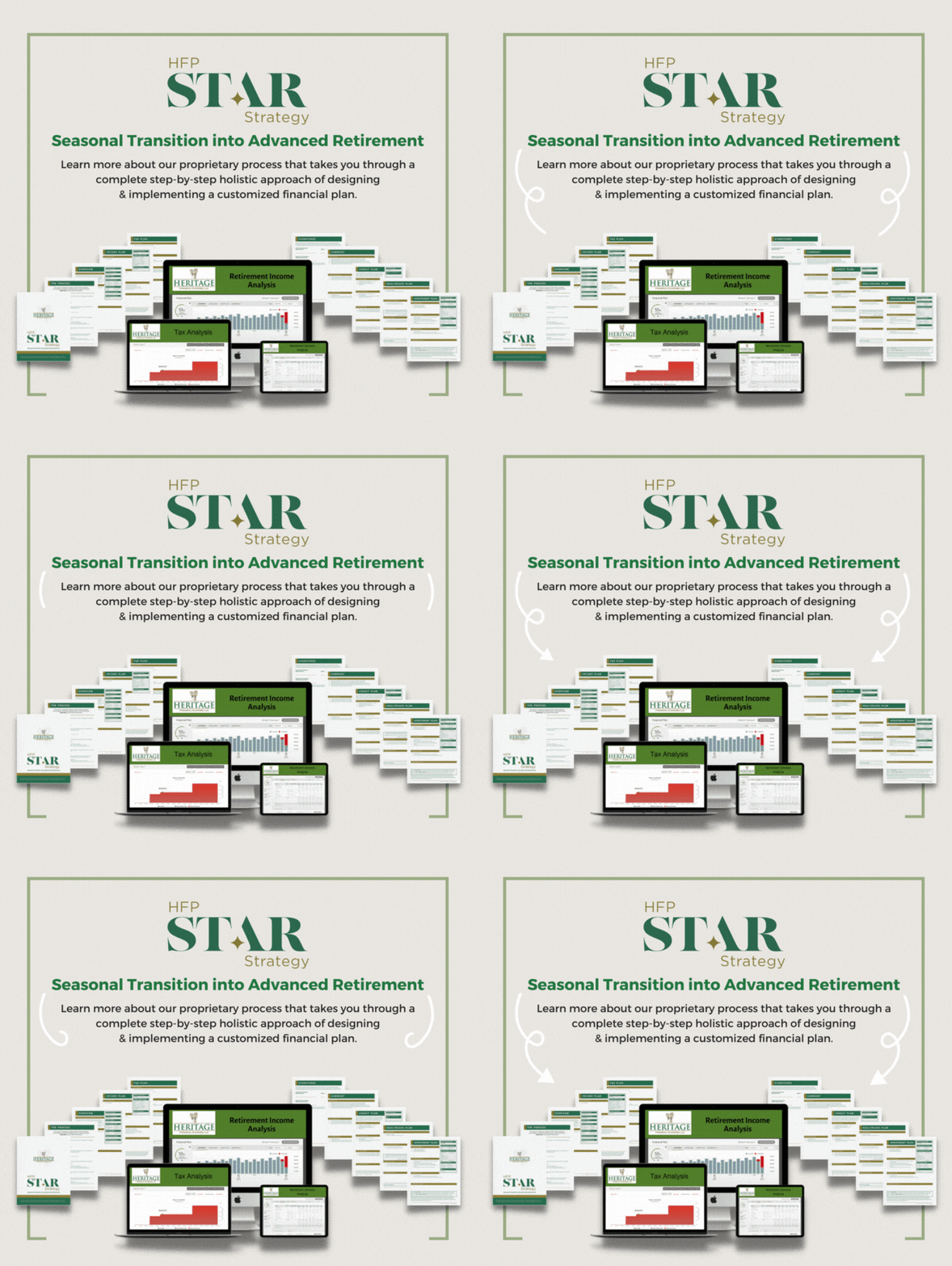
Click here to learn more about our HFP STAR Strategy process.
Sources:
1 . Internal Revenue Service — Frequently Asked Questions on Gift Taxes – https://www.irs.gov/businesses/small-businesses-self-employed/frequently-asked-questions-on-gift-taxes
2 . Internal Revenue Service — Publication 590-B, Distributions From Individual Retirement Arrangements (IRAs) – https://www.irs.gov/publications/p590b
3 . Heritage Financial Planning — HFP S.T.A.R. Strategy – https://heritagefinancialplanning.net/about/heritage-financial-star-strategy/