

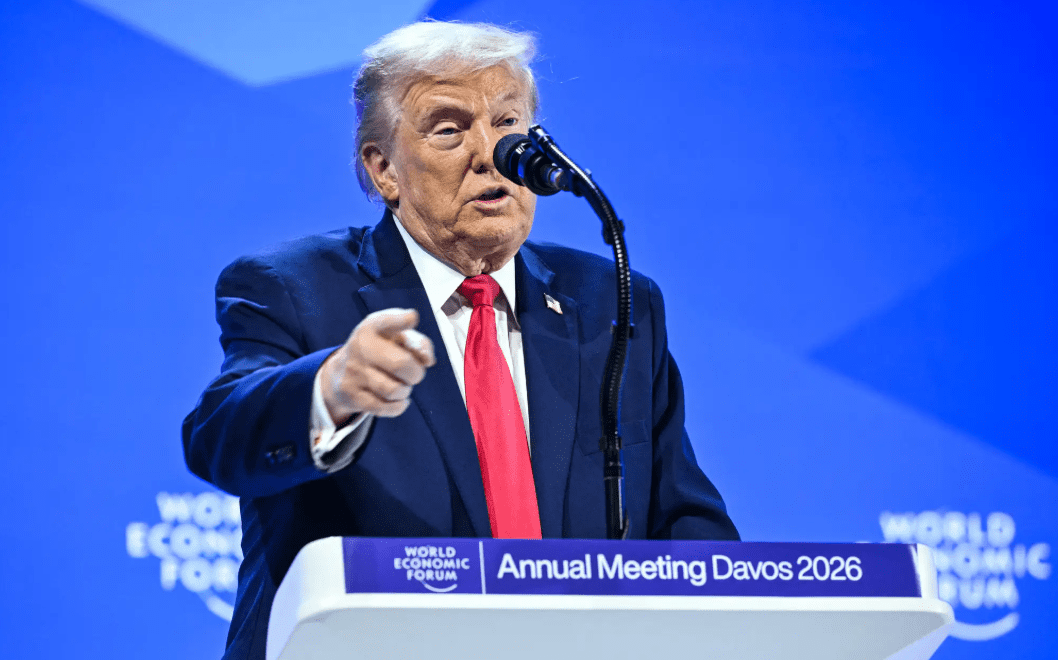
(Image By: Mandel NGAN / AFP via Getty Images)*
What Retirees Should Take from Today’s Market Reaction
Markets often respond quickly when political leaders speak on the global stage—especially when comments touch on international influence and economic power. On Wednesday, U.S. stocks moved higher as investors reacted to remarks from Donald Trump delivered during his appearance at the World Economic Forum in Davos.
The rally followed a recent market pullback and came as investors weighed Trump’s comments regarding U.S. interests abroad—including remarks tied to Greenland—alongside broader economic conditions. For retirees and pre-retirees, this moment offers a clear example of how political commentary, global positioning, and market sentiment intersect.
What Drove the Market Move
After a period of selling pressure, U.S. equity markets rebounded, with major indexes advancing as investors digested the tone and implications of Trump’s speech. The response suggested that markets viewed the comments as supportive of U.S. economic strength and global leverage, at least in the near term.
At the same time, other asset classes reflected a more cautious undertone:
- Bonds stabilized after recent volatility, signaling a pause rather than a clear shift in interest-rate expectations.
- Gold climbed to a new record above $4,850, indicating that investor demand for defensive assets remains strong despite the equity rebound.
This mix—stocks rising while gold sets records—shows that markets are responding to optimism and uncertainty simultaneously.
Why Trump’s Davos Comments Mattered to Investors
Davos speeches matter not because they announce policy, but because they influence perception. Investors often listen for signals around:
- Global economic leadership
- Trade relationships and geopolitical leverage
- Confidence in U.S. growth and capital markets
Trump’s remarks on Greenland and global positioning touched on long-standing themes of strategic influence, which can affect how investors think about global stability, supply chains, and international cooperation. While markets reacted positively in the short term, the broader picture remains complex.
For retirees, this reinforces an important reality: markets can react quickly to headlines, but retirement planning cannot be built on headlines.
What This Means for Retirement Portfolios
Short-term market rallies—especially those tied to political events—can feel reassuring. However, they rarely change the fundamentals of retirement planning.
Periods like this raise practical questions:
- Is your retirement income strategy prepared for renewed volatility?
- Are withdrawals structured to avoid selling assets during market swings?
- Does your portfolio balance growth potential with stability?
- Are defensive assets included intentionally, or simply by default?
The fact that investors continue to push gold to record highs suggests that uncertainty has not disappeared, even as stocks rebound.
Stocks Up, Gold Up: A Signal Retirees Should Notice
When equity markets advance while gold prices surge, it often signals uneven confidence. Investors may be optimistic about short-term economic resilience while remaining cautious about inflation, geopolitical risks, or long-term fiscal pressures.
For retirees, this environment highlights the importance of:
- Diversification with purpose
- Income planning that does not rely on perfect market timing
- Risk management aligned with spending needs
- Coordination between investments and tax strategy
This is not a time for reaction—but it is a time for review.
Why This Matters in Today’s Retirement Landscape
Today’s retirement landscape is shaped by rapid information flow, global political developments, and markets that can shift direction quickly. Events like a Davos speech can move markets in a single day, but retirement plans must be designed to last decades.
The goal isn’t to anticipate every political or market event—it’s to be prepared regardless of which direction markets move next.
Navigating Market Reactions with the HFP S.T.A.R. Strategy
At Heritage Financial Planning, market movements tied to political commentary are viewed through a long-term, retirement-focused lens. The firm’s HFP S.T.A.R. Strategy (Seasonal Transition into Advanced Retirement) is a structured, personalized planning process that integrates income planning, tax efficiency, risk management, and long-term clarity.
Rather than reacting to market headlines or political speeches, the strategy helps clients transition into retirement with a plan built to adapt through changing market and global conditions.
If recent market moves—sparked by political events or global commentary—have raised questions about how your retirement plan is positioned, this may be a good opportunity to review your strategy. We invite you to contact Heritage Financial Planning to schedule a conversation and ensure your plan remains aligned with your goals, priorities, and comfort with risk.
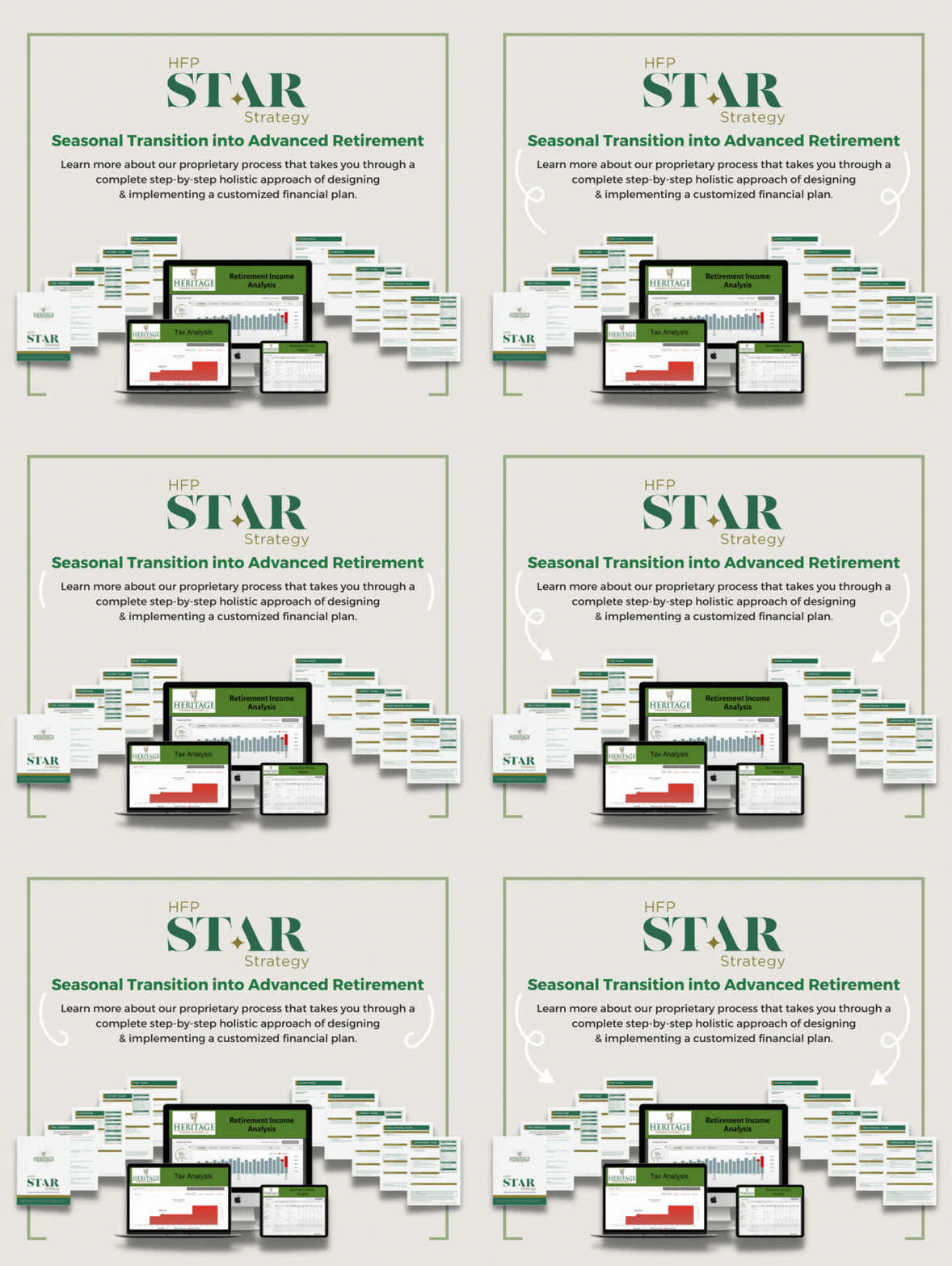
Click here to learn more about our HFP STAR Strategy process.
Sources
- MarketWatch – Coverage of U.S. market reaction following President Trump’s Davos remarks
- IRS – Retirement income and tax planning guidance
- CFP Board – Retirement planning standards and fiduciary best practices