




Many people spend years preparing financially for retirement. They contribute to their retirement accounts, monitor investment performance, and work toward a target number they hope will support their future lifestyle.
Yet when retirement finally approaches, many discover that readiness involves much more than reaching a specific account balance.
Retirement represents one of the biggest transitions in life. It affects not only your finances, but also your daily routine, healthcare decisions, family relationships, and long-term goals. Because of this, determining whether you’re truly ready for retirement requires asking broader questions than simply, “Do I have enough saved?”
While everyone’s situation is unique, there are several questions that can help evaluate retirement readiness from a more complete perspective.
Do You Know Where Your Income Will Come From?
One of the biggest adjustments in retirement is replacing a paycheck.
Many retirees rely on a combination of Social Security, retirement accounts, investments, pensions, and other income sources. Understanding how these pieces fit together is critical.
It’s not enough to know how much income you may receive. It’s equally important to understand when income begins, how it may be taxed, and how it will support your lifestyle over time.
A clear income strategy often provides greater confidence than focusing solely on portfolio balances.
Have You Thought About Healthcare Costs?
Healthcare is often one of the largest expenses retirees face.
While Medicare provides important coverage, it does not cover everything. Premiums, deductibles, prescription costs, and potential long-term care needs can all affect retirement finances.
Considering healthcare as part of your retirement readiness assessment can help prevent surprises later.
Is Your Investment Strategy Aligned With Retirement?
The investment approach that helped build wealth during your working years may not be identical to the strategy that supports retirement.
Retirement often introduces new priorities, including income generation, risk management, and preserving flexibility.
Reviewing your portfolio with retirement goals in mind can help ensure it remains aligned with your needs.
Have You Considered Taxes?
Taxes don’t disappear in retirement.
In fact, many retirees are surprised by how different income sources interact within the tax system. Withdrawals from retirement accounts, Social Security benefits, investment income, and Required Minimum Distributions can all influence your tax picture.
Understanding these interactions can help improve long-term planning.
What Does Retirement Actually Look Like?
Many people spend years planning for retirement financially but very little time considering what retirement life will actually involve.
How will you spend your time?
What activities bring meaning and purpose?
What goals have you postponed while working?
Retirement is about more than financial security. It is also about creating a lifestyle that feels fulfilling.
How Flexible Is Your Plan?
No retirement unfolds exactly as expected.
Markets change. Expenses evolve. Family circumstances shift.
The most effective retirement plans are often those that can adapt over time. Flexibility may be one of the most valuable characteristics of any retirement strategy.
Do You Have a Process for Ongoing Decisions?
Retirement planning does not end when retirement begins.
It becomes an ongoing process of reviewing, adjusting, and adapting as life evolves.
Having a framework for making future decisions can help reduce uncertainty and improve confidence.
Why This Matters Today
Today’s retirees face longer retirements, changing healthcare costs, evolving tax rules, and economic uncertainty. These realities make retirement readiness about far more than a savings target.
A successful retirement plan addresses income, taxes, risk management, healthcare, and long-term flexibility.
A More Comprehensive Approach
At Heritage Financial Planning, we help clients evaluate retirement readiness through our HFP S.T.A.R. Strategy (Seasonal Transition into Advanced Retirement).
Rather than focusing on a single number, this process helps clients assess how income, taxes, investments, healthcare considerations, and lifestyle goals work together throughout retirement.
Moving Forward With Confidence
Retirement readiness is not determined by one milestone. It is the result of thoughtful preparation across multiple areas of life and finance.
If you’re approaching retirement and wondering whether your plan is truly ready, a conversation may help provide clarity.
At Heritage Financial Planning, we help individuals and families evaluate retirement from a comprehensive perspective through our HFP S.T.A.R. Strategy. If you’d like to explore how prepared you are for the next phase of life, we invite you to schedule a conversation with our team.
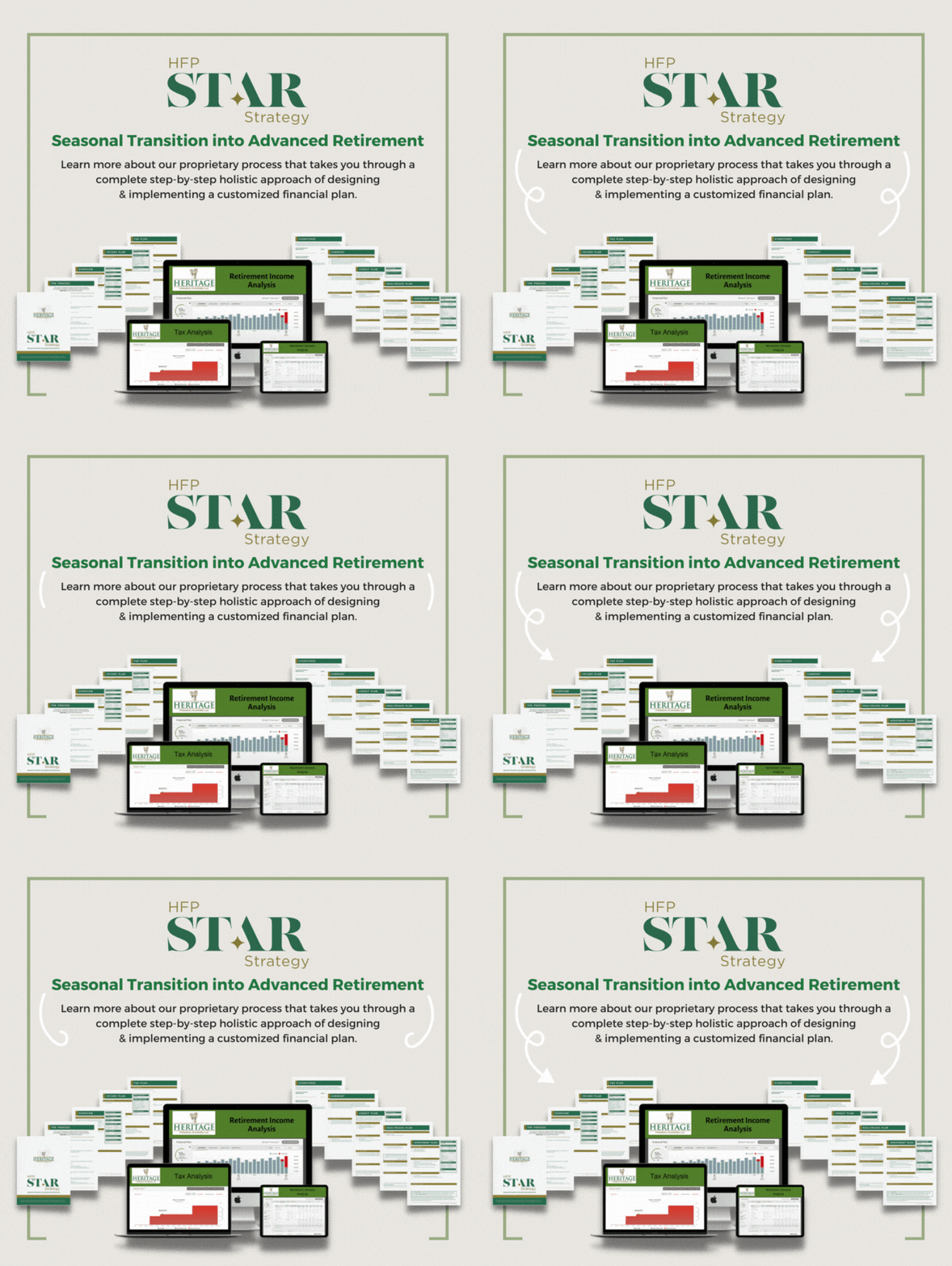
Click here to learn more about our HFP STAR Strategy process.
Sources:
1. Social Security Administration – Retirement Benefits Planning
https://www.ssa.gov/retirement
2. Medicare.gov – Planning for Retirement Healthcare Costs
https://www.medicare.gov
3. Fidelity Investments – Retirement Planning Resources
https://www.fidelity.com/retirement-planning